Plus Size Karo-Outfits für Herbst 2026: So tragen Sie Tartan, Karos und Hahnentritt selbstbewusst
Sep 01, 2026

Wenn Sie schon einmal einen Schottenrock zurück ins Regal gehängt haben, weil Ihnen jemand einmal gesagt hat, dass große Karos "nichts für Kurven" sind, dann ist dieser Leitfaden für Sie geschrieben. Plus-Size-Karo-Outfits gehören zu den lohnendsten Dingen, um die Sie eine Herbstgarderobe aufbauen können. Karo hat Struktur ohne Steifheit, es wirkt überlegt statt aufdringlich, und es gibt mehr Variationen davon als bei fast jedem anderen Muster in der Mode. Die Vorstellung, dass eine Frau über Größe 42 bei winzigen, unauffälligen Prints bleiben sollte, ist keine Stilregel. Es ist eine Überbleibselgewohnheit aus einer Ära, die Körper als etwas behandelte, das korrigiert, anstatt gekleidet werden sollte.
Dies ist ein Musterführer statt eines Einzelkleidungsstückführers, der Karo-Röcke, -Hosen, -Kleider, -Mäntel, -Blazer, -Schals, -Socken und -Strumpfhosen abdeckt – plus die Karo-Familie und ihre Skalen, Farbwertkontrast, Nahtanpassung, Herbststoffgewichte und sieben Komplett-Formeln, die Sie genau kopieren können.

Karo ist nicht tabu und war es nie
Irgendwann verhärtete sich ein Ratschlag zu einem Mythos: Halten Sie Prints klein, halten Sie Farben dunkel, halten Sie alles unauffällig. Dies basierte nie darauf, wie Kleidung funktioniert, sondern auf der Annahme, dass das Ziel des Anziehens darin besteht, weniger Platz einzunehmen. Das ist ein erbärmliches Ziel und führt zu erbärmlichen Garderoben.
Was Karo in einem Outfit tatsächlich bewirkt
Ein Karo ist ein Gitter, und Gitter wirken bewusst, maßgeschneidert und leicht architektonisch – weshalb Karo seit Jahrhunderten in Oberbekleidung, Kilts und Anzügen zu finden ist. Da das Gitter sowohl vertikale als auch horizontale Linien enthält, bietet es dem Auge Struktur, der es überall am Körper folgen kann, und lässt eine einfache Silhouette ohne zusätzliches Styling fertig aussehen. Ein Karo-Mantel über Jeans und einem T-Shirt ist ein komplettes Outfit. Ein einfarbiger Mantel über Jeans und einem T-Shirt ist eine Person auf dem Weg zum Laden.
Die Fragen, die es wirklich wert sind, gestellt zu werden
Vergessen Sie jede Frage, die damit zu tun hat, kleiner zu wirken, und stellen Sie stattdessen drei praktische Fragen. Fühlt sich der Stoff gut auf meiner Haut an und bewegt er sich, wenn ich mich bewege? Sitzt das Muster dort, wo ich den Blick hinlenken möchte, weil ich diesen Teil meines Outfits mag? Bringt die Farbe mein Gesicht zum Strahlen, wenn ich sie in die Nähe meines Kiefers halte? Diese Fragen führen zu Kleidung, nach der Sie greifen. Ein kühnes Muster ist eine Entscheidung über Stimmung und Präsenz, und ein Körper der Größe 50 hat genau so viel Anspruch auf Präsenz wie einer der Größe 34. Wenn Sie jahrelang vorsichtig eingekauft haben, ist das Stöbern in einer speziellen Plus-Size-Modekollektion, die für Kurven gemacht ist, anstatt einer nachträglich vergrößerten Standardgröße, der schnellste Weg, Vertrauen in mutige Stücke wieder aufzubauen.
Die Karo-Familie, entschlüsselt
"Plaid" ist eine Kategorie, kein Muster, und jedes Mitglied hat eine andere Persönlichkeit. Die Namen zu kennen, macht das Zusammenstellen von Plus-Size-Karo-Outfits viel einfacher, da Sie nach der Stimmung suchen können, die Sie tatsächlich wünschen.
Die kühnen, energiegeladenen Karos
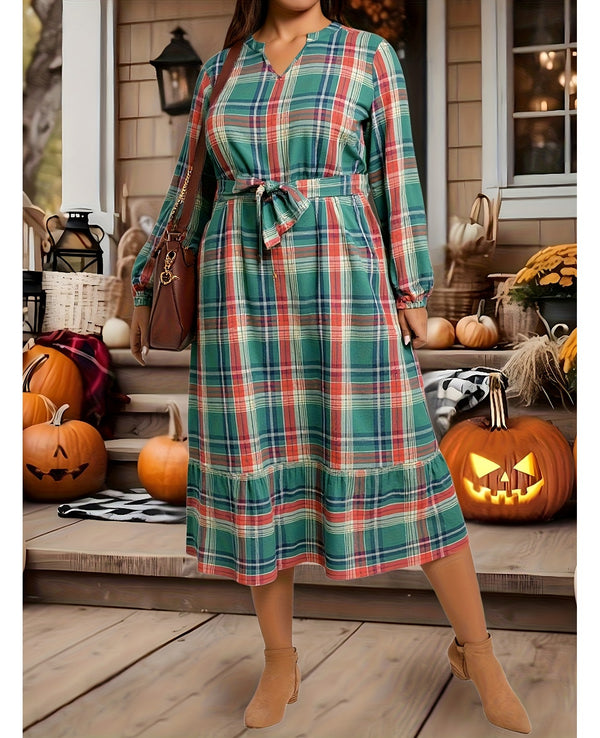
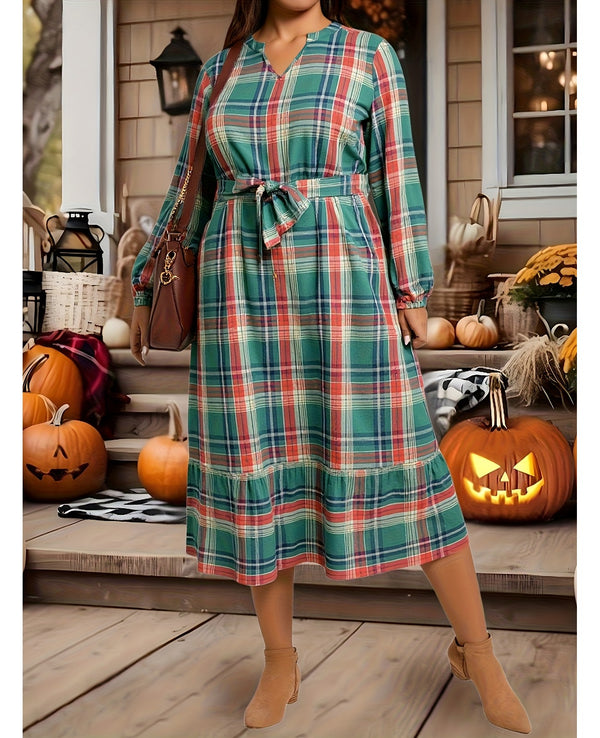
Tartan ist das klassische schottische Karo: mehrere Farben kreuzen sich in einem asymmetrischen Rapport, meist mit dünnen "Overcheck"-Linien, die durch die Blöcke verlaufen. Es ist das festlichste der Familie, weshalb es November und Dezember dominiert. Buffalo Check ist das große zweifarbige Quadrat, berühmt in Rot und Schwarz, wobei das Überlappungsquadrat dunkler wirkt; sein Rapport ist groß, seine Kanten scharf, seine Stimmung rustikal und fröhlich. Madras ist der leichte Baumwollcousin, heller und leicht unregelmäßig – eher Frühling als Herbst, obwohl es als Übergangs-Hemdjacke Anfang September sehr schön ist.
Die ruhigen, maßgeschneiderten Karos
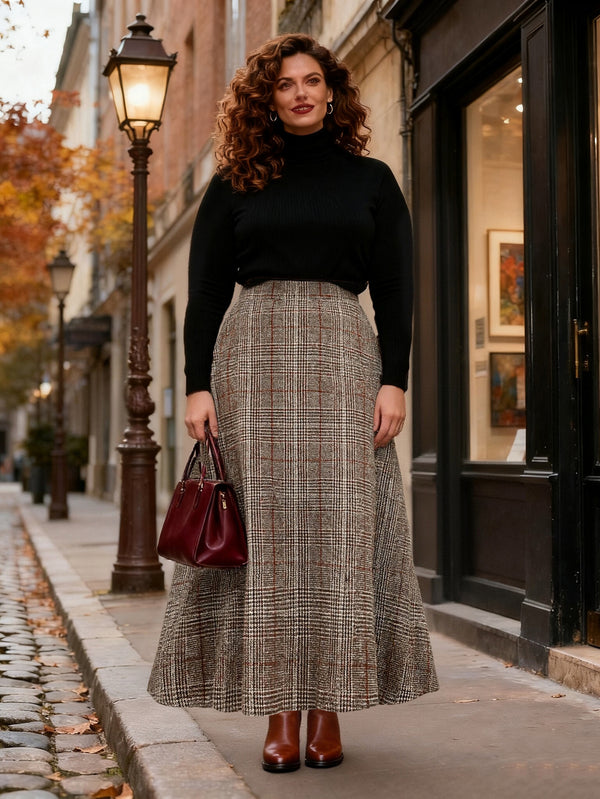
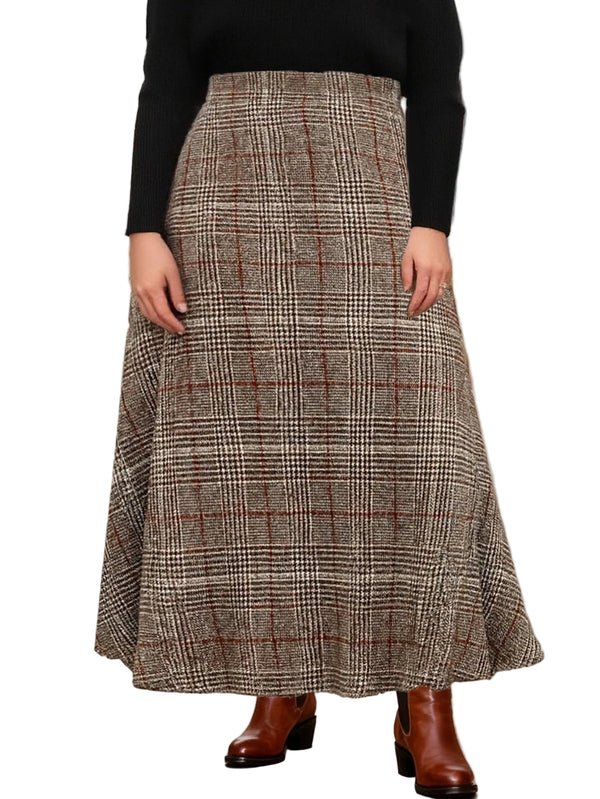
Fenstergitter ist eine weit auseinanderliegende dünne Linie auf einem einfarbigen Grund, wie die Scheiben eines Schiebefensters. Da der größte Teil des Stoffes einfarbig ist, verhält es sich aus drei Schritten Entfernung fast wie ein Uni-Stoff, was es zum einfachsten Einstiegspunkt macht, wenn kühne Muster neu sind. Glen Plaid (als Prince of Wales Check verkauft, wenn es einen kräftigen Überkaro hat) ist ein kleines gewebtes Gitter aus dunklen und hellen Garnen, das aus der Ferne zu einem warmen Grau- oder Braunnebel verschwimmt – das bürotauglichste Karo überhaupt. Gingham ist das gleichmäßige zweifarbige Quadrat, meist klein und knackig, ordentlich und leicht retro.
Die grafischen Webmuster
Hahnentritt ist technisch gesehen ein gebrochenes Karo, das so gewebt ist, dass die Quadrate Spitzen bilden und sich wie gezackte Zähne ineinander verschränken. Kleiner Hahnentritt, oder Puppytooth, wirkt wie eine reiche Textur und ist hervorragend in Blazern; überdimensionierter Schwarz-Weiß-Hahnentritt ist ein echtes Statement und eine der stärksten Einzelstück-Investitionen in einer Herbstgarderobe. Argyle, mit seinen Rauten und dünnen Kreuzlinien, ist kein echtes Karo, wohnt aber quasi nebenan und ist unschlagbar auf Socken und Strumpfhosen.
Mustergröße: Das Karo an Ihre Figur und Ihr Kleidungsstück anpassen
Die Größe ist das nützlichste Konzept in diesem Leitfaden für Plus-Size-Karo-Outfits und das, das fast niemand erklärt. Ein Karo hat einen Rapport: der Abstand, bevor das Design von vorne beginnt. Ein Gingham-Rapport kann einen halben Zoll betragen, ein Buffalo-Check vier bis sechs Zoll, ein Tartan-Rapport acht Zoll oder mehr.
Warum derselbe Stoff bei verschiedenen Größen unterschiedlich aussieht
Hier kommt der entscheidende Punkt für Übergrößen: Der Rapport wächst nicht mit dem Kleidungsstück. Ein Vier-Zoll-Karo auf einem Rock der Größe 40 mag drei Quadrate quer zeigen; auf einem Rock der Größe 50 zeigt es fünf oder sechs. Derselbe Stoff wirkt daher auf einem größeren Kleidungsstück etwas detailreicher und geschäftiger, nicht größer. Wenn Sie also ein großzügiges Karo lieben, wählen Sie auch ein größeres Muster – die Version mit dem größten verfügbaren Rapport oder ein Kleidungsstück mit weniger Nähten, damit das Gitter ununterbrochen verläuft.
Skala nach Art des Kleidungsstücks
Passen Sie die Rapportgröße an die Oberfläche an. Große, flache Oberflächen – Mäntel, Midi-Röcke, weite Hosen, Decken-Schals – tragen große Rapporte elegant, weil das Gitter genügend Raum hat, um sich zu entfalten. Nahtreiche Kleidungsstücke wie taillierte Blazer, Bleistiftröcke und kurze Jacken wirken in kleinen Rapporten sauberer, da jede Naht das Muster ohnehin unterbricht. Accessoires sind die Ausnahme von jeder Regel: Ein Schal, eine Socke oder eine Strumpfhose kann jede Größe tragen, da die Oberfläche klein ist und das Muster Akzente setzt.
Ein schneller Test in der Umkleidekabine
Stellen Sie sich sechs Fuß vom Spiegel entfernt hin. Wenn Sie immer noch einzelne Quadrate zählen können, haben Sie ein auffälliges Karo und sollten das Stück als Star behandeln. Wenn das Gitter in Textur oder einem Farbschleier verschwimmt, haben Sie ein dezentes Karo und können es so frei schichten wie ein Uni-Stoff.

Farbwertkontrast innerhalb des Karos
Zwei Karomuster können die gleiche Rapportgröße haben und sich aufgrund des Kontrasts völlig unterschiedlich verhalten. Der Wert gibt an, wie hell oder dunkel eine Farbe ist, unabhängig vom Farbton, und der Wertunterschied zwischen den Linien und dem Grund entscheidet, wie laut ein Karomuster wirkt.
Hoher Kontrast: knackig, grafisch, ausdrucksstark
Schwarz-weißer Hahnentritt, rot-schwarzes Büffel-Karo, elfenbein-marineblaues Tartan: Ein großer Wertunterschied hält jede Kante auf jede Entfernung scharf. Hochkontrastiges Karo ist energisch und lässt sich wunderbar fotografieren, und es braucht einen ruhigen Partner. Kombinieren Sie es mit einem Uni-Teil in einer Farbe, die direkt aus dem Karo gezogen wurde, halten Sie den Rest ruhig und lassen Sie das Muster sprechen.
Geringer Kontrast: weich, strukturiert, endlos tragbar
Holzkohle auf Schwarz, Camel auf Hafer, Olive auf Moos, grauer Glen Plaid: Der Abstand ist gering, so dass das Muster aus ein paar Schritten Entfernung zu einer reichen Textur verschmilzt. Plaid mit geringem Kontrast ist das Arbeitstier unter den Plus-Size-Plaid-Outfits – es mischt sich ohne Streit mit anderen Mustern, wirkt im Büro elegant und ermöglicht es Ihnen, Kopf-bis-Fuß-Muster zu tragen, ohne dass das Ergebnis wie ein Kostüm wirkt. Wenn Sie nur ein Plaid-Teil besitzen, wird ein neutrales Plaid mit geringem Kontrast am häufigsten getragen.
Nutzen Sie den Overcheck als Farbschlüssel
Die meisten Tartans und Prince of Wales Karos enthalten eine dünne Akzentlinie – Senf, Rost, Türkis oder Karminrot, die durch ein ansonsten neutrales Gitter läuft. Dieser Faden ist eine kostenlose Farbpalette. Nehmen Sie ihn für Ihren Strick, Ihre Stiefel, Ihren Lippenstift oder Ihre Socken auf, und das Outfit wirkt ohne Anstrengung professionell gestylt.
Musteranpassung an den Nähten: Das Qualitätsmerkmal
Hier trennt sich gutes Karo von billigem Karo, und es lohnt sich, es zu lernen, weil es objektiv ist. Wenn ein Kleidungsstück gut geschnitten ist, stimmen die horizontalen Linien an jeder Naht überein, sodass das Gitter ununterbrochen durch den Körper fließt. Das Anpassen kostet Stoff und Arbeitsaufwand, weshalb es genau ein Zeichen für Qualität ist.
Wo man zuerst hinschauen sollte
Überprüfen Sie die Seitennähte an der breitesten Stelle der Hüfte. Wenn die Querstreifen über die Naht nach oben oder unten versetzt sind, wurden die Teile ohne Musteranpassung zugeschnitten, und dieser Bruch wird bei jedem Tragen ins Auge fallen. Überprüfen Sie dann die mittlere Rückennaht eines Rocks oder einer Hose, die Schulter- und Ärmelkopfnaht einer Jacke, eine Knopfleiste und jede aufgesetzte Tasche. Gut verarbeitete aufgesetzte Taschen passen entweder unsichtbar oder sind bewusst im Schrägschnitt zugeschnitten, sodass das Gitter um fünfundvierzig Grad gedreht ist – diese Diagonale ist eine Designerwahl, ebenso wie ein schräg geschnittenes Bund an einem karierten Körper.
Beurteilung der Ausrichtung beim Online-Shopping
Sie können Stoffe nicht durch einen Bildschirm ertasten, daher verwenden Sie diese Kontrollpunkte, wenn Sie Plus-Size-Karo-Outfits online beurteilen. Zoomen Sie stark auf den Hüft- und Seitennahtbereich des Produktfotos. Suchen Sie nach einer Rückansicht und einem Flatlay, denn Marken, die Muster anpassen, zeigen in der Regel die Rückseite. Wenn Bilder in mehreren Größen vorhanden sind, vergleichen Sie diese – eine Passung, die bei der größten fotografierten Größe hält, ist ein gutes Zeichen für die gesamte Palette. Lesen Sie die Stoffbeschreibung: Gewebte oder garngefärbte Karos werden normalerweise sorgfältiger zugeschnitten als bedruckte, und ein bedrucktes Karo kann auch schief verlaufen, so dass das Gitter schräg zum Saum steht. Schauen Sie schließlich in den Bewertungen nach "Druckplatzierung", "ausgerichtet" oder "schief", wo dieses Problem auftaucht.
Stoffgewicht, Schichtreihenfolge und Pflege
Herbst-Karo steht und fällt mit dem Stoff. Das richtige Gewicht lässt ein Karo teuer aussehen; das falsche lässt es wie ein Faschingskostüm wirken.
Vier wissenswerte Gewichte
Wollmischgewebe (ca. 280–450 g/m²) hat Stand und Formgedächtnis, hält eine Bügelfalte und fällt in eine klare Säulenform, daher ist es die beste Wahl für weite Hosen, Midi-Röcke und maßgeschneiderte Mäntel. Gebürstete Baumwolle (140–200 g/m², klassisches Flanellgewicht) ist weich, matt und lässig, ideal für Hemdjacken und legere Hemdblusenkleider. Ponte-Strick, ein stabiler Doppelstrick um 280–320 g/m², ist der Komfort-Champion: mechanischer Stretch, Knitterarmut und eine Oberfläche, die schmeichelt, ohne zu kleben, weshalb Ponte-Karo-Hosen und -Kleider diejenigen sind, die Sie an langen Tagen tatsächlich tragen. Tweed und Bouclé fügen Textur hinzu, die selbst ein kontrastreiches Karo weicher macht, und ein Tweed-Blazer ist die nachsichtigste strukturierte Schicht, die Sie besitzen können, einfach weil die genoppte Oberfläche reichhaltig wirkt.
Schichtreihenfolge, die an echten Körpern funktioniert
Die meisten Plus-Size-Karo-Outfits lassen sich am besten in dieser Reihenfolge schichten: eine glatte, dünne Basisschicht (Feinstrick, Langarmshirt oder Body), damit nichts verrutscht; dann Ihre Karo-Zwischenschicht oder Ihr Unterteil; dann eine einfarbige Außenschicht, die sauber über dem Muster schließt; dann Strumpfwaren und Schuhe. Die dünne Basisschicht ist am wichtigsten, denn Volumen direkt unter einem strukturierten Karo-Teil lässt eine Jacke an den Knöpfen spannen. Beim Layering von Karo auf Karo legen Sie das kleinskaliere Karo am nächsten an den Körper und das kräftigere nach außen.
Pflege- und Knitterhinweise
Dämpfen Sie Wollmischgewebe im Karomuster anstatt es zu bügeln; hohe, trockene Hitze glättet den Flor und kann auf dunklen Karos einen Glanz hinterlassen. Wenn Sie bügeln müssen, verwenden Sie ein Bügeltuch auf der Wolleinstellung. Hängen Sie Wolle und Tweed auf breite Bügel und lüften Sie die Kleidungsstücke über Nacht, anstatt sie nach jedem Tragen chemisch reinigen zu lassen. Waschen Sie Ponte und gebürstete Baumwolle kalt und vermeiden Sie hohe Trocknerhitze, die dazu führt, dass Karos mit der Zeit leicht verzerrt aussehen. Wenn ein bedrucktes Karomuster nach dem Waschen schief aussieht, ziehen Sie den Stoff im feuchten Zustand wieder gerade und trocknen Sie ihn flach liegend.
Sieben Plus-Size-Karo-Outfit-Formeln von Kopf bis Fuß
Kopieren Sie diese genau, dann tauschen Sie die Farben aus. Jedes dieser Plus-Size-Karo-Outfits folgt der gleichen Logik: ein klarer Musterfokus, eine Farbe aus dem Karo, bequeme Schuhe, nichts, was um Aufmerksamkeit kämpft.
Casual und Wochenende
Formel 1 – Der Buffalo-Check-Rock. Rot-schwarzer Buffalo-Check-Midi-Rock, locker eingesteckter schwarzer Feinstrick-Rollkragenpullover, blickdichte schwarze Strumpfhose, schwarze Stiefeletten, Umhängetasche. Die dunkle Farbe des Karos zieht sich von oben bis unten durch und verleiht dem Rock einen klaren Rahmen.
Formel 2 – Die Karo-Shacket über Denim. Kontrastarme grau-cremefarbene Shacket aus gebürsteter Baumwolle, offen über einem weißen T-Shirt und Straight-Leg-Jeans getragen, weiße Sneaker, klobige Socken, die über dem Knöchel sichtbar sind. Das funktioniert, weil die offene Jacke zwei lange vertikale Musterlinien erzeugt.
Formel 3 – Glen-Plaid-Hose mit weitem Bein. Glen-Plaid-Hose mit weitem Bein, cremefarbener Rippstrickpullover, Jeansjacke, Loafer. Eine weite Hose in einem dezenten Karomuster ist das vielseitigste Unterteil in einer Herbstgarderobe, und es lohnt sich, einen Schnitt zu wählen, der für Kurven konzipiert ist, anstatt eine hochgestufte Standardgröße; eine spezielle Auswahl an Plus-Size-Hosen mit weitem Bein berücksichtigt das Verhältnis von Bundhöhe zu Hüfte, wodurch das Karomuster am Bein gerade bleibt.
Arbeit und elegant
Formel 4 – Hahnentritt-Blazer, alles andere unifarben. Schwarz-cremefarbener Hahnentritt-Blazer, schwarze Ponte-Hose oder ein schwarzes Säulenkleid, spitze Ballerinas, ein goldener Armreif. Der Blazer ist das Outfit; der Rest ist Kulisse. Für Tage mit vielen Meetings tauschen Sie ihn gegen einen Ponte-Anzug mit Fenstergittermuster und einer Bluse aus Seidenimitat in der Overcheck-Farbe aus.
Formel 5 – Karo-Kleid plus langer Cardigan. Ponte-Etui- oder Wickelkleid mit Fenstergittermuster, langer unifarbener Cardigan in einer Farbe aus dem Karo, blickdichte Strumpfhosen, Stiefeletten mit niedrigem Blockabsatz. Die ununterbrochene vertikale Linie eines offenen Cardigans über einem Muster ist ruhig, bequem und unendlich wiederholbar.
Abend
Formel 6 – Tartan für die Feiertage. Ein Tartan-Wickel- oder Slip-Midi-Kleid, transparente bis blickdichte schwarze Strumpfhosen, Stiefel mit Absätzen, goldene Creolen, kleine Clutch. Tartan ist von Natur aus festlich, also halten Sie den Schmuck schlicht und lassen Sie das Muster den Anlass sein. Ein Samtband oder ein schwarzer Gürtel an der natürlichen Taille verleiht Definition, wenn Sie das Gitter an einem bestimmten Punkt unterbrechen möchten.
Karo als Akzent: Schals, Socken und Strumpfhosen
Formel 7 – Das reine Akzent-Outfit. Eine komplett einfarbige Basis – schwarzer Strick, schwarze Hose, schwarze Stiefel – plus ein Karo-Moment: ein überdimensionaler Tartan-Decken-Schal, Argyle-Socken, die über Loafers umgeschlagen sind, oder Karo-Strumpfhosen unter einem einfarbigen Strickkleid. Dies ist der unkomplizierteste Weg in Plus-Size-Karo-Outfits und oft der stilvollste. Strumpfwaren verdienen besondere Erwähnung: Gemusterte Strumpfhosen und Kniestrümpfe sind preiswert, zeigen nur vom mittleren Wadenbereich abwärts und fügen der Kleidung, die Sie bereits besitzen, genau eine interessante Linie hinzu. Kombinieren Sie transparente gemusterte Strumpfhosen mit einem einfarbigen Midi, blickdichte Karo- oder Argyle-Strumpfhosen mit einem kürzeren Rock und gerippte oder Zopfmuster-Socken mit Karo-Hosen, wenn Sie Textur ohne ein zweites Muster wünschen.
Ein Karo oder zwei? Muster mischen ohne Lärm
Die Standardeinstellung ist ein Karomuster pro Outfit, und das ist eine gute Standardeinstellung, denn damit kann man nichts falsch machen. Aber Karo auf Karo ist unter zwei Bedingungen wirklich tragbar: Halten Sie die Farbfamilie gleich und machen Sie die Größen deutlich unterschiedlich. Ein kleiner Glen-Plaid-Blazer über einem kräftigen Tartan-Rock in gemeinsamen Grautönen funktioniert; zwei mittlere Karos in nicht verwandten Farben werden sich streiten. Um Karo mit einem anderen Muster zu mischen, wählen Sie ein kontrastarmes Karo und kombinieren Sie es mit einer anderen Struktur und Größe – einem feinen Streifen, einem kleinen Blumenmuster, einem Leoparden-Accessoire – wobei Sie wieder eine gemeinsame Farbe beibehalten. Und unifarbene Stoffe sind niemals eine Ausrede: Ein tolles Karoteil mit drei unifarbenen Stoffen ist das, was die meisten gut gekleideten Menschen tatsächlich tragen.
Häufig gestellte Fragen zu Plus-Size-Karo-Outfits
Sind große Karomuster für große Größen wirklich in Ordnung?
Ja, absolut. Es gibt keine Größe, bei der ein Muster nicht mehr erlaubt ist, und der alte Ratschlag, sich an kleine Drucke zu halten, zielte eher auf das Verkleinern als auf den Stil ab. Große Karos sind auf einem größeren Kleidungsstück tatsächlich leichter zu tragen, da eine große, flache Oberfläche es dem Gitter ermöglicht, sich zu vervollständigen, anstatt es in Fragmente zu zerteilen. Weit wichtiger als die Größe sind die Stoffqualität, die Passform an Hüfte und Schulter und ob die Musterlinien an den Nähten übereinstimmen. Wählen Sie ein großes Karo, weil Sie seine Energie lieben, und behandeln Sie es als den Mittelpunkt Ihrer Plus-Size-Karo-Outfits.
Woher weiß ich, ob ein Karokleidungsstück gut verarbeitet ist, bevor ich es online kaufe?
Zoomen Sie auf die Seitennaht an der Hüfte und prüfen Sie, ob die horizontalen Balken in gleicher Höhe darüber verlaufen, dann wiederholen Sie dies an der hinteren Mittelnaht und an jeder aufgesetzten Tasche. Gewebte oder garngefärbte Karos werden im Allgemeinen sorgfältiger zugeschnitten als bedruckte, und bedruckte Karos können leicht schief sitzen, sodass das Gitter am Saum schief aussieht. Suchen Sie nach Rückansichts- und Flat-Lay-Fotos, vergleichen Sie Bilder über mehrere Größen hinweg, wenn sie angezeigt werden, und suchen Sie in den Bewertungen nach Erwähnungen von Druckplatzierung oder schiefen Mustern.
Kann ich Karohosen im Büro tragen, ohne zu lässig auszusehen?
Absolut, und der Trick liegt eher im Kontrastlevel als im Karomuster selbst. Wählen Sie ein kontrastarmes Karomuster wie Glen Plaid, Windowpane oder kleines Puppytooth in einer neutralen Farbfamilie, aus einem Stoff mit Stand wie Wollmischgewebe oder einem stabilen Ponte. Aus ein paar Schritten Entfernung wirkt es wie eine texturierte Unifarbe, was genau der Tonart entspricht, die die meisten Arbeitsplätze wünschen. Halten Sie dann die obere Hälfte ruhig: einen Feinstrickpullover oder eine einfache Bluse in einer Farbe, die aus dem Karomuster stammt, plus ein strukturiertes Drittes Teil wie einen Blazer oder einen langen Cardigan.
Was ist der einfachste Weg, Karo zu tragen, wenn es einschüchternd wirkt?
Fangen Sie bei den Füßen und am Hals an, wo sowohl das Engagement als auch die Kosten am geringsten sind. Ein karierter Deckenschal, Argyle-Kniestrümpfe oder gemusterte Strumpfhosen zeigen Ihnen, wie Sie sich mit einem Karomuster fühlen, ohne Ihre Garderobe neu zu gestalten. Sobald sich Accessoires natürlich anfühlen, fügen Sie ein Karo-Unterteil mit geringem Kontrast hinzu, wie z.B. eine weite Hose oder einen Midirock, der mit bereits vorhandenen Unifarben getragen wird. Statement-Teile wie ein übergroßer Hahnentritt-Mantel sind eher als dritter oder vierter Kauf sinnvoll, wenn Sie wissen, welche Größe und welchen Kontrast Sie wirklich mögen.