Denier is one of those hosiery words that gets used constantly and explained almost never. If you have ever stood in front of a size chart wondering whether 55D is heavy or light, warm or cool, sheer or solid, this guide is for you. 55D stay up stockings sit in a genuinely useful middle ground: semi-sheer, mid-weight, soft against the skin and warm enough for cool weather without the bulk of a full opaque tight. Because they hold themselves up with a silicone band rather than a waistband, nothing digs into your middle and there is no gusset to adjust all day. Below we explain what denier really means, how 55D looks and feels on fuller thighs and calves, how to choose your size, which colours do what for an outfit, and how to style and wash them so they last.
What Denier Actually Means in Plain English
Denier tells you how much yarn went into the knit. Technically, one denier is one gram of yarn per 9,000 metres of length, which is a wonderfully unhelpful fact when you are standing in a shop. The practical version is simpler: a higher denier number means a heavier yarn, more yarn packed into every square centimetre, and therefore more coverage and more warmth. That single number explains most of the difference between a flimsy summer sheer and a stocking you can wear in November.
Denier is a weight, not a thickness
People often assume denier describes how thick an individual thread is, and that is not quite right. It describes the weight of the yarn over a set length, which captures both the thread and how densely it has been knitted. Two stockings can use threads that feel similar between your fingers and still behave very differently at 40 denier versus 60, because the knit packs the yarn in differently. Yarn quality, knit pattern and finishing all shift the final feel, but denier remains the fastest way to compare one pair against another.
The denier scale, from sheer to opaque
It helps to picture denier as a scale rather than a set of rules. From about 5 to 15 denier you are in ultra-sheer territory: barely-there hosiery for warm days and dressy evenings. Between 20 and 40 denier the fabric turns semi-sheer, still letting skin tone show through but with more even coverage and more resilience than a 15. From roughly 40 to 60 denier you reach the semi-opaque band, where colour reads clearly and the leg looks smooth while the knit keeps enough depth that it never looks painted on. From 70 to 120 denier the yarn is genuinely opaque and cold-weather ready. Above that sit the fleece-lined and thermal styles built for deep winter.
Where 55D sits on the scale
Fifty-five denier lands toward the top of the semi-opaque band, which is why it feels so useful. It is substantial enough to even out the look of the leg and warm enough to notice on a cool morning, yet fine enough that you still catch a soft trace of skin through the knit. If 15 denier sheers always ladder before their time and 80 denier opaques feel heavy indoors, 55D is usually the answer. It also suits the stay up format beautifully, because the fabric is light enough to drape on the thigh without dragging at the band.
What 55D Semi-Sheer Really Looks Like on Your Legs
Numbers only tell you so much, so here is what this weight actually does once it is on your leg, in daylight, under a skirt.
Coverage and opacity
At 55 denier you get what most people would call semi-sheer to lightly opaque. Across the room the leg reads smooth, even and softly matte, with none of the shine that cheaper sheers sometimes have. Close up you can see a gentle shadow of your own skin tone through the knit, and that hint of depth is exactly what keeps the look natural rather than solid. Freckles, scars and uneven tone are softened rather than blocked out, which is usually the effect people are hoping for.
Warmth without the weight
A 55D knit traps a real layer of air against the skin, so your legs stay noticeably warmer than they would in a 20 denier sheer. What you do not get is the dense, compressive feel of a heavy opaque tight, or the clammy sensation of thick hosiery in a heated room. That balance is the whole appeal: warmth for the walk to the car or the platform, comfort for the office, and no need to peel anything off the moment you get indoors.
Which seasons suit 55D best
This is a three-season weight in most climates. Early autumn and late spring are its natural home, when mornings are cool and afternoons are warm. It works through mild winter days, especially layered under boots, and it is ideal for over-air-conditioned offices and long journeys in summer. If you live somewhere genuinely cold, treat 55D as your daytime pair and save heavier opaques for the coldest weeks.
How it reads in daylight and in the evening
In daylight, semi-sheer knits look soft and understated, close to a natural skin finish with a little extra polish. Under evening light the same pair reads slightly deeper and more elegant, because the knit catches light rather than reflecting it. That quiet quality means one pair of 55D stay up stockings can carry you from a morning meeting to dinner without looking like it belongs only to one half of the day.
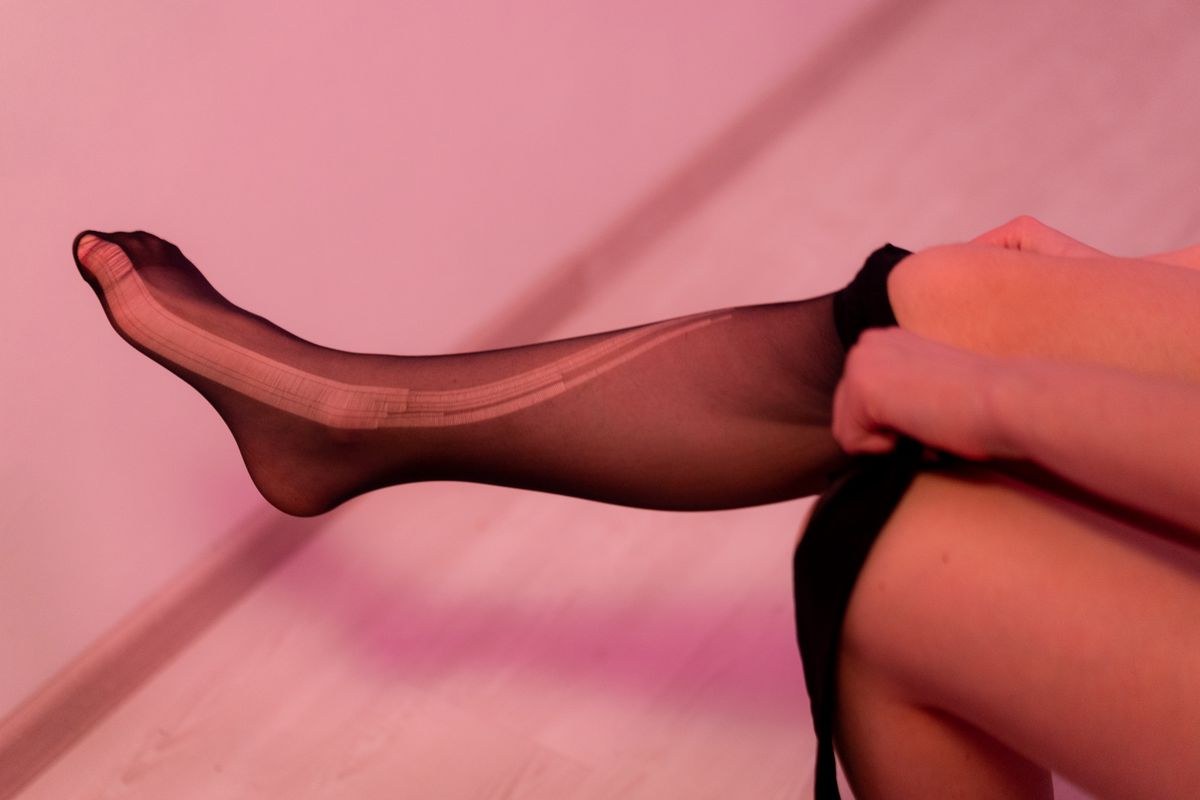
How to Choose the Right Size for Fuller Thighs and Calves
Fit matters more than denier with stay ups, because a stocking that is too small will pull at the band and a stocking that is too large will wrinkle. Sizing for fuller thighs is straightforward once you know which two measurements actually count.
Start with your height and thigh circumference
Ignore your dress size for this. Take a soft tape measure around the fullest part of your upper thigh, usually a hand's width below the crease of your leg, keeping the tape level and snug but not tight. Then note your height. Those two numbers do most of the work: height tells the brand how long the leg and foot need to be, and thigh circumference tells it how much stretch the top band must accommodate. If you are tall, size up before you size down.
How to read a size chart without guessing
Good charts list a range, not a single number, for both height and thigh. Find the row where both of your measurements sit comfortably inside the range rather than on the very edge. If your thigh is at the top of one band and your height is in the middle of the next band up, choose the larger size. It is far easier to take in a slightly generous stocking at the toe than to stretch a tight band that will roll or dig all day.
Between sizes? Here is the rule
When you are genuinely between two sizes, think about how you will wear them. If you will be on your feet for hours or wearing them over another layer, size up. If you mainly want a close, smooth line under a fitted dress, stay with the smaller size only if your thigh measurement sits in the middle of that range, never at the top. Sizing up for comfort is almost never the wrong call with stay ups.
Signs the size is wrong
A band that leaves deep red marks, rolls at the top, or needs constant hitching is too small. A stocking that pools at the ankle, twists around the calf, or slips down in the first hour is usually too large. Both problems can happen with correct measurements if the silicone grip is worn or the knit has stretched, so check the band first before blaming the size. When in doubt, compare how the skirt of the stocking sits: it should follow your calf smoothly with no ripple lines.
Colour Guide: Black, Nude, White, Red, Violet and Pink
Colour changes how a semi-sheer 55D reads far more than it does with a heavy opaque, because your skin tone shows through and mixes with the yarn. Here is what each shade does for an outfit.
Black: the everyday anchor
Black is the workhorse. At 55 denier it gives the leg definition and depth without going flat, and it makes almost any shoe look deliberate. Black pairs beautifully with denim, tailoring, leather and floral prints, and it is the safest choice if you want one pair that handles everything from the office to dinner. It is also the most forgiving of small snags, since a repaired ladder disappears into the colour.
Nude: the quiet extender
A nude tone matched reasonably close to your own skin creates the longest, simplest line, especially with skirts and dresses in the same colour family. Because a semi-sheer nude blends with you rather than covering you, it looks warm rather than costumey, and it is the pair to reach for when you want coverage and polish with nothing competing for attention. Nude also works beautifully under open-toe shoes and light summer fabrics.
White: fresh and deliberate
White and cream opaques or semi-sheers read as intentional, so treat them as a statement rather than a neutral. They look wonderful with knitwear, monochrome outfits and layered autumn looks, and they add a clean, graphic lift to dark shoes and dark skirts. Keep the rest of the outfit simple so the white has space to do its job.
Red: the statement
Red is the boldest choice and the most fun. A 55D red has enough depth to feel rich rather than bright, and it turns the leg into part of the outfit. Wear it with black, charcoal or cream so it stays the focal point, and echo the colour somewhere small, a bag strap or a lip, for a look that feels considered rather than accidental.
Violet: the unexpected one
Violet and plum shades flatter almost every skin tone and feel distinctive without shouting. They layer beautifully with grey, navy and black, and they look especially lovely with soft autumn palettes and brown leather boots. If you have been circling the same black pairs for years, violet is the easiest step into colour.
Pink: playful and soft
Pink softens an outfit instantly. A pale pink 55D is charming with denim and knits, while a deeper rose or berry acts almost like a neutral with cream and grey. It is a lovely way to add warmth to a winter look without going bright, and it suits anyone who wants their hosiery to feel like a small pleasure rather than a utility. Whichever shade you pick, our plus size thigh highs range keeps these colours in sizing built for fuller thighs.
Styling 55D Stay-Ups with Skirts
Skirts are where semi-sheer stay ups get to show their advantage, because the band sits clear of the hem and you never have to think about a waistband.
Midi skirts
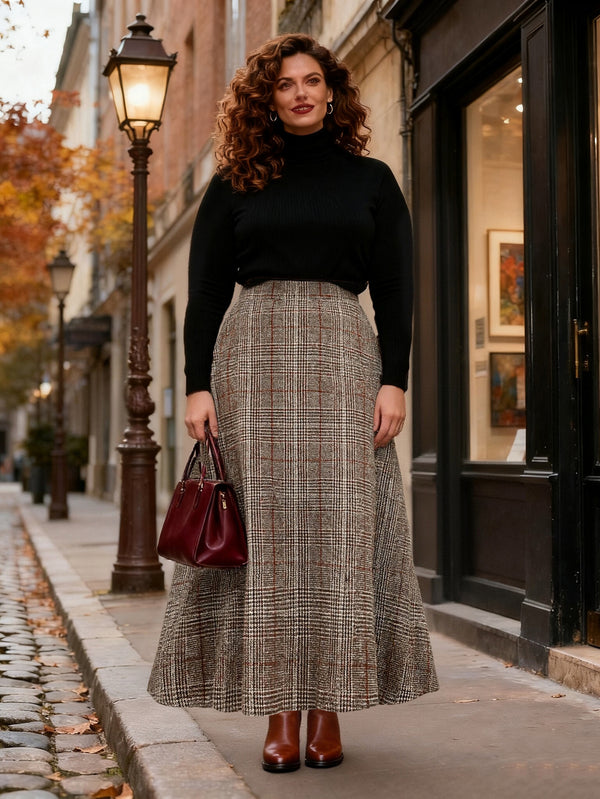
A midi hem that finishes at the calf leaves the entire stocking visible below it, which makes the fineness of a 55D knit really count. Pair a black 55D with a pleated midi and ankle boots for an easy autumn outfit, or choose nude under a cream skirt for an uninterrupted line. Because there is no waistband, the fit of a tucked-in top stays smooth.
Mini skirts
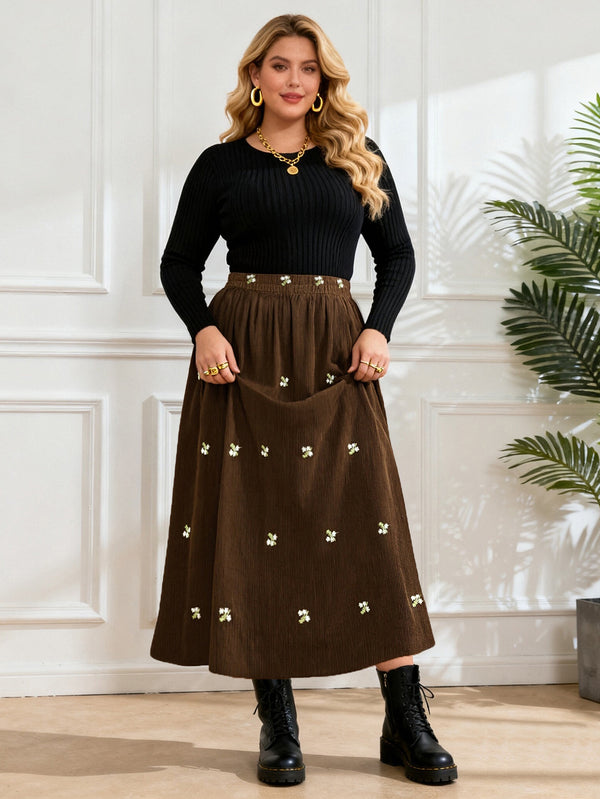
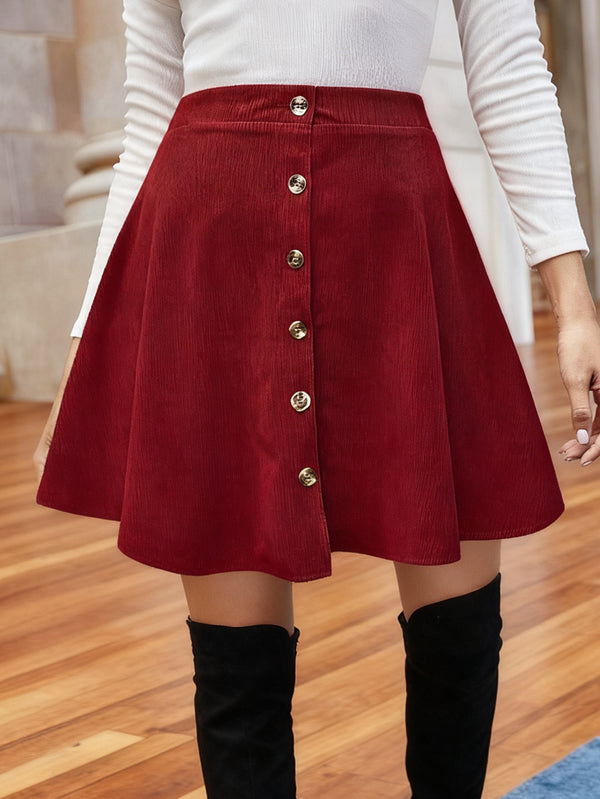
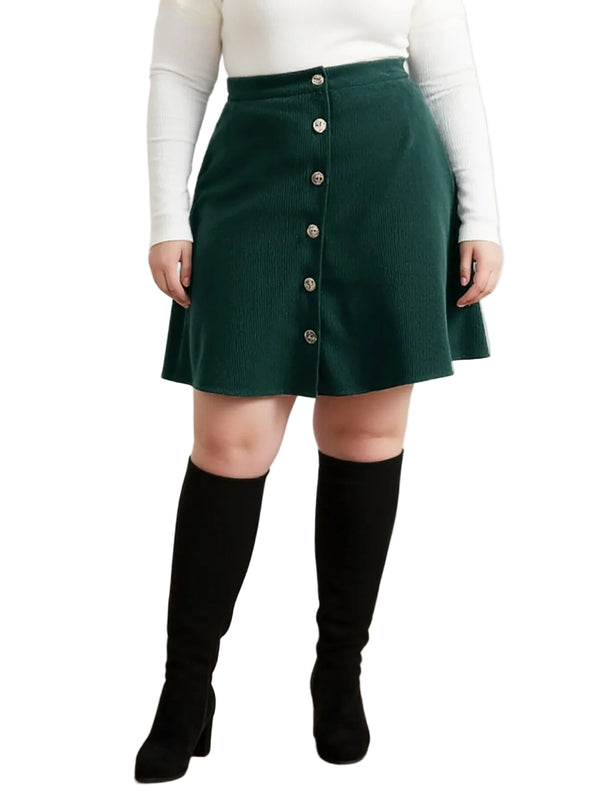
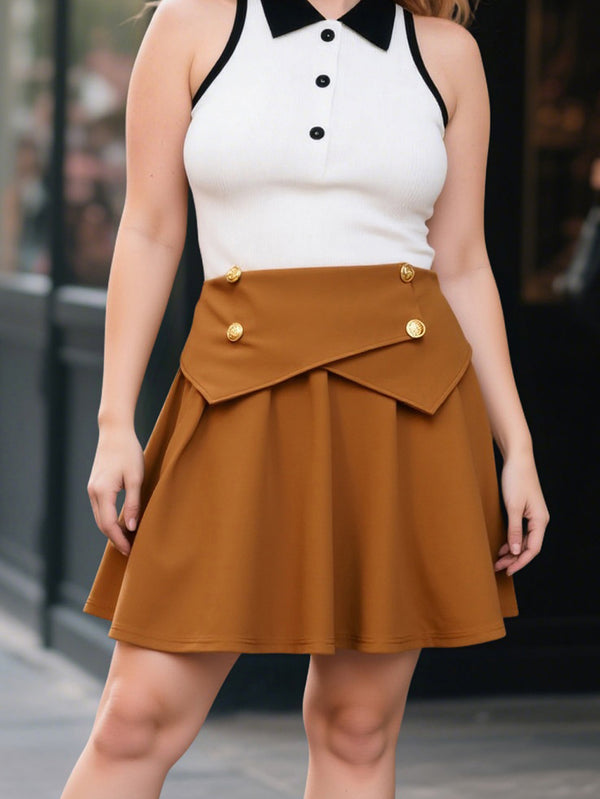
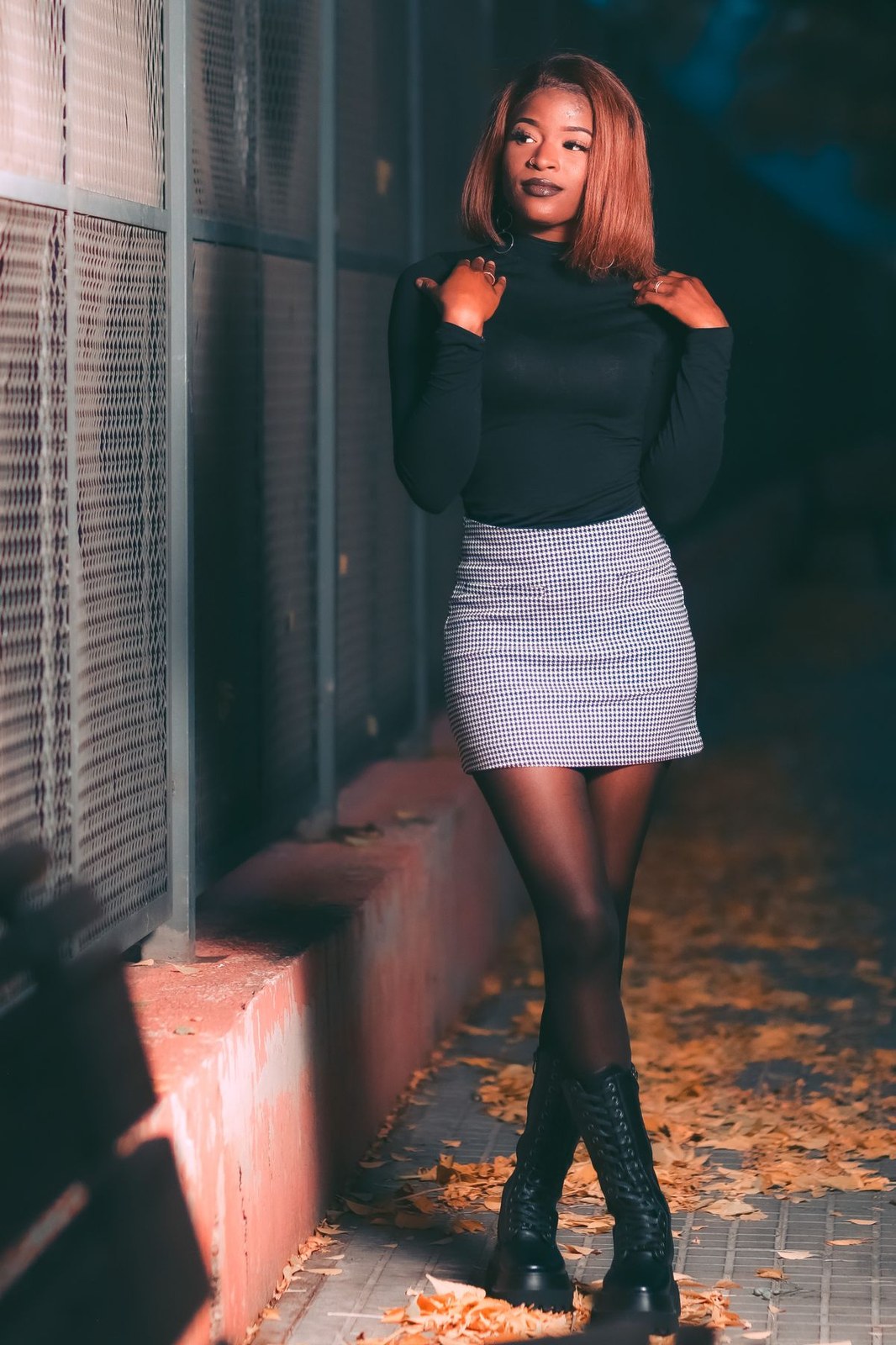
With a mini, the stocking does most of the styling work. A 55D gives more coverage than a sheer, which makes short hems feel easier on cool days, and the silicone band lets you choose exactly where the top of the stocking sits. Denim minis, corduroy skirts and A-line shapes all work, especially with a chunky knit or oversized blazer layered above.
A-line, pleated and wrap skirts
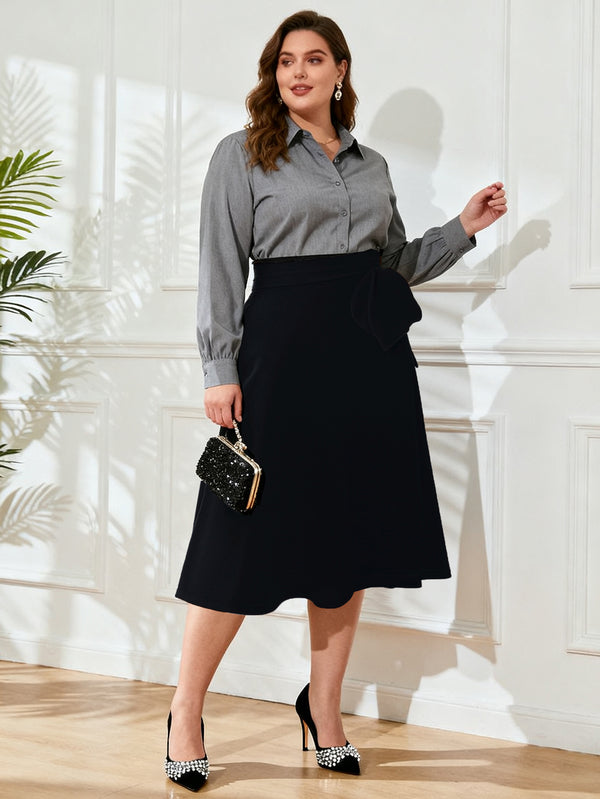
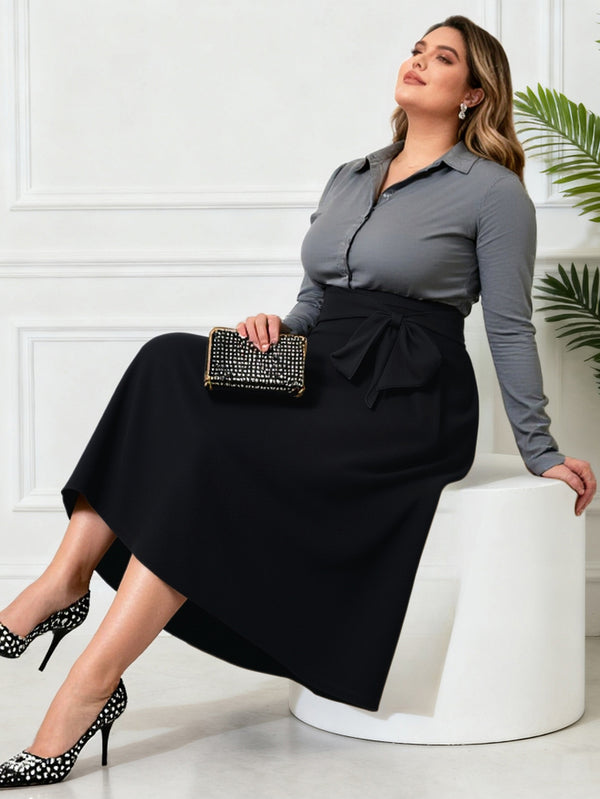
Volume on top with a close-fitting leg below is a flattering combination in any size. Let a full pleated or wrap skirt move freely over a smooth 55D leg, then finish with a slim boot or a loafer. Adding a belt at the waist or a structured bag keeps the proportions deliberate, and the contrast between a floaty hem and a defined leg does the rest.
Shoes that finish the look
Ankle boots and 55D are close to a perfect pairing, with the stocking disappearing cleanly into the boot. Loafers and Mary Janes give a smart, slightly vintage feel in daylight, while heels or platforms take the same pair into the evening. Keep the colour relationship in mind: matching shoe to stocking lengthens the line, while a contrast shoe draws the eye down and makes the hosiery part of the outfit's pattern.
Styling Semi-Sheer Stay-Ups with Dresses and Shorts
Dresses and shorts are the two most common reasons people reach for a stocking over tights, so it is worth working through both.
Knit and sweater dresses
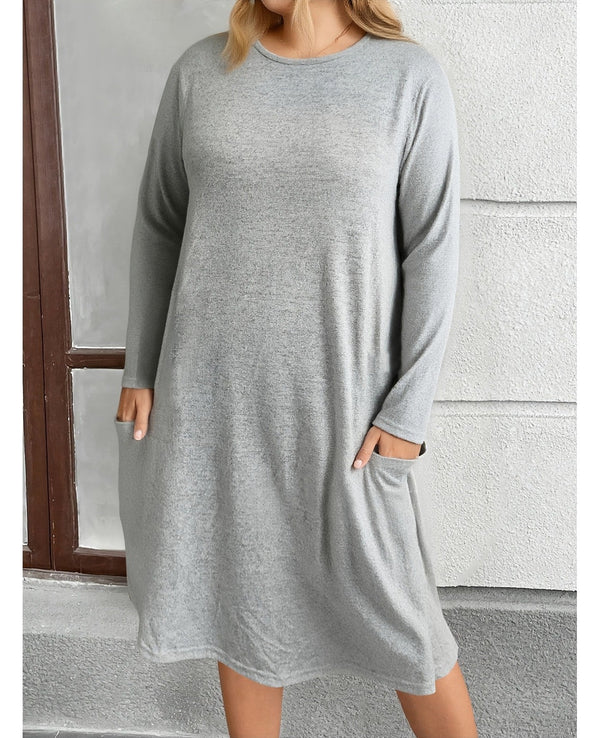
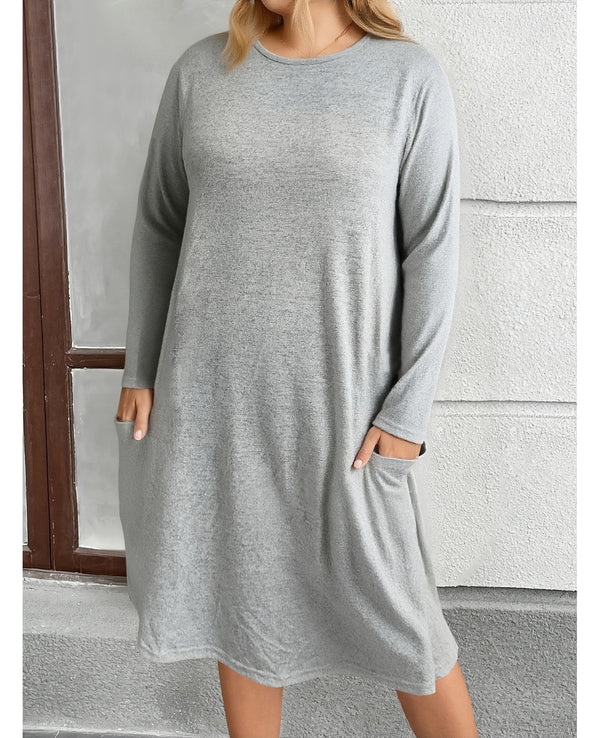
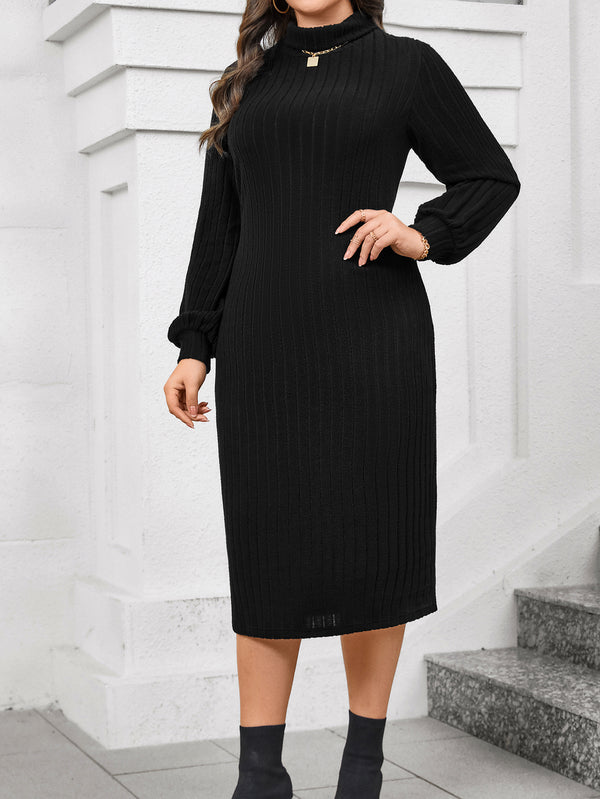
A long knit dress over a 55D is one of the warmest, easiest autumn combinations there is. The knit provides the bulk and the stocking provides the finish, so you get real warmth on your legs without the tightness of a full tight underneath a heavy dress. Choose a slightly darker stocking than the dress for depth, or a matching tone for a long, clean column.
Slip and satin dresses
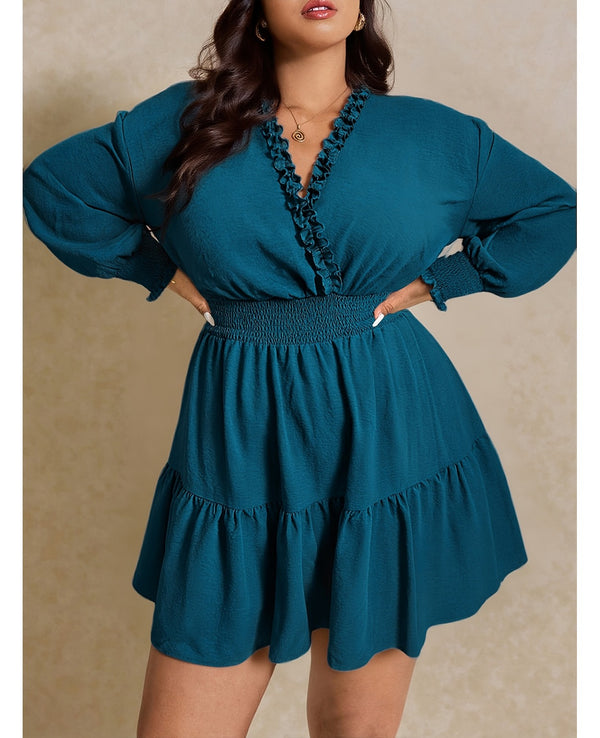
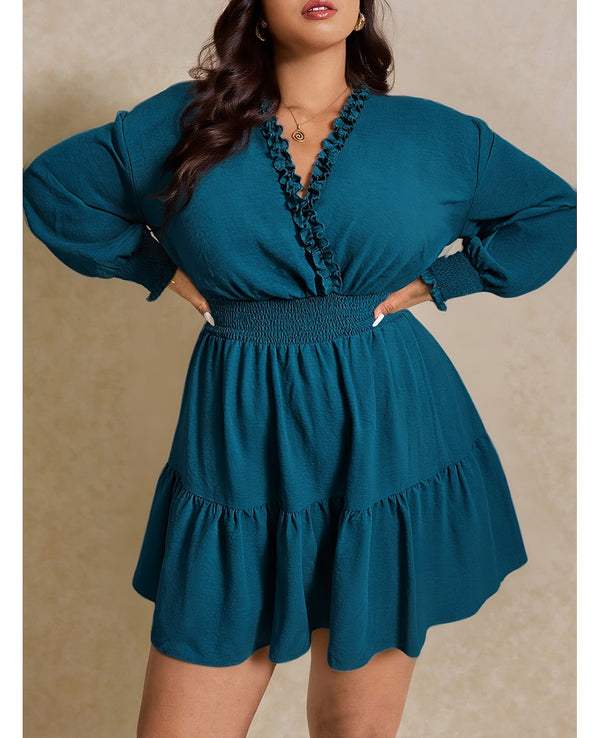
Semi-sheer hosiery under a slip or satin dress gives the look a soft base instead of bare skin, which is especially welcome when the weather turns. A black 55D with a jewel-toned dress feels evening-ready, while nude keeps the whole look light and fluid. Because there is no waistband, the dress skims smoothly rather than showing any edge.
Shorts for transitional weather
Tailored shorts with a 55D knit is an underrated autumn outfit: warm enough for a cool afternoon, dressy enough for dinner, and far more comfortable than tights under a short hem. Denim shorts work the same way with an oversized sweater and boots. The rule is simple, if the shorts are short, let the stocking be the texture.
Layering through autumn
As the season deepens, add a slip, a long cardigan or a trench without changing your hosiery. A 55D handles that layering well because it is warm but thin, so nothing feels bulky under a coat, and it dries quickly if you are caught in the rain. One pair, several outfits, very little fuss.
Durability, Washing and Making a Pair Last
A good semi-sheer stocking is not fragile, but it does need the right habits. Handled well, 55D stay up stockings keep their shape, their colour and their grip for a long time.
Hand washing
Wash by hand in cool water with a small amount of gentle soap. Swish gently, do not scrub, and pay attention to the band, where skin oils and lotion collect. Rinse until the water runs clear. Skip fabric softener, bleach and harsh detergent, and keep them out of the washing machine, where agitation stretches the knit and pulls the silicone away from the band.
Drying and storing
Squeeze water out gently instead of wringing, then lay the stockings flat on a towel away from direct heat. Hanging them by the toe stretches the leg length, and a tumble dryer will damage both the knit and the grip. Once dry, fold loosely and store flat in a drawer or a fabric pouch, away from zips, hooks and velcro, which are the usual culprits behind sudden snags.
Preventing snags and ladder runs
Put your stockings on before your jewellery, keep nails smooth, and take a moment to check your hands and any rough surfaces. If you catch a run, stop it with a dab of clear nail polish at the top of the ladder and let it dry before wearing them again. Keeping a spare pair in rotation means you are never forced to wear a damaged one, and it gives each pair time to recover its stretch.
When to replace a pair
Replace stockings when the silicone band stops gripping even on clean, dry skin, when the knit has lost its spring and sags around the calf, or when runs start appearing in the same place. Rotating three or four pairs and washing them by hand can easily double their useful life compared with a single pair worn every week.
FAQ: 55D Stay Up Stockings
Is 55 denier warm enough for winter?
For mild winter days and for wearing under boots, yes. 55D is a solid three-season weight, and in genuinely cold weather it works well as a daytime layer beneath tall boots or a long skirt. For the coldest weeks, many people keep a heavier opaque pair alongside their 55D stay up stockings and switch depending on the forecast.
What size should I choose for fuller thighs?
Base it on your height and the circumference of your fullest upper thigh, not your dress size, and size up whenever both measurements do not sit comfortably inside one range. A band that grips firmly without leaving deep marks or needing constant adjustment is the one that fits correctly.
Do 55D stay up stockings really stay up all day?
They do when the band is wide, correctly sized and worn against clean, dry skin. Rich body lotion leaves a film that reduces grip, so moisturise earlier and let it absorb before dressing, and dust the thigh lightly with translucent powder on warm days. Worn this way, most people forget they have them on.
Can I wear semi-sheer stay-ups with shorts and mini skirts?
Absolutely, and it is one of the best ways to wear them. The extra coverage compared with a sheer makes short hems comfortable on cool days, and because stay ups have no waistband or gusset there is nothing to adjust or show. Browse our stay up stockings collection to choose your denier and colour.