Why Flared Leg Warmers Are Back for 2026
Flared leg warmers were everywhere the first time around, on dance floors and in aerobics studios, and they have returned with a difference: this time they are softer, better fitted and easier to wear off the mat. The classic silhouette is defined by a knit that widens toward the ankle, creating a bell or trumpet shape over the foot rather than a straight tube. That single design choice changes how the whole leg reads, and it is the reason the look keeps being reinvented decade after decade.
The 2026 version is a collaboration between retro dance wear and modern streetwear. Knits are chunkier and more forgiving, cuffs are cut to actually hold their position, and colour has moved beyond neon into pastels, off-whites and deep neutrals. Worn with leggings, a leotard or a mini skirt, the flare adds movement and personality without requiring you to commit to a full eighties costume. If you like the slouchier end of the trend, our Y2K leg warmers collection has plenty of longer, scrunchable options to layer with.
Who this style suits
Because the flare sits at the ankle, it draws the eye downward in a soft curve rather than a hard horizontal line, which works well on almost any leg shape. For plus-size women who want a retro accent that feels playful rather than restrictive, a flared knit is one of the friendliest options in the whole leg-warmer family: it adds volume by design, so there is nothing to negotiate with a tight seam.
What changed since the eighties
The original studio version was thin, stretchy acrylic, often cut to one length and one width. Today's versions use denser wool blends, wider cuff bands and extended size ranges, which means the knit stays up, holds the flare and fits a fuller calf. You get the same nostalgia with a better drape and far less rolling down mid-class.
What Makes a Flared Cuff Different: Proportions Explained
A straight leg warmer hugs the calf and ends where it ends. A flared one keeps a snug top, then widens gradually so the hem stands slightly away from the ankle. That flare acts like a small pedestal for the foot, and it subtly changes the balance of the entire outfit.
The proportion effect
- Adds visual width at the ankle: perfect for balancing a very short hem or a very skinny legging.
- Softens hard footwear lines: a flare flowing over a chunky trainer or a ballet flat feels finished rather than abrupt.
- Creates movement: the loose hem swings as you walk, which is exactly why the style suits dance.
- Demands a snug top: if the top band is loose, the weight of the flare will pull the whole knit down. Fit at the calf matters most here.
Choosing flare depth
A gentle flare of a few centimetres reads elegant and works with trousers and midi skirts. A dramatic, deep flare is a statement that wants bare legs or leggings and a short hem. If you are new to the shape, start gentle; you can always scrunch a wide flare down for a subtler line, but you cannot stretch a narrow one wider.
Length and where the hem lands
The hem should land somewhere intentional: just below the calf, at the ankle bone, or sweeping over the top of the foot. A hem that stops mid-calf tends to look accidental, so either pull it down further or push it up higher. Checking the landing point in a mirror before you leave the house takes ten seconds and saves a whole day of fidgeting.
Width at the top versus width at the hem
The difference between the top band and the hem is what creates the bell. A wide top with only a small hem flare looks almost straight; a narrow top with a wide hem gives a dramatic trumpet. Look for the measurements on the product page rather than judging from the photo, since knit stretches as soon as it is worn.
How the flare reads in a photograph and in person
Knits photograph flatter than they look in real life, so a pair that appears gently flared on screen can have a much deeper bell once it is on. If you are shopping online, read the stated hem width and compare it with your ankle measurement to get a realistic picture. In person, stand side-on to a mirror as well as facing it; the flare shows up most clearly in profile, where you can see the hem swing away from the leg.
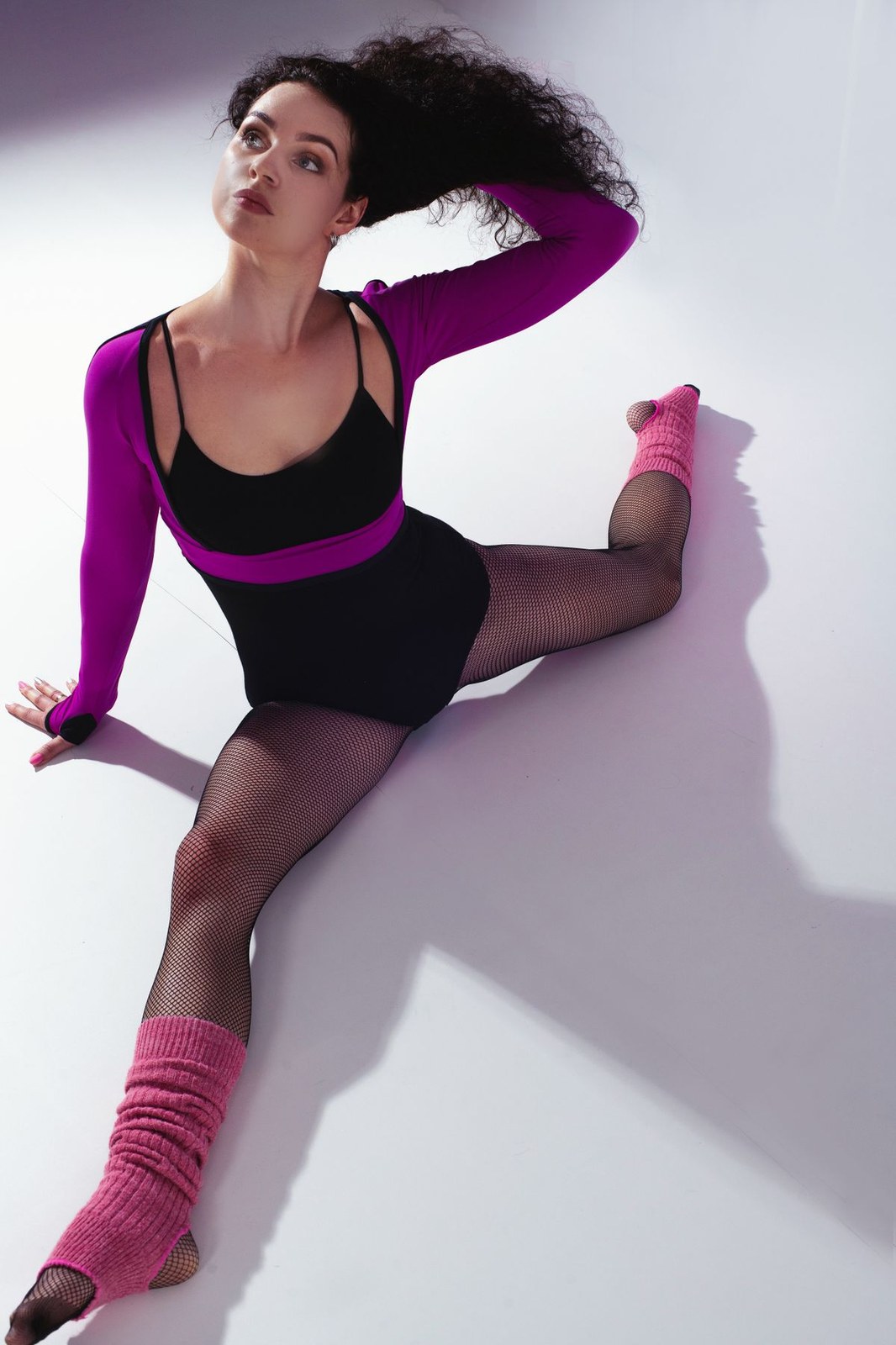
Slouch Versus Scrunch: Getting the 80s Drape Right
The signature eighties look is not tidy. It is slouched, slightly gathered and deliberately relaxed. Learning the difference between slouch and scrunch is the fastest way to make the style look current rather than like a leftover costume from a school play.
Slouch
Slouching means letting the knit fall naturally and gather in soft folds near the ankle. It works best with a ribbed knit and a slightly longer length, and it pairs beautifully with leggings and a loose sweatshirt. Slouch is casual, forgiving and the easiest version to wear every day.
Scrunch
Scrunching means pushing the knit down on purpose so it concertinas into deliberate horizontal folds. It looks more styled and a little more punk, and it works best with a dense knit that holds a fold rather than sliding back up the leg. Scrunch reads intentional; slouch reads relaxed. Both are correct.
Getting the drape to stay
Damp-block your knits the first time you wear them: spritz lightly with water, shape the folds you like, and let them dry flat. Wool and wool-blend yarns remember shape, so the folds you set will repeat the next time you pull the pair on. A firm ribbed cuff at the top also holds the slouch in place instead of letting it creep upward through the day.
Where to place the folds
Keep the deepest folds just above the ankle and let the top third of the knit stay smooth against the calf. That gives a clean line where the leg is visible and the soft texture where the interest is. Folds stacked all the way up the calf can add bulk you may not want under a fitted skirt.
Yarn choice changes how the drape behaves
Acrylic is light and springy, so it scrunches easily but can slip down over a long day. Wool and wool blends are heavier and hold a fold, which makes them better for a deliberate slouch. Cotton blends sit in the middle: less bouncy than acrylic, less warm than wool, and excellent for shoulder-season wear. If you want one pair to do everything, a wool-blend rib is the safest bet.
Styling with Leggings, Leotards and Unitards
Flared knits were born in the studio, and the pieces they pair with best still come from that world. Leggings, leotards and unitards give you a smooth base so the flare reads clearly as its own shape rather than fighting a printed trouser.
Leggings
High-waisted leggings with a cropped or tucked top create a long line, and a flare at the ankle finishes it. Choose a matte legging in black, charcoal or a deep jewel tone, and let the leg warmers carry the colour. Avoid a legging with a busy print if the knit is patterned, and check that the legging hem does not bunch inside the knit.
Leotards and unitards
A leotard worn as a top over leggings is the classic dance-studio formula, and a flared knit completes it perfectly. A unitard in a solid colour with one bright pair of knits is the simplest version of the look, and it is surprisingly wearable outside the studio with a denim jacket and trainers.
Skirts and shorts
Mini skirts and fitted shorts over leggings both work, especially when the knit is a matching or contrasting solid. Keep the hem short enough that the flare has room to sit below it; if the skirt is long, switch to a gentler flare so the lines do not collide at the calf.
Cover-ups that make it street-ready
Layer a cropped hoodie, an oversized bomber or a longline cardigan over the top. The combination of a soft, roomy top with a flared ankle creates a balanced silhouette that reads relaxed rather than dressed up, and it keeps the retro reference subtle enough for everyday wear.
Layering for warmth without bulk
Wearing flared leg warmers over a thin thermal tight keeps the leg line smooth and the ankle soft, even on a genuinely cold day. Start with a liner tight in the same colour as your leggings, add the knit on top, then check that the legging hem is not bunched where the cuff grips. If it is, roll the legging cuff up once so the knit sits against flat fabric instead of a fold.
Matching Sets: Pairing the Flare with Arm Warmers
The quickest way to make the retro look feel intentional is to repeat it. Wearing a matching set of leg and arm pieces gives the outfit a coordinated, eighties-inspired rhythm that reads as a deliberate choice rather than an accident. A good pair of matching arm warmers is the piece that turns a base outfit into a look.
Why the pairing works
Arm warmers echo the knit at the wrist and create a soft, rounded shape that balances the flare at the ankle. Together they frame the body top and bottom, which is why dance-wear sets have always used this trick. The eye reads the repeat as intentional styling rather than random layering.
How to match without matching exactly
- Same colour, different length: long leg pieces with shorter arm pieces keeps the look from becoming overwhelming.
- Same motif, different scale: a bold stripe on the leg and a finer stripe on the arm is a subtle, sophisticated match.
- Complementary colours: charcoal knits with a pastel arm piece, or an off-white arm piece with a coloured leg.
- Texture instead of colour: both in the same cream but one cable knit and one ribbed for quiet interest.
Wearing arm warmers day to day
Arm warmers work with short-sleeve tees, sleeveless tops and even over a light long sleeve for extra warmth. Push them to the forearm for a sporty look or pull them to the elbow for a softer line. A matching knit set is one of the easiest ways to make a plain base outfit feel styled in seconds.
Neon, Pastel and Sparkle: Choosing Your Colour Direction
Colour is what separates a modern flared look from a flat retro copy. The rule is simple: choose one direction and commit to it, then keep the rest of the outfit neutral so the knit can do its job.
The three colour directions
- Neon energy: hot pink, electric blue, acid green. Wear one neon pair against all-black leggings and a plain top so the colour is the star.
- Soft pastel: lilac, mint, butter yellow, powder blue. Lovely with off-white and grey, and softer for daytime wear.
- Deep neutral: black, chocolate, charcoal, cream. The most versatile option and the easiest to wear to work or class.
Adding sparkle
Rhinestones, metallic thread and lurex stripes catch the light and give the knit a studio-glam feel. Keep sparkle to one piece: sparkly leg warmers with a plain top, or a plain knit with a sparkly trim. If both the leg and the arm sparkle, the outfit starts to look like a costume rather than a choice.
What to wear underneath
Against neon, choose black or white. Against pastel, choose grey, cream or denim. Against deep neutrals, you can afford one accent elsewhere, such as a coloured bag or a bold lip, but keep the clothing itself calm. Matching your shoe colour to your knit colour is another quick way to look put together without adding anything new.
Print and pattern
If you want pattern, keep it small and repeat it: a fine stripe on the knit with a fine stripe somewhere else in the outfit. Large prints compete with the flare and break the clean ankle line that makes the style work.
Seasonal colour shifts
In autumn and winter, deep neutrals and jewel tones sit naturally with boots, wool coats and dark denim. In spring, move to pastels and off-whites so the knit reads light against bare legs and lighter layers. A single bright pair is a great way to lift a mostly black wardrobe, especially when the rest of the outfit stays tonal so the colour has somewhere to stand out.
From Dance Studio to Street: Outfit Formulas That Work
The best part of the flared revival is how easily the look crosses from the studio to the street. Here are four formulas you can assemble from pieces you probably already own, with notes on fit for a fuller calf.
Studio-to-street
Black high-waisted leggings, a fitted tank, a cropped hoodie and a bright flared pair, finished with chunky trainers. Add a tote and it works for a class, a coffee and the walk home. Choose a knit that holds its cuff so it stays put between the studio and the pavement.
Weekend retro
Denim mini skirt over opaque tights, an oversized sweater, slouchy cream knits and chunky ankle boots. This is the softest, most wearable version of the trend and the easiest to translate into cold weather.
Evening and sparkle
A slip dress or a fitted mini with sheer tights, a deep-neutral knit with a metallic thread, and heeled boots. The flare adds softness to a dressed-up look without adding weight, and it keeps the outfit from feeling too formal.
Layering for cold weather
Put a thin sock or a thermal tight underneath, then the flared knit on top, then a tall boot so the flare sits over the boot shaft. Choose a denser knit for cold days, and keep a spare pair in your bag because these are the accessory people ask to borrow.
Fit note for a fuller calf
Look for a generous top band and a true plus-size range rather than relying on extreme stretch. A cuff that fits without pinching keeps the flare sitting where you put it, and it is the difference between wearing the style once and wearing it all season long.
FAQ: Flared Leg Warmers, Answered
Do flared leg warmers work on curvy legs?
Yes. The flare adds a gentle curve at the ankle rather than a hard horizontal line, and it softens the transition between leg and shoe. Choose a knit with a snug, ribbed top and a moderate flare, and pair it with leggings or tights so the shape reads clearly. If the top band sits comfortably on your calf without pinching, the drape will stay where you place it.
What shoes work best with a flared cuff?
Chunky trainers, ballet flats, ankle boots and platforms all work well. The key is to let the flare land either just above the shoe or sweep over the top of it. Very slim, delicate heels can get lost under a deep flare, so choose a gentler flare for those occasions.
Can I wear them over skinny jeans?
You can, but keep the flare slim and the denim tight, otherwise the ankle area becomes bulky and the knit fights the trouser seam. Flared knits usually look best over leggings, tights or bare legs, where the shape of the knit is fully visible and the flare has room to move.
How should I wash and store knitted leg warmers?
Hand wash in cool water with a gentle knit detergent, press the water out in a towel rather than wringing, and dry flat while reshaping the flare. Store folded flat rather than hung, and give the knit a day to rest between wears so the ribbing recovers its shape and the cuff keeps its grip.
Ready to find your pair? Shop all thigh high socks — plus sizes, striped, fishnet and over-the-knee styles, all in one place.