Fluffy leg warmers are the fastest route into the kawaii trend without rebuilding your wardrobe. One pair of plush, fuzzy warmers changes the temperature of an outfit instantly — softer, warmer, more playful — and it works as well over tights and a slip dress as it does over jeans and trainers. Whether you are drawn to faux fur, thick plush or a leopard-print finish, this guide covers the textures genuinely worth buying, how to style fluffy leg warmers with skirts, dresses and shorts, how to layer them over tights without bulk, and how to keep the pile looking full instead of flattened.
Why Fluffy Leg Warmers Took Over Fall and Winter
Leg warmers have been in and out of fashion for forty years, but the fluffy version has stuck for a reason that has nothing to do with nostalgia. Three things pushed it to the front of the rail.
Comfort became the point
For a few seasons now, getting dressed has been about feeling good rather than looking sharp at all costs. Fluffy leg warmers sit squarely in that mood: they are soft against the skin, they are warm, and they make an ordinary outfit feel like a treat. If you want the wider trend picture, our Y2K leg warmers range shows the full spectrum from ribbed knit to full faux fur.
Texture is the cheapest way to make an outfit new
You do not need new clothes to feel like you have new clothes. Adding one textural element — a fuzzy cuff at the ankle — changes how an entire look reads, and it costs a fraction of a new coat.
The kawaii influence went mainstream
Cute, soft and deliberately playful styling moved from a niche internet aesthetic into everyday wardrobes. Fluffy warmers are the easiest entry point: one pair, no commitment, visible payoff. They photograph well, they feel good, and they work on every body size.
Why they suit almost every body
There is no rigid shape to fit into here — no zip, no waistband, no structured panel. A fluffy warmer rests on the calf, warms the ankle and ends wherever you decide it should end. That is a big part of why the trend crossed over from the internet so quickly: it asks very little of you and gives a lot back, whether you are a size 12 or a size 26.
What changed this season
The fluff got more considered. Instead of novelty prints on thin yarn, the strongest pairs now use a denser pile that keeps its shape, a wider cuff that stays put on a fuller calf, and finishes that survive more than a few washes. Shorter, denser plush has quietly replaced the very long faux fur of a few seasons ago, which means the trend looks better in daylight and wears far better over a winter.
Faux Fur, Plush and Leopard: Choosing Your Texture
Not all fluff behaves the same way. The texture you choose decides how warm the warmer is, how it wears over time, and what it pairs with. Here is the honest breakdown.
Faux fur
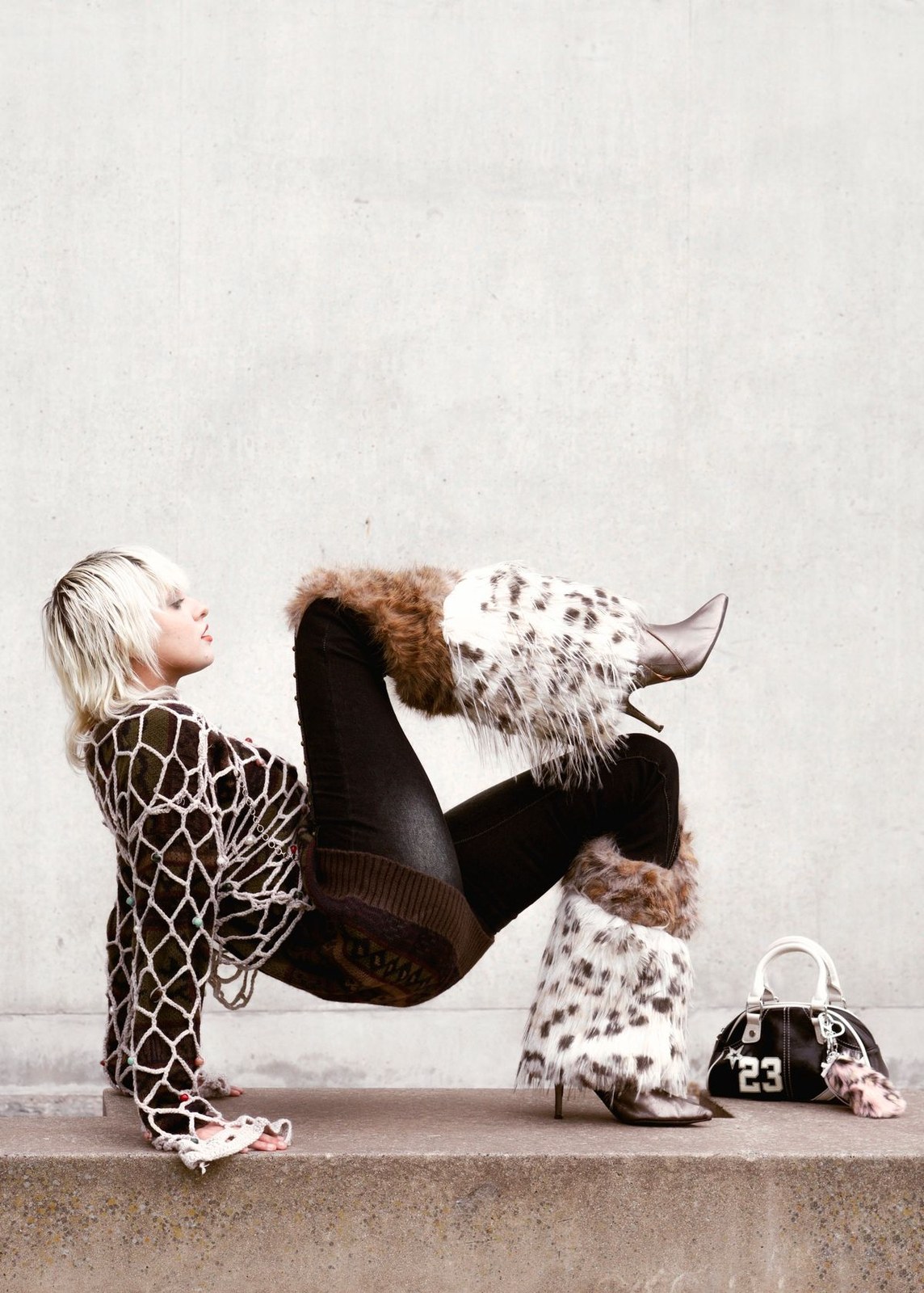
The longest pile and the most dramatic look. Faux fur is warm, sculptural and reads as a statement, which makes it perfect over boots and a mini skirt. The trade-off is that a long pile mats more easily and needs brushing, so treat it as the piece you wear for occasions rather than every day.
Plush and sherpa
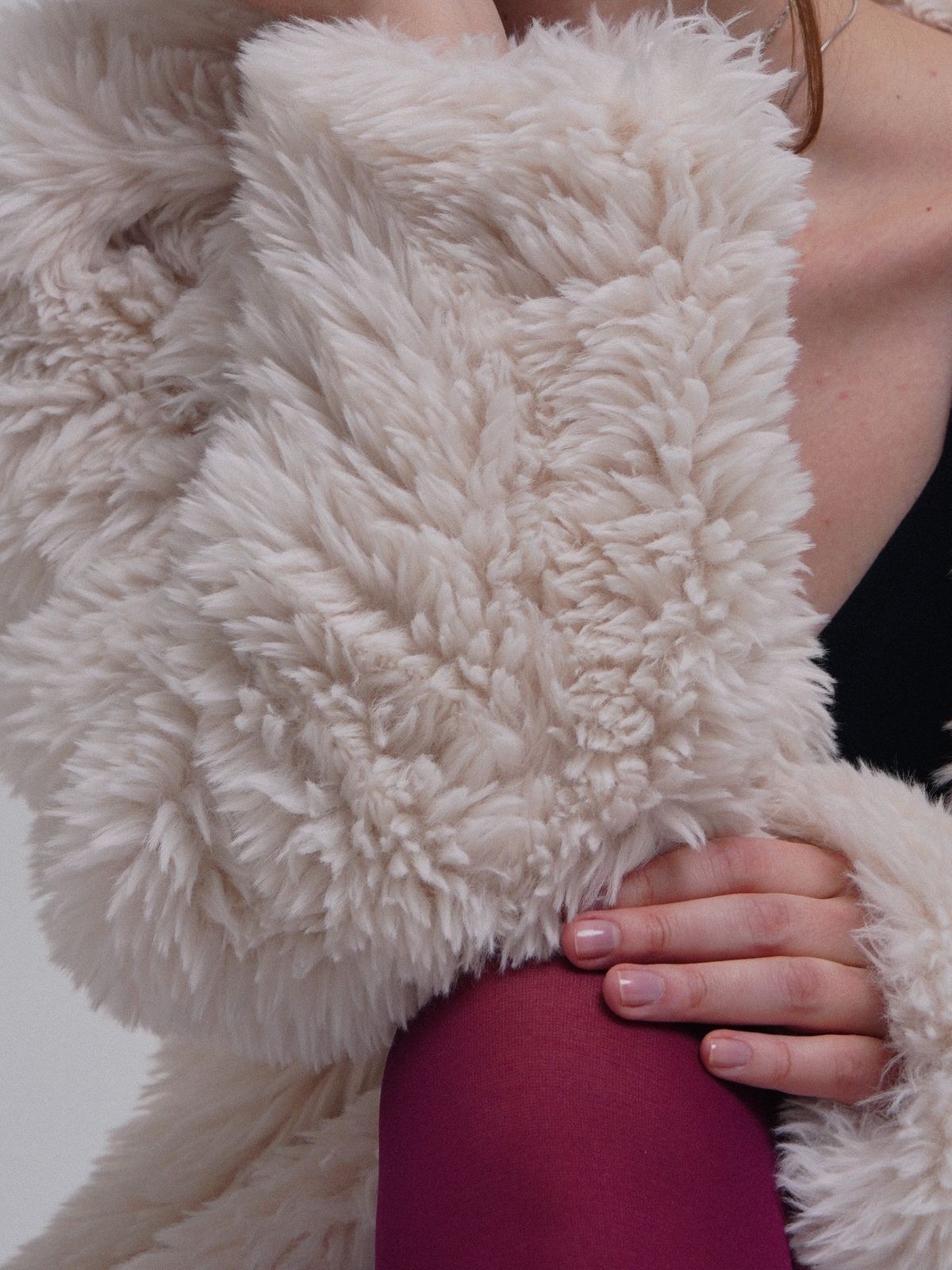
A shorter, denser pile with a soft, almost velvety hand. Plush holds its shape far better than long faux fur, stays warm, and is the most versatile of the fluffy textures. If you want one pair you can wear on repeat, buy plush or sherpa.
Leopard and printed fluffy
A printed pile — leopard, cow, marble or tie-dye — gives you pattern and texture in a single piece. Because the print is doing the work, keep the rest of the outfit plain: a black mini, opaque tights and a single knit.
Cable and chenille "fluffy"
If you want the soft look with a little more structure, a brushed chenille or fuzzy cable knit gives you fluff with body. These are the warmers that stay exactly where you put them, and they are the easiest to wash.
Short pile versus long pile: a quick comparison
Long pile — faux fur and shaggy finishes — gives the biggest visual impact and the most warmth, but it mats faster and needs regular brushing. Short pile — plush, sherpa, brushed chenille — is less dramatic but far more durable, easier to clean and better for daily wear. If you are choosing your first pair, start short. If you already own a practical pair, add a long-pile one for nights out and photographs.
Why Fluff Works: Warmth, Softness and the Kawaii Factor
Trapped air is real warmth
A fluffy pile works the same way a fleece jacket does: thousands of tiny fibres trap air, and still air is an excellent insulator. That is why a plush warmer feels noticeably warmer than a thin knit one of the same size — the fibre itself is doing something. Over tights, a pair of fluffy leg warmers is a genuine seasonal upgrade, not a decorative one.
Softness you can feel all day
There is a practical reason fluffy warmers get worn constantly: they never dig in. A wide, soft cuff distributes pressure across the calf instead of concentrating it, so you can wear them for a full day without that tight band feeling. If you have ever taken off a pair of socks the second you got home, this is the difference you will notice.
Volume balances a short hem
Fluff adds legitimate volume at the calf, which balances two very different silhouettes: a hem that ends high, like a mini skirt or shorts, and a soft dress that needs grounding. In both cases the warmer gives the outfit a base so it stops floating.
Warmth without the weight
A good plush warmer adds noticeable warmth for very little weight, which matters if you dislike heavy layering. Instead of adding a second pair of tights or a thicker sock, you add softness to the outside. It is a useful trick for transitional weather, when a coat is too much but bare ankles are too little.
Fit notes for wider calves
Fluffy warmers are unusually forgiving because the pile compresses rather than cutting in, but the cuff still needs to be wide enough. Look for a band of at least four centimetres, a soft elastic rather than a tight rib, and a style that lists a calf measurement. A slightly loose cuff on a soft pile stays up well, because the friction of the fluff does much of the work that grip alone has to do on a smooth knit.
Styling Fluffy Leg Warmers with Skirts, Dresses and Shorts
This is where fluffy warmers earn their place. Four pairings cover almost every outfit in a cold-weather wardrobe.
Mini and pleated skirts
Tuck a fitted knit or a baby tee into a pleated mini, add opaque tights and pull the warmers up to just below the knee. The pile softens the sharp hem and stops the outfit looking like a school uniform. A cream sherpa warmer with a black pleated skirt is the most reliable version of this look.
Midi and maxi dresses
A long jersey or satin dress with fluffy warmers at the ankle is a genuinely elegant combination, especially in cream, chocolate or dusty lilac. Let the dress break just above the top of the warmer, so you see a clear band of fluff rather than a sliver peeking out.
Shorts and bike shorts
Yes, this works — and it is the most kawaii version of the trend. Wear opaque tights or thermal leggings under the shorts, then warmers over the top. Choose a warmer in the same colour family as the shorts so the silhouette reads as continuous rather than chopped up.
Over jeans and leggings
The everyday interpretation. Fluffy warmers over plain black leggings are cosy and forgiving; over a straight-leg jean they add a soft contrast at the ankle. In both cases a cropped or straight hem looks cleaner than a wide, fluid trouser, which competes with the pile.
What to wear on the top half
A fluffy warmer needs a simple top half, or the outfit becomes busy. Fitted knitwear, a cropped cardigan, a plain tee under an oversized blazer, or a single-colour dress all work well. Avoid pairing fluffy ankle warmers with a fluffy jumper unless you deliberately want a head-to-toe texture story — and in that case keep every piece the same colour so it reads as a look rather than an accident.
Layering Over Tights, Leggings and Socks Without Bulk
Bulk is the one thing that will put you off a fluffy warmer, and it is entirely avoidable if you get the order of layers right.
Start with a thin base
Choose a base that is thin and smooth: sheer or medium opaque tights, a lightweight thermal legging, or a fine merino sock. Anything thick and fluffy underneath a fluffy warmer creates twice the volume and half the comfort.
Order of layers
Sock first, then tights or leggings, then the warmer. Putting the sock closest to the skin keeps your foot warm, the tights grip the sock so nothing rides down, and the warmer sits on top where it adds softness rather than slipperiness.
Avoiding the lumpy ankle
The tell-tale lump happens when the tights, the sock and the warmer all end at the same point. Stagger the hems: tuck the sock into itself at the ankle, let the tights finish higher, and start the warmer a good two fingers above the tights' hem. Nothing overlaps in one thick band, and the leg stays smooth.
When to size up
If you plan to wear your fluffy warmers over fleece-lined tights in deep winter, buy one size up on purpose. Fleece linings add real thickness, and a warmer that fits perfectly over sheer tights will feel tight over fleece. Our plus size leg warmers section lists calf measurements on every style, which takes the guesswork out of it.
Sock and warmer combinations that work
Three combinations cover almost every situation. Fine merino socks with sheer tights for autumn days that start cold and warm up by lunch. Fleece-lined tights with a thin cotton sock for deep winter. Plain cotton ankle socks under leggings for indoor-to-outdoor days, because the sock stops the leggings riding up while the warmer adds warmth on top. In every case the sock is doing the gripping, so it needs to be snug rather than slouchy.
Colour and Texture Pairings for a Cozy Palette
Fluffy warmers are a good place to experiment with colour, because the texture keeps even unusual shades wearable.
Cream and oatmeal
The most versatile and the softest-looking option. Cream fluff pairs with black, grey, camel, denim and every pastel, and it makes an all-black outfit look intentional rather than severe. It is also the shade that shows dirt fastest, so choose it in a plush that brushes clean easily.
Blush and lilac
Pink and lilac fluff are the most kawaii choices, and they work beautifully with grey knitwear and white trainers. Balance them with something neutral on top so the outfit reads as styled rather than themed.
Chocolate and black
Rich brown fluff is the quiet luxury option and looks expensive with camel, oatmeal and gold jewellery. Black fluff is the most practical: it wears beautifully, works with everything, and looks sleek over black tights.
If you want the fluff to be the loudest element, pair a printed or leopard warmer with plain clothing. If you want a calmer look, keep the warmer tonal — cream on cream, chocolate on brown — and let the texture do the talking instead of the colour.
Metallics and small accents
If cream feels too plain, a warmer with silver or gold thread through the knit adds a subtle sparkle that reads festive without being seasonal-only. Pair metallic-touched warmers with black tights and a plain dress for parties, or with denim for an everyday Y2K nod.
Prints, patterns and the one-colour rule
When your warmers are printed or leopard, treat them as the pattern in the outfit and keep everything else solid. When they are plain, you have room to play with a patterned skirt or a printed knit. The quickest way to test a combination is to lay the pieces on the bed together and step back: if you can count more than three colours, take one away.
Keeping the Fluff Looking Good: Care, Brushing and Storage
Fluffy warmers go flat for exactly two reasons: heat and compression. Both are easy to avoid.
Washing
Wash inside out in a mesh bag on a cold, gentle cycle with a small amount of mild detergent. Never use hot water and never use fabric softener — softener coats the fibres and collapses the pile. Squeeze water out gently; do not wring or twist.
Drying
Lay flat on a towel, reshape the cuff by hand and let them air dry away from radiators and direct sun. Heat is the enemy of a soft pile, and a tumble dryer will flatten faux fur in a single cycle.
Brushing and fluffing
Once fully dry, brush the pile gently with a soft pet slicker brush or a wide-tooth comb, working in one direction. This lifts the fibres back up and restores the bounce. Do it after every two or three wears and long-pile faux fur will keep looking new for seasons.
Storing without flattening
Never fold a fluffy warmer tightly into a drawer. Roll it loosely and stand it upright, or hang it by the cuff from a clip hanger. If you are storing them for the summer, put them in a breathable cotton bag rather than a vacuum bag, which crushes the pile permanently.
Static and pills
Synthetic fluff can build static in dry winter air. A light spritz of water mixed with a drop of hair conditioner on your hands, smoothed over the outside, settles it instantly. Small pills should be trimmed with scissors rather than pulled off, which drags more fibre loose.
Reviving a pair that has gone flat
Flattened pile is rarely permanent. Mist the surface lightly with cool water, brush the fibres upward with a soft slicker brush and let the warmers air dry flat. A very light pass with a handheld steamer held at a distance can also lift matted fibres, but keep it moving and never press an iron near them. If the pile has genuinely thinned at the cuff, that pair becomes your indoor pair — and the replacement is worth buying in a denser plush.
FAQ: Fluffy Leg Warmers, Answered
Are they warm enough for a proper winter?
Yes. A plush or faux fur pair over opaque or fleece-lined tights traps air the same way a fleece layer does, and it covers the cold area between a short hem and a boot. For long periods outdoors, add a thin thermal sock underneath and they are genuinely winter-proof.
Will they stay up on wider calves?
They will if the cuff is wide and elastic rather than narrow and tight. Look for a design with a soft, broad band and a silicone grip strip, measure the widest part of your calf, and choose by that number rather than an assumed size. A wider band spreads the tension and stays up better, not worse.
Can they be worn over jeans?
You can, and the cleanest version is over a straight-leg or cropped jean in a similar colour. Avoid very wide or fluid trousers underneath, because two large volumes at the ankle compete with each other and the outfit loses its shape.
How do I stop faux fur from matting and looking tired?
Cold gentle washes in a mesh bag, air drying flat, and a gentle brush in one direction once the pile is dry. Never tumble dry them, and never store them folded or vacuum-packed. Those four habits alone will keep a good pair looking full for years.