Most people reach for tights when the weather turns cold because it is the obvious choice, and then spend the day negotiating with a waistband that rolls, presses or slowly slides down. Opaque over the knee stockings offer the same warm, covered feeling without any of that, because the garment starts at your mid-thigh and stops there. There is no waistband digging into your middle, no gusset to pull straight, and no second skin hugging a body that would rather be comfortable. This guide compares extra-long opaque stockings with tights, explains how they sit and stay put on fuller thighs, how to choose the right size, how to layer them under skirts, dresses and shorts through autumn and winter, which boots and shoes pair best, and how to wash them so both the knit and the grip last.
Why Opaque Over the Knee Stockings Beat Tights for Many Curvy Women
Comfort is personal, so this is not a campaign against tights. It is simply worth knowing exactly what changes when you swap one full garment for two separate ones.
The waistband problem
Tights have to grip around your middle to hold themselves up, which means every pair is a compromise between staying put and not pressing in. On a plus size body that pressure usually lands right where you least want it, across the softest part of the stomach or in the crease under the belly, and it gets worse after a meal or a long drive. A stocking anchors at the thigh instead, so your waist, hips and stomach stay completely free.
You control your own temperature
Two separate stockings let you dress for the weather you actually have. Wear them under a long skirt on a freezing morning, then step into a warm afternoon without changing your outfit. With tights, warmth is all or nothing: once they are on, they stay on. With stockings you can also choose a different weight for each season and keep the same skirts in rotation all year.
Bathroom breaks and layering, without the fuss
Anyone who has wrestled with a tight beneath a jumpsuit knows how much this matters. Stockings simply roll down and back up. They layer more easily too, sliding under leggings, wide leg trousers and long knit dresses without adding bulk or a second band around your middle, and they let you wear a shorter hem in cold weather without committing to a full tight.
When tights are still the better choice
Be honest about the trade-offs. Tights are quicker to put on, they cover the foot and ankle in one step, and under a very fitted bodycon dress they create an uninterrupted line. If you are wearing a short fitted dress in January, a good opaque tight may still be the simplest answer. Stockings win on comfort, flexibility and warmth without pressure, which is what most of us are really shopping for.
How Opaque Over the Knee Stockings Sit on Your Thigh
Placement is the difference between a pair you forget about and a pair you fight with all day, so it is worth getting the top of the stocking right before anything else.
Where the band lands on a fuller thigh
The top of an over the knee stocking should finish on the firm, fullest part of your upper thigh, roughly a hand's width below the crease of your leg. Sit it there rather than pushing it up into the crease, where the skin is softer and the leg narrows, because a narrow point is exactly where bands begin to roll. A wide cuff spreads pressure over more surface, which is why a generous eight to ten centimetre band holds far better than a thin one.
What actually keeps them up
A good pair relies on either a wide, densely knitted cuff that grips through gentle compression, or a soft silicone strip inside the top that adds friction. Both work best against clean, dry skin. A silicone band gives the most secure hold on smooth thighs, while a plain knit cuff suits anyone who dislikes the feel of silicone against the leg. Either way the stocking must be the right size: too small and it digs, too large and it slides.
Over the knee, above the knee and thigh high
These terms get used loosely, so trust the measurement rather than the label. Over the knee styles typically finish just above or slightly higher than the knee, above the knee styles stop on the lower thigh, and thigh highs reach the upper thigh. Extra-long over the knee styles are the ones designed as a tights replacement, and they will sit higher on a shorter leg and lower on a longer one, which is completely normal.
Avoiding roll-down and pinch marks
If a band rolls, it is usually too small or has been stretched too far up the leg. If it leaves deep marks after an hour, size up. If it slides, check that your skin is free of lotion and dust the thigh lightly before dressing. Easing the stocking up in smooth stages rather than dragging it in one hard pull also keeps the band from distorting out of shape.
Opaque Coverage and Warmth, Explained
Opaque is a word worth pinning down before you buy, because it is used to describe everything from a dense winter knit to something far finer.
What opaque actually means
An opaque knit covers the leg completely: you cannot see your skin tone through it, only the colour of the yarn. That is the practical difference between opaque and semi-sheer, and it matters both for warmth and for how the leg reads under a hem. Opaque also creates an even surface across the leg, so you never have to think about marks or uneven tone showing through on a cold day.
Denier and knit weight
Most opaque stockings sit between about 60 and 120 denier, with the heavier end giving the most warmth. Denier is only part of the story though: a tightly knitted 80 denier can feel warmer than a loosely knitted 100, because warmth comes from air trapped in the knit, and a dense knit traps more of it. If warmth is your priority, look for a stocking described as opaque or thermal rather than simply as high denier.
Breathability and indoor comfort
Opaque does not have to mean stifling. Natural fibre blends and well ventilated knits keep the leg comfortable in a heated office, and because there is no tight, nothing traps heat around your middle. Many people find they can wear an extra-long opaque stocking indoors far more happily than a comparable tight, and they can simply roll them down for the journey home.
Footed or footless
Footed styles cover the toes and suit wearing with shoes, especially in deep winter when you want warmth all the way down. Footless styles stop at the ankle, which is useful if you want your own socks or a shoe that hugs the foot. For a true tights replacement, footed is usually the closer match; under boots with thick socks, footless is often the better pick.
Sizing and Measuring for a Secure Fit
Ten minutes with a soft tape measure saves you from a season of stockings that will not stay where you put them.
Measure your thigh and your height
Measure around the fullest part of your upper thigh, keeping the tape level and snug but never pulled tight, then note your height. Thigh circumference tells the brand how much room the band needs, and height tells it how long the leg and foot should be. If you are tall, check the length measurement before you fall in love with a colour, because a stocking that is too short will not stay up.
Reading the size chart properly
Choose the size where both your thigh and your height sit comfortably inside the range, not on the edge of it. If your thigh fits one size and your height fits the next one up, take the larger size, since extra length is much easier to live with than a band stretched to its limit. Brands that publish a thigh range rather than only a dress size are usually the ones worth buying from.
Choosing between two sizes
Size up if you plan to wear them all day, if you will layer them over leggings or tights, or if your thigh measurement sits at the very top of the smaller range. Choose the smaller size only when your measurement is comfortably in the middle and you want the closest possible line under a fitted dress.
Signs of a poor fit
Rolling bands, deep marks, pins and needles in the leg, or stockings that end up around your calves by lunchtime all point to the wrong size. Bunching at the ankle usually means the leg length is too long for you, while a band that refuses to sit flat suggests it is too tight. If you can, exchange rather than persist, and check the sizing of the next pair before ordering again.
Layering Under Skirts, Dresses and Shorts for Autumn and Winter
This is where extra-long opaque stockings earn their place in a cold-weather wardrobe.
Mini and midi skirts
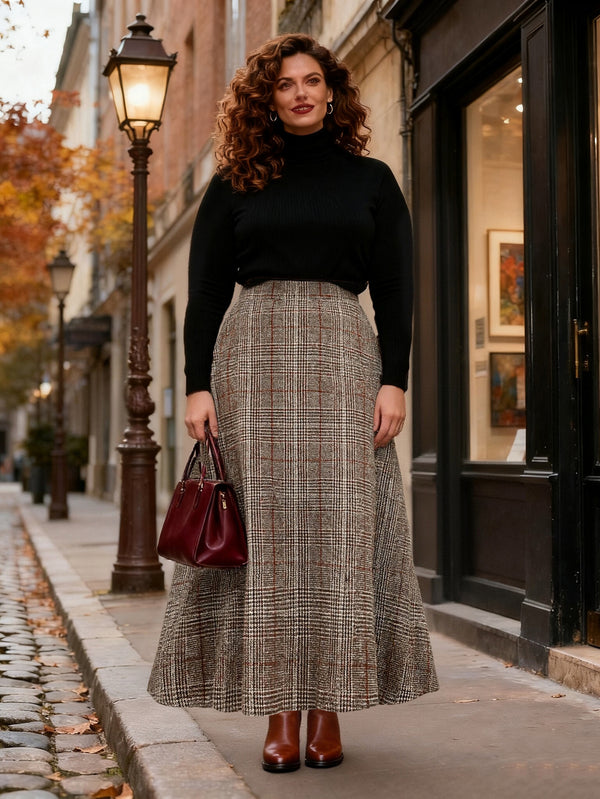
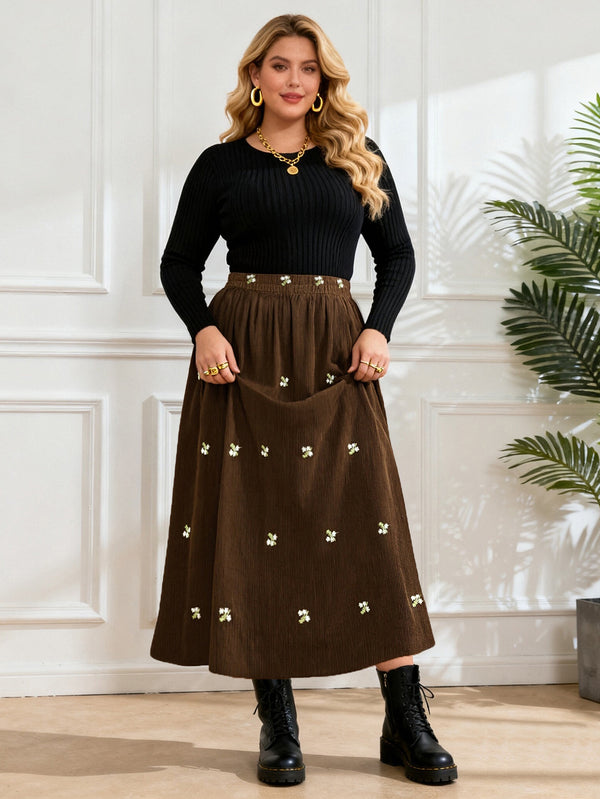
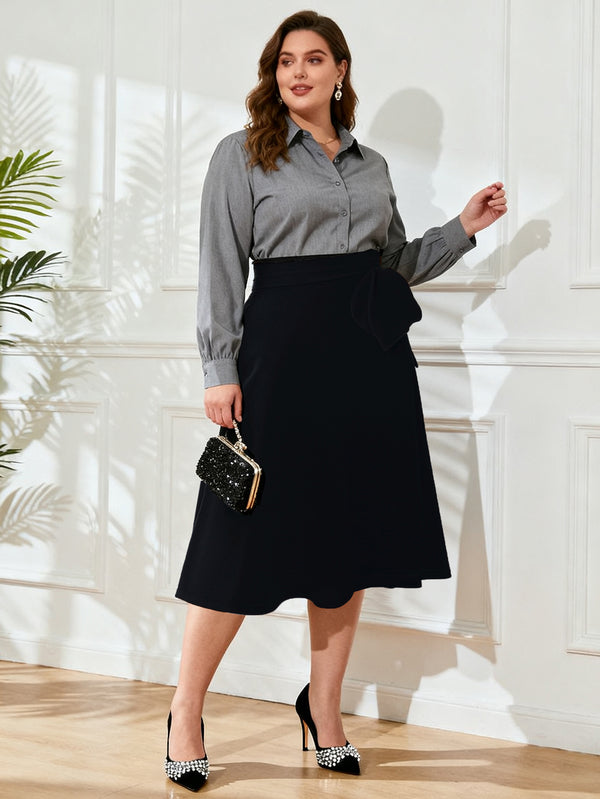
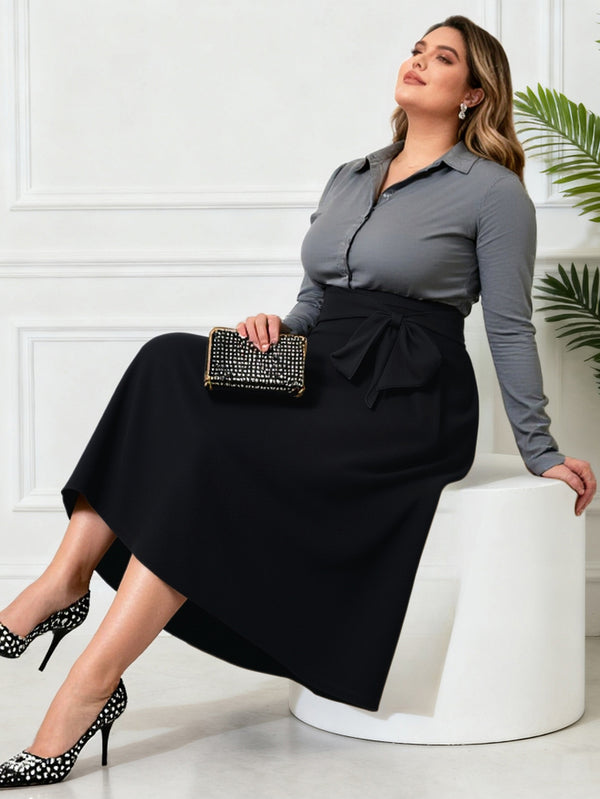
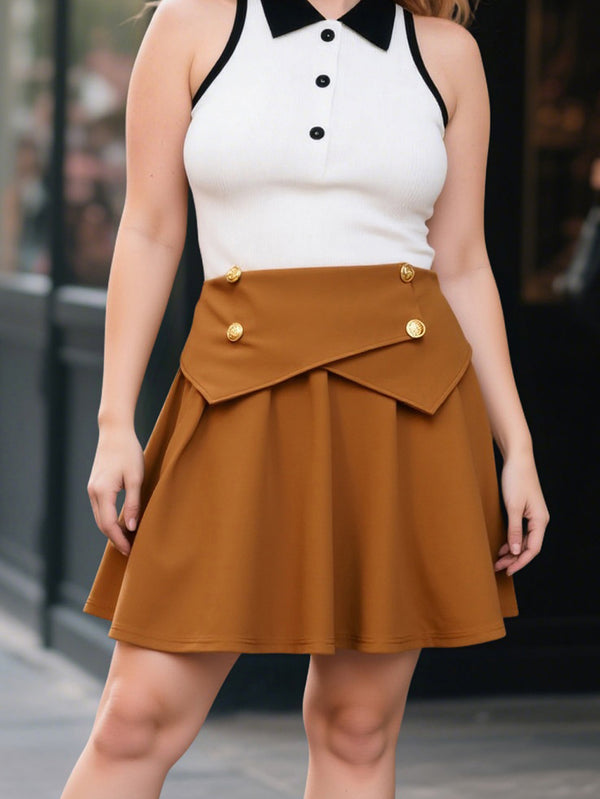
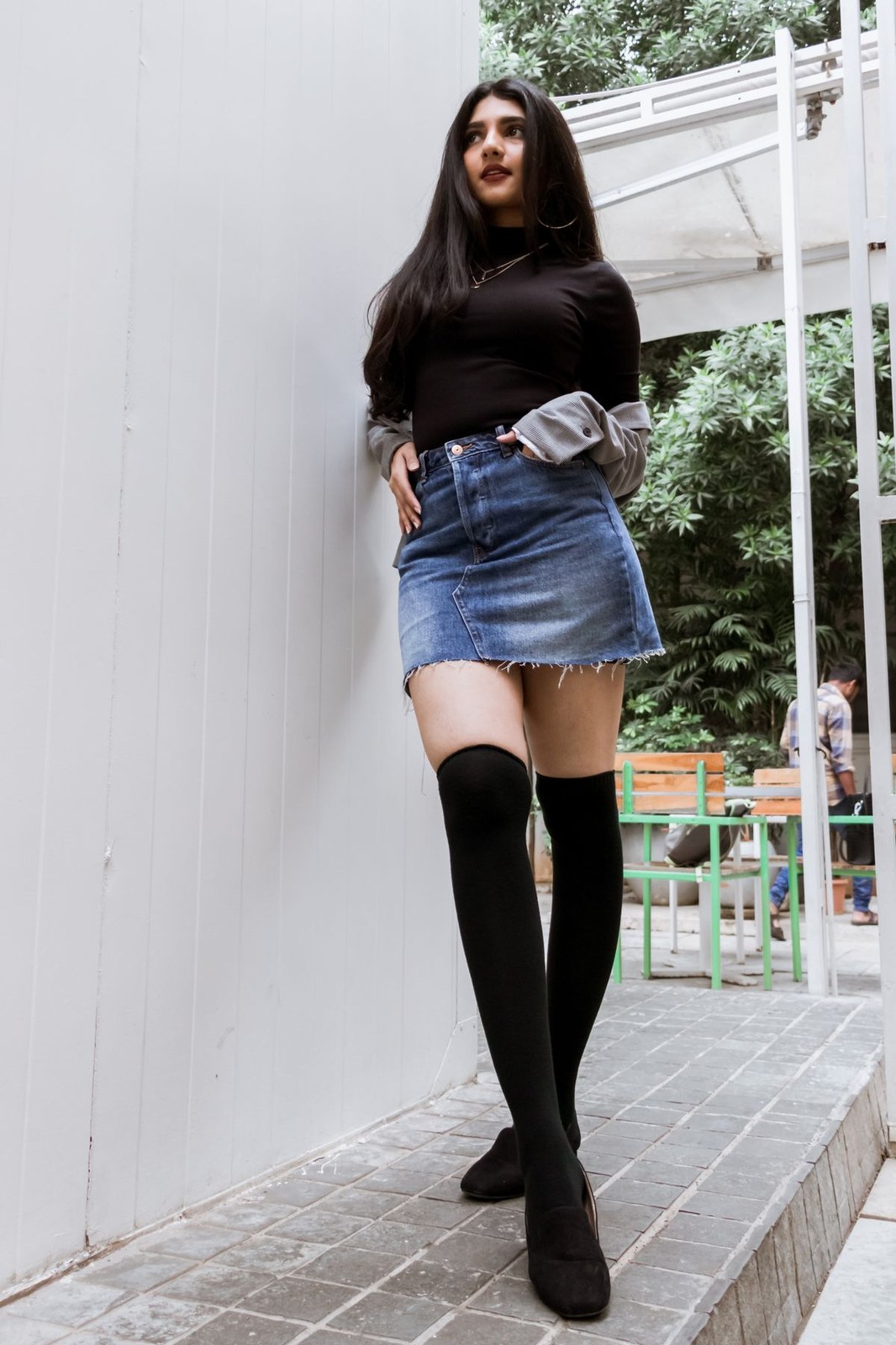
Under a mini, an opaque stocking gives coverage and warmth with none of the tight anxiety, and the band sits neatly out of sight beneath the hem. With a midi, aim for a stocking that reaches well above the hem so no band of bare skin appears when you sit down. A leather, denim or tailored mini with a chunky knit above and boots below is the classic combination, and it works just as well on a curvy frame.
Sweater dresses and knit dresses
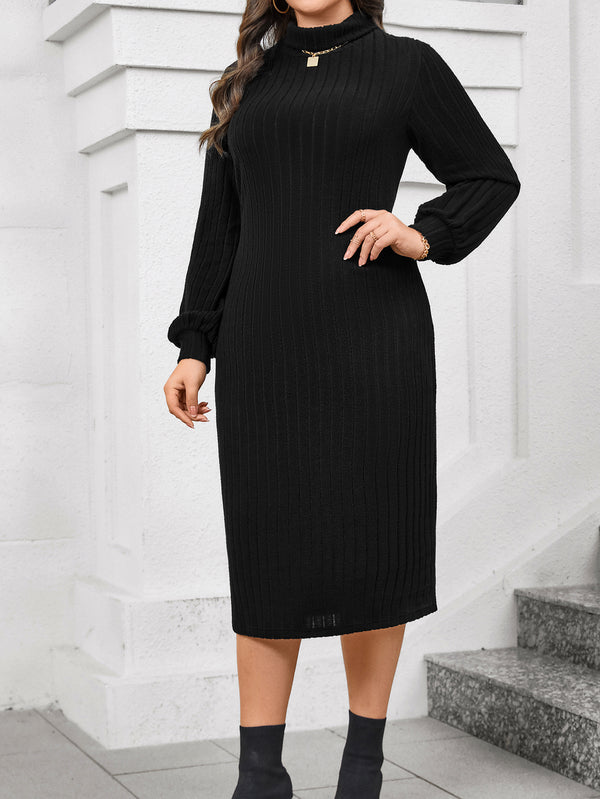
A long knit dress over opaque stockings is the simplest warm outfit there is. Because there is no waistband, nothing competes with the dress, and you can tuck an extra layer into the skirt without creating lines. Choose stockings a shade darker or lighter than the dress rather than an exact match, so the two pieces read as deliberate rather than accidental.
Shorts with boots
Tailored shorts, wool shorts and even denim shorts work through autumn with opaque stockings and tall boots. The stocking closes the gap between the hem and the boot, which is exactly the coverage tights would give, but without pressure around your middle. Add a turtleneck and a long coat and you have an outfit for a genuinely cold day.
What to wear above the waist
Keep the top half as warm as the bottom and the whole outfit looks intentional: a fine merino base layer under a jumper, a puffer vest over a hoodie, or a longline blazer over a knit. Because the stockings are doing the work on your legs, the upper layers can stay simple and unstructured. Our over the knee socks and stocking ranges are both worth a look if you like to mix weights across the season.
Shoes and Boots That Work With Opaque Stockings
An opaque knit is forgiving with footwear, but a few pairings consistently look better than the rest.
Ankle boots
Ankle boots with opaque stockings leave a clear length of covered leg between boot and hem, which is both flattering and warm. Chunky lug soles, Chelsea boots and heeled ankle boots all work well; just smooth the stocking into the boot rather than letting it bunch at the top, and check the cuff of the boot is not so tight that it presses a mark into your calf.
Knee high and tall boots
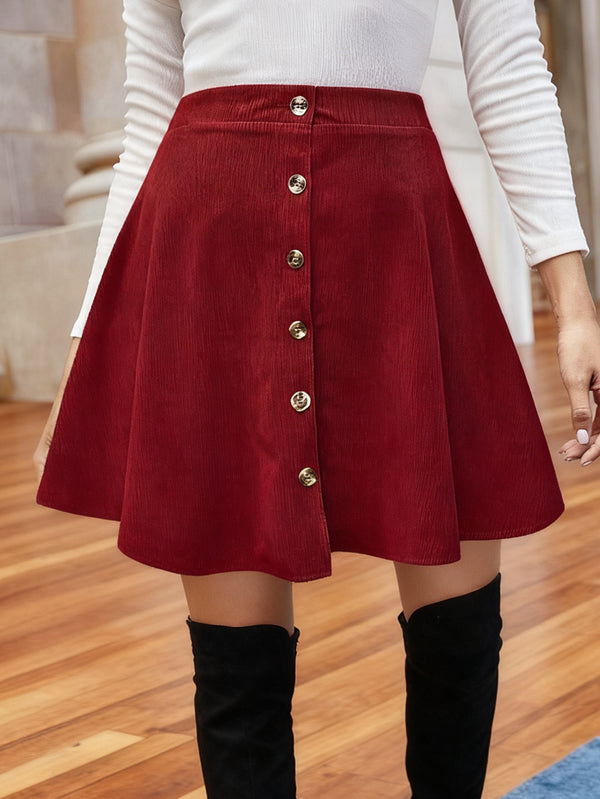
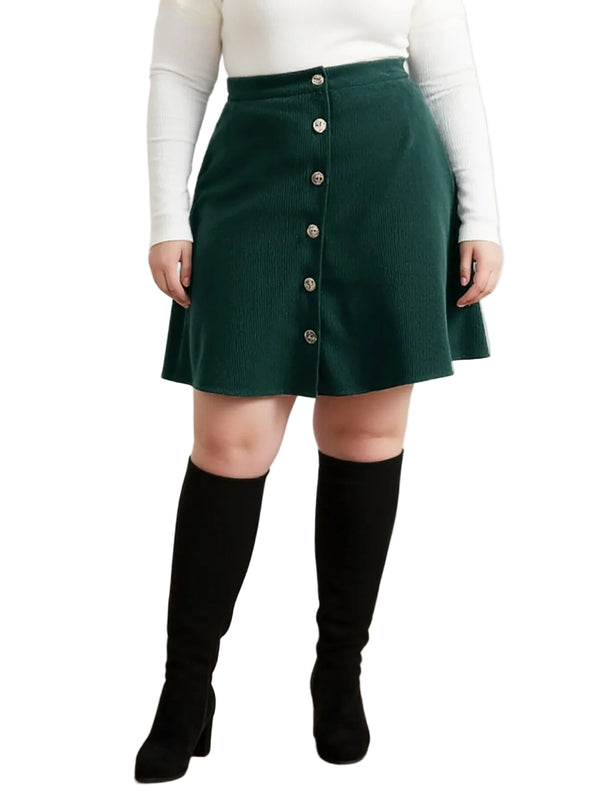
Knee high boots over opaque stockings are the warmest combination in this guide. The stocking finishes just above the boot top, so there is no gap and no cold spot, and the layered silhouette looks deliberate. If your boots come above the knee, choose a longer stocking so the band stays well above the boot and out of sight.
Loafers, brogues and Mary Janes
For a smarter, more tailored look, opaque stockings with loafers or brogues work beautifully, especially with pleated skirts and wool trousers. Mary Janes add a softer, slightly vintage feel. This is the pairing where footless styles make the most sense, since the ankle can stay clean and close-fitting inside the shoe.
Heels, platforms and sneakers
Opaque stockings with heels are a modern, confident pairing, and platforms deliver the same effect with more comfort. White sneakers over opaque black stockings is a casual combination that still looks considered. Match tone where you want a longer line and use contrast where you want the shoe to become part of the outfit.
Washing, Care and Making Opaque Stockings Last
An opaque knit is hardy, but the band is the part that decides how long a pair stays wearable, so give that top section a little extra care.
Hand washing
Wash in cool water with a gentle detergent, pressing the stocking gently through the water rather than rubbing or twisting it. Rinse until the water runs clear. Skip fabric softener, which leaves a film that reduces the grip of a silicone band and coats the fibres, and keep opaque stockings out of a hot machine wash, which shrinks the knit and ages the elastic.
Drying and storing
Squeeze the water out gently and lay the stockings flat on a towel to dry, away from radiators and direct sun. Never hang them by the toe, which stretches the leg, and never tumble dry. Store them folded flat in a drawer or a fabric pouch, away from anything with hooks, zip teeth or velcro that could catch the knit.
Pilling, snags and the band
A small pill can be trimmed with a fabric shaver or eased to the inside of the stocking rather than tugged off. Deal with the band early if it starts to feel loose: a gentle hand wash and an air dry usually restore grip, and a band that has stretched permanently means it is time to replace the pair. Lightly powdering the thigh also helps a silicone band that has become less tacky with wear.
Rotation and replacement
Owning two or three pairs and rotating them is the single biggest thing you can do to extend their life, because a knit recovers better with rest. Replace a pair when the band no longer holds, when the knit has gone thin and shiny at the knee, or when runs keep appearing in the same place. With hand washing and rotation, most people get several seasons out of a good pair. Browse our stay up stockings to find opaque weights and colours that suit how you layer.
FAQ: Opaque Over the Knee Stockings
Are opaque over the knee stockings warm enough instead of tights?
Yes, in most autumn and winter conditions, especially in a dense opaque knit of 80 to 120 denier worn with boots. They cover the same part of the leg where most heat is lost, from the mid-thigh down, while leaving your waist and stomach completely free. For the coldest weeks, look for a thermal or fleece-lined version.
Will they stay up on fuller thighs?
They will if the band is wide, the size is correct and your skin is clean and dry. A silicone grip or a dense knit cuff of eight to ten centimetres holds well on a fuller thigh, and sizing up rather than down is usually the key to a band that stays put without digging in or rolling.
Can I wear opaque stockings under trousers or leggings?
Absolutely. Opaque stockings layer smoothly under wide leg trousers, leggings and jumpsuits because there is no waistband to add bulk, and they bring real warmth to a winter outfit without a second layer around your middle. Footless styles are especially comfortable for this kind of layering.
How are they different from a pair of socks?
They do a different job. Knitted socks are casual and usually shown off with a folded cuff, while opaque stockings are finer, smoother and designed to be worn in place of tights under skirts and dresses. Many people own both and choose based on the outfit rather than the weather alone.