There is something quietly revolutionary about pulling on a pair of plus size dungarees and realising they were made to fit your body, not the other way around. If you have spent years convinced that bib-and-brace styles were off-limits to curvy figures, this is your gentle invitation to think again. Dungarees are one of the most forgiving, comfortable and genuinely fun pieces you can add to a plus size wardrobe, and the modern cuts available today are a world away from the stiff, awkward fits of the past.
Why Plus Size Dungarees Belong in Your Wardrobe
Comfort is the first reason to love plus size dungarees. The bib-and-brace construction distributes weight evenly across your shoulders rather than digging into your waist, which makes them a dream for long days when you want to feel put-together without fuss. There is a relaxed ease to the silhouette that works whether you are running errands, meeting friends, or simply lounging at the weekend. Unlike jeans that can pinch at the waistband or trousers that need constant adjusting, dungarees stay put and let you move freely.
Versatility is the second reason. A single pair of dungarees can read as casual with a plain tee, polished with a turtleneck, or playful with a crop layer peeking out. Because the shape is so recognisable, it becomes a reliable uniform you can reach for again and again without ever feeling like you are repeating an outfit. You can dress them up with a blazer and loafers or keep things easy with trainers and a tote, and the same garment carries you through both moments.
Confidence is the third reason, and arguably the most important. Dungarees celebrate the body instead of shrinking from it. The adjustable straps let you set the fit exactly where you like, and the roomy cut gives you space to move, breathe and live. For many plus size women this is the piece that finally makes getting dressed feel like an act of self-kindness rather than a battle with sizing charts and unrealistic standards. When clothes fit the body you actually have, your whole mood tends to lift.
Practicality seals the deal. Most dungarees come with pockets you can genuinely use, they layer beautifully through changing seasons, and they survive repeated washing without losing their shape. Few garments offer this much return on a single purchase, which is why so many curvy shoppers end up owning more than one pair once they find a cut that works.
Another quiet benefit is longevity. A well-made pair of dungarees earns its place for years, outlasting trend-driven pieces that lose their appeal after a single season. Choosing one or two great pairs rather than many mediocre items is also a kinder way to shop, kinder to your wallet and kinder to the planet. When a garment fits this well, you reach for it constantly, which is the truest test of real value. The cost per wear quickly becomes tiny, and the confidence it brings is impossible to price.
Size inclusivity has genuinely improved too. Brands are finally cutting patterns for bodies with curves, bust and tummy rather than grading a straight size upward and hoping for the best. That means the plus size dungarees you buy today are engineered to sit right on a real curved figure, with room where you need it and structure where it helps. The difference between a graded-up straight pattern and a true curvy pattern is something you feel the moment you put the pair on.
The Bib and Brace: Understanding the Dungaree Shape
To choose well, it helps to understand the two defining parts of a dungaree: the bib and the braces. Together they create the signature look that separates dungarees from ordinary trousers or from the dress version known as overalls. Knowing what each part does will help you spot a quality pair and avoid the common fit traps that frustrate plus size shoppers.
The Bib
The bib is the panel that sits across your chest. On a well-designed plus size pair, it should lie flat without gaping or pulling. Look for a bib that is cut with enough room through the bust and torso so it follows your shape rather than fighting it. A slightly curved or shaped bib tends to sit more comfortably than a rigid rectangular one, particularly if you have a fuller bust. Some designs add a little gathering or a centre seam that gives the fabric somewhere to go, which prevents the dreaded pull across the chest.
The Adjustable Brace Straps
The braces, or shoulder straps, are the real secret to a good fit. Adjustable straps let you raise or lower the bib so the crotch and inseam sit where they should. If the straps are fixed, you lose that control, and the whole garment can feel wrong no matter your size. Always prioritise adjustable hardware you can tighten or loosen as your body changes through the seasons. Wide straps also spread the load and feel kinder on the shoulders than thin ribbons, which can dig in over a full day of wear.
Side Buttons and Closures
Many plus size dungarees include side buttons or a zip at the hip. These little additions make getting in and out far easier and let you loosen the waist after a big meal without discomfort. They are a small detail that makes a big difference to daily wear, so check for them when comparing styles.

Denim vs Twill vs Linen: Choosing Your Fabric
The fabric you choose changes everything about how your plus size dungarees feel and move. The three most common options are denim, twill and linen, and each brings a different mood to your outfit. Your climate, your routine and your personal comfort all play a role in which one deserves a place in your wardrobe.
Denim
Denim dungarees are the classic. They hold their shape, develop character with wear, and pair effortlessly with almost any top. A mid-weight denim with a touch of stretch is usually the most comfortable for curves, giving structure without stiffness. Dark indigo reads smarter, while washed blue feels relaxed and weekend-ready. Rigid denim can look fantastic but demands careful sizing, so if you are new to the style, begin with a stretch blend and graduate to rigid once you know your fit.
Twill
Twill is the soft, slightly brushed cousin of denim. It drapes more gently, resists creasing better, and often feels lighter against the skin. If you find denim too heavy, twill is a wonderful alternative that still gives you that sturdy, substantial feel many plus size shoppers prefer. It also tends to come in richer autumn tones like olive, rust and mustard, which makes building a seasonal capsule wardrobe a pleasure.
Linen
Linen dungarees are the summer hero. They are breathable, airy and beautifully relaxed, perfect for warm days when you want coverage without heat. Linen does crease, but that lived-in texture is part of its charm and signals an easy, unhurried attitude. Choose a linen blend if you want a little more stability and a smoother finish that travels better on holiday. A linen pair rolled at the cuff looks effortless with sandals and a sunhat.
Caring for your fabric matters too. Denim and twill improve with infrequent washing and airing, while linen prefers a gentle cool cycle and a line dry. Whichever you choose, turn the garment inside out, fasten the straps, and avoid harsh tumble drying so the colour and shape last. A little care keeps your dungarees looking new for far longer than you might expect, and protects the environment at the same time.
Straight Leg vs Tapered Leg: Finding Your Silhouette
The leg shape is where personal preference really comes into play. Straight and tapered legs each flatter different body types, and the right choice depends on the proportions you want to celebrate. There is no single correct answer, only the version that makes you feel most like yourself.
Straight leg dungarees fall from hip to hem in a consistent width. They create a balanced, easy line that works for most figures and feel especially comfortable through the thigh and calf. If you like a relaxed, skater-influenced vibe, straight is your friend, and it pairs naturally with chunky trainers or ankle boots. The even width also makes hemming simpler if you need to adjust the length for your height.
Tapered leg dungarees narrow gently toward the ankle. This can be lengthening and neat, particularly when paired with a cuff or a slight crop. Tapered styles suit those who want a more streamlined finish without going full skinny. Try both on, because the difference in feel between the two is bigger than it looks on paper, and your favourite may surprise you once you see it in a mirror rather than on a hanger.
Do not overlook the cropped option either. A cropped straight or tapered leg that ends at the ankle shows a little skin and works beautifully with bold socks or statement shoes. Crops are especially handy in spring and autumn when full-length layers feel like too much.
Footwear changes the whole impression of each leg shape. Straight legs love a chunky sole or a retro trainer that balances the volume, while tapered legs show off a sleek ankle boot or a pointed flat. Cropped versions beg for a colourful sock moment that turns a small flash of ankle into a style statement. Matching your shoes to the leg line is a simple trick that pulls the entire outfit together without any extra effort, and it is one of the easiest ways to make dungarees feel deliberate rather than thrown on.
Stretch vs Non-Stretch: What Curves Need to Know
Few decisions matter more than whether your plus size dungarees contain stretch. This is not about hiding anything; it is about comfort, movement and the kind of day you plan to have. Both approaches have merit, and the best wardrobe probably contains a little of each.
Non-stretch denim and twill offer structure and a crisp silhouette. They hold their shape beautifully and can look more formal. The trade-off is less give, so sizing and fit matter more. If you choose non-stretch, make sure you can sit, squat and climb stairs without restriction, and consider sizing up if you sit between measurements. The reward is a polished, architectural look that photographs wonderfully.
Stretch blends, usually with a little elastane, move with you. For many plus size women this is the difference between clothes you tolerate and clothes you love. Stretch reduces gaping at the bib, eases over the hips, and simply feels kinder through a long day. A small percentage of stretch, around one to three percent, is often enough to transform the fit without the garment bagging out by midday. If you are unsure, start with stretch and learn what level of recovery you prefer.
Think about your day when deciding. A stretch pair is ideal for travel, childcare, or anything active, while a structured non-stretch pair shines at a dinner or event where you want a sharper line. Having both means you are ready for whatever the week throws at you.
Recovery is the word to remember with stretch. After a day of wear, a good stretch fabric bounces back rather than bagging at the knee or seat. To protect that recovery, wash on a cool cycle and skip the heat, which slowly breaks elastane down over time. Non-stretch fans should expect a little natural softening with each wash, and can embrace the personal fade that develops as the denim moulds to the wearer. Neither path is wrong; they simply suit different lives and different moods, and many people happily keep one of each.
Pockets That Actually Work
Pockets are not a luxury on dungarees; they are practically part of the design. The best plus size versions give you functional storage rather than decorative stitching that disappears the moment you put something inside.
Look for a roomy front bib pocket large enough for a phone or a small notebook. Side pockets set into the hip should sit smoothly without adding bulk, and a back patch pocket adds both utility and shape. Deep, reinforced pockets mean you can actually use them, which is a small but genuine joy when so much women's clothing forgets that we carry things too. A phone, keys, lip balm and a card can all find a home, freeing your hands for the important business of enjoying your day.
Pay attention to pocket placement as well. Pockets set too high can shorten the line of the leg, while pockets positioned well can subtly shape the hip. When you try a pair on, actually use the pockets before you buy, because a beautiful pocket that will not hold a thing is no pocket at all.
Styling Your Plus Size Dungarees: Tees, Turtlenecks and Crop Layers
This is where the fun begins. The bib leaves a frame of fabric above and below, and what you put inside that frame defines the whole look. Because dungarees are essentially a neutral canvas, your top choices do most of the talking, which makes them wonderfully forgiving for experimenting.
With Tees
A simple crew or V-neck tee is the everyday choice. Solid colours keep things clean, while stripes or a graphic print add personality. Tuck the tee neatly into the waistband so the bib lies flat, and roll the braces slightly if you want a more casual slouch. Longline tees that skim the hip also work if you prefer a little more coverage at the sides, and they blend seamlessly with the dungaree waist.
With Turtlenecks
For cooler months, a slim turtleneck under your dungarees is effortlessly chic. The high neck balances the open bib and creates a cosy, polished column of colour. Stick to thinner knits so the bib does not bulge, and let the turtleneck do the talking. A fine-gauge merino or jersey turtleneck in a contrasting colour makes the denim pop and reads quietly elegant.
With Crop Layers
A crop top or cropped cardigan worn beneath the braces lets a sliver of skin or fabric show at the waist. This is a playful, warm-weather option that many plus size women enjoy because it puts you in charge of how much you reveal. Layer with an open shirt for extra dimension on breezy days, or throw a cropped jacket over the top for an outfit that has real editorial energy. You set the rules.
With Shirts and Knitwear
Do not forget the open shirt trick. A checked or chambray shirt worn unbuttoned over your dungarees adds a layer of colour and warmth while keeping the bib visible. Similarly, a chunky cardigan tossed over the shoulders turns a summer pair into an autumn staple. The more you play, the more looks you unlock from a single garment.
Colour and accessories finish the story. A bright pair of earrings or a silk scarf knotted at the strap draws the eye upward and adds personality. Belting is rarely needed because the bib defines the waist for you, but a long necklace left to hang inside the bib creates a lovely vertical line. Play with contrast: light dungarees with a dark top, or vice versa, to keep the look intentional rather than accidental. A structured bag and a confident smile are the only other pieces you really need.
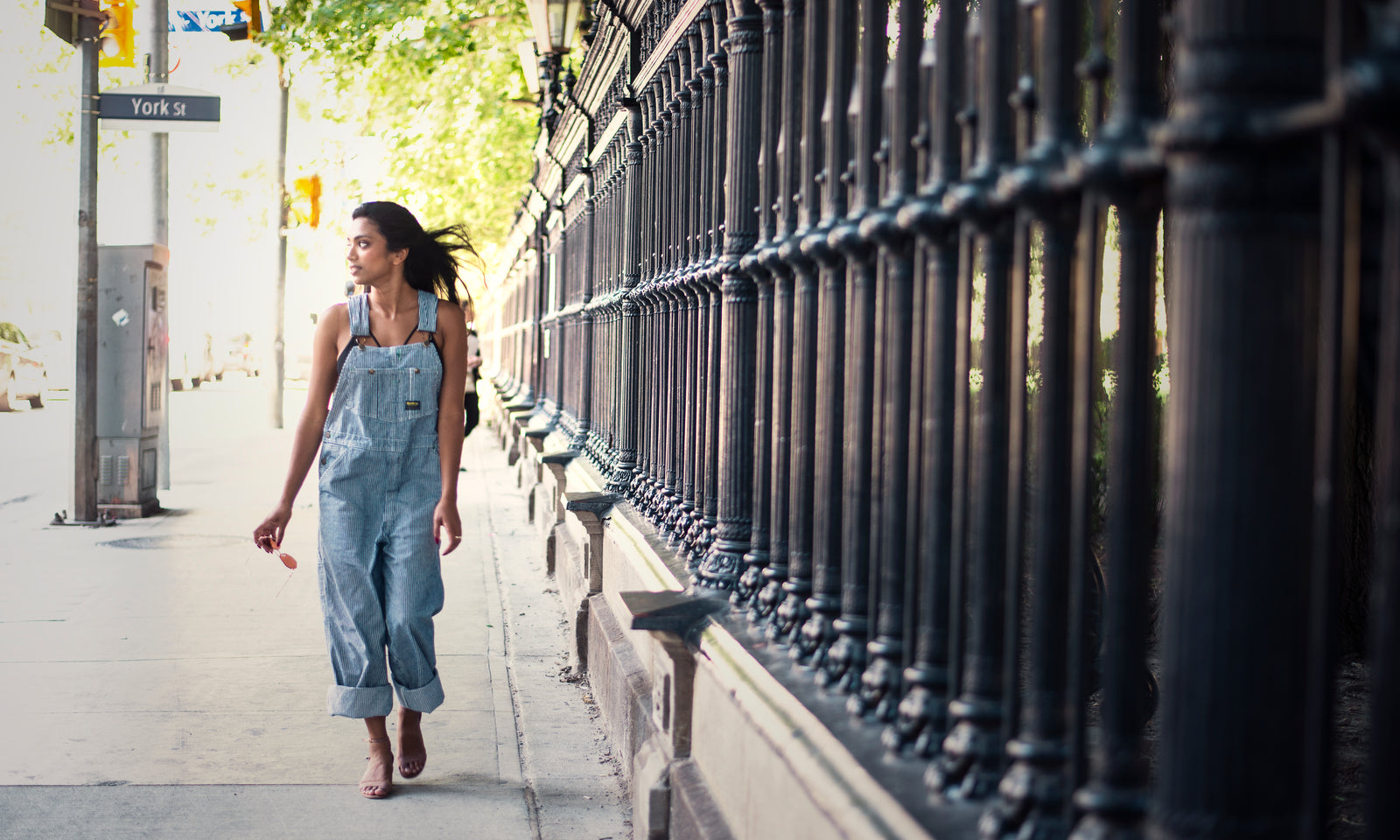
FAQ: Plus Size Dungarees
Are dungarees the same as overalls?
Not quite. Dungarees are the pants-style version with a bib and brace straps over trouser legs, while overalls often refer to the dress-length or bib-dress style. This article focuses on the pants version, which you can explore alongside our plus size overalls for the dress take.
How should plus size dungarees fit at the bib?
The bib should lie flat against your chest without gaping or straining. Adjustable straps are key: shorten them if the crotch sits too low, lengthen them if the bib pulls. A small amount of stretch makes achieving this comfortable fit much easier, and side buttons give you extra room when you need it.
Can I wear dungarees to work?
Yes, depending on your dress code. Dark twill or denim with a smart turtleneck reads polished, and tailored tapered legs look neat. Pair with clean shoes and minimal accessories for an office-friendly version of this relaxed staple, and keep the bib smooth by tucking your top properly.
Where can I find more curvy bottoms to mix and match?
Our full range of plus size bottoms pairs beautifully with dungarees for a layered, coordinated wardrobe built around comfort and real fit.