Why Plus Size Slouch Socks Are Having a Moment in Fall 2026
The scrunched, bunched, slightly rebellious sock is back, and this time it is built for every body. Plus size slouch socks take the 80s and Y2K trend that once felt reserved for narrow ankles and open it up to wide calves, full ankles and everything in between. If you have ever pulled on a tall sock and watched it slide, pinch or bunch in the wrong place, this guide is for you. We are going to walk through what actually makes a slouch sock work, how to style it with leggings, skirts, shorts and boots, and how to care for the cuff so it keeps holding its shape week after week.

The slouch sock is one of those rare accessories that does two jobs at once. It adds a little personality to an outfit that would otherwise be plain, and it makes a cold-weather look feel intentional rather than thrown together. A pair of cotton knee high socks worn with a little extra volume around the ankle can turn a simple legging-and-sweater combo into something that looks styled. That is the magic of the trend: it is casual, it is playful, and it does not ask you to change your body to participate.
What makes plus size slouch socks different from the tall socks you might already own comes down to three things: the yarn, the knit and the cuff. A sock that is meant to slouch is usually knitted from a slightly thicker, softer cotton blend that can hold a fold without collapsing. The ribbing is often looser than a compression sock, so the fabric pools where you want it instead of cutting a line into your leg. And the cuff is usually finished with a gentle elastic band rather than a tight one, so it can sit comfortably on a fuller calf while still staying put.
Fall 2026 styling is leaning into texture. Think chunky knits, corduroy, denim and suede, all of which pair beautifully with a scrunched sock. The trend rewards a little softness and a little messiness, which means you do not need a perfectly smooth silhouette to look polished. In fact, the whole point is the lived-in, gently rumpled shape. That is genuinely good news if you have a curvy leg profile, because the slouch is designed around volume, not against it.
What Makes a Great Slouch Sock for Wide Calves
Not every tall sock can slouch well, and the difference is easier to spot than you might think. When you are shopping for plus size slouch socks, look at the construction before you look at the colour.
Fabric weight and stretch
A good slouch sock has enough body to hold a fold. If the yarn is too thin, the sock will cling to your leg like a second skin and never actually pool. If it is too stiff, the fold will feel like a hard ridge. The sweet spot is a medium-weight cotton blend with a small amount of elastane, usually around two to five percent. That tiny bit of stretch lets the sock move with you while the cotton does the work of holding the scrunch.
Rib pattern
Ribbing is the vertical texture you see running up the sock. A wider, softer rib gives a more relaxed slouch, while a tight, narrow rib creates a firmer, more structured look. For a classic 80s scrunch, a medium rib that relaxes slightly after the first wear tends to give the nicest result. A rib that is too tight can make the sock feel like it is gripping, which is the opposite of what you want.
Cuff construction
The cuff is the top edge of the sock. On a slouch style, you want a cuff that stays in place without digging in. Look for a folded or softly ribbed cuff rather than a sharp, tight band. If the top of a sock leaves a deep mark after an hour, it is telling you the elastic is too strong for your calf. A well-made cuff should feel snug and secure but leave nothing more than a faint, temporary line.
It also helps to look for socks labelled as crew or knee high, since both lengths can be worn with a slouch. Crew slouch socks sit around the mid calf, while knee high socks reach closer to the knee. Many people keep both on hand: the crew for warmer days and cropped trousers, the knee high for boots and full-length styling. Having a pack of socks in a couple of lengths means you always have the right option for the outfit in front of you.

How to Get a Slouch That Actually Stays Up
The number one question we hear about plus size slouch socks is simple: how do you keep the scrunch from sliding down to your ankle by lunchtime? The answer is part technique and part choosing the right fabric. Here is the method we recommend.
Start with a slightly longer sock
A slouch needs fabric to work with. If your sock only just reaches the top of your calf, there is nothing left to bunch. Choose a knee high or a generous crew that comes up higher than where you want the fold to sit, then scrunch down to the level you like. That extra length is exactly what becomes the slouch.
Push, do not pull
When you create the scrunch, push the fabric down from the top rather than pulling it up from the toe. Pushing creates even, relaxed folds. Pulling stretches the knit and makes it more likely to spring back down. Slide the sock up to its full height first, then gently push it down in two or three soft accordion folds until it rests where you want it.
Anchor at the ankle and the calf
The most stable slouch sits with the sock pulled smooth over the foot and ankle, then bunched only around the lower calf. If you bunch it right at the ankle joint, it will bunch further every time you walk. Keep the foot area smooth and let the volume live higher up the leg, where it has less reason to shift.
Use the fold to your advantage
A gentle fold near the top of the calf can act as a soft anchor. Because the fabric doubles over itself, it grips a little more and helps the slouch stay put. You can also tuck the very top edge under once so the cuff rests just below the widest part of your calf, giving the sock a natural ledge to sit against.
If you find a sock still creeps after a few hours, it usually means the cuff has lost some tension or the yarn is too slick. Cotton blends tend to grip better than shiny synthetic yarns, so a cotton knee high is often the more dependable choice for a slouch that lasts all day.
Sizing and Fit: Getting the Cuff Right on Fuller Calves
Fit is where many tall socks go wrong on curvy legs, and it is worth talking about openly. Most standard socks are graded to an average calf measurement, which means the cuff can feel tight even when the foot size is correct. The good news is that there are clear signals to look for when you are choosing a size.
Trust the stretch, not just the label
Sock sizing is often listed as shoe size, but the fit around your calf depends on the width of the leg, not the length of your foot. A sock with generous stretch will accommodate a wider calf comfortably even if the label only mentions shoe size. If a product description mentions stretch or comfort fit, that is usually a good sign for fuller calves.
Look for a relaxed cuff
The cuff should sit gently against your leg. If you can slide one finger under the top edge without forcing it, the tension is about right. If you cannot, size up or choose a style with a softer band. A cuff that feels tight at first often feels tighter as the day goes on, especially if you are sitting or standing for long stretches.
Check the heel and toe
Even a slouch sock should fit well at the foot. The heel should sit at your heel without pulling the leg section down, and the toe should not bunch under your toes. If the foot fits but the leg feels tight, that is a cuff issue rather than a size issue, and a different style will usually solve it better than sizing up would.
When to size up
Size up if the sock leaves deep marks, feels hot and tight, or makes your lower leg ache. There is no prize for squeezing into a smaller sock. A slightly larger sock that stays up because of its construction will always look better and feel better than a tight one that you cannot wait to take off.
Styling Plus Size Slouch Socks with Leggings, Skirts and Shorts
This is the fun part. The scrunched sock is wonderfully versatile, and it works with far more outfits than people expect. Here are some combinations that consistently look great on curvy figures.
With leggings
Leggings and slouch socks are a natural pairing. Pull on your leggings, then add a crew slouch sock in a colour that either matches the legging or deliberately contrasts with it. A matching sock creates a long, clean line, while a contrasting sock adds a fun break at the ankle. Finish with an oversized sweater or a long cardigan and you have a comfortable, styled look for almost any casual day.
With skirts
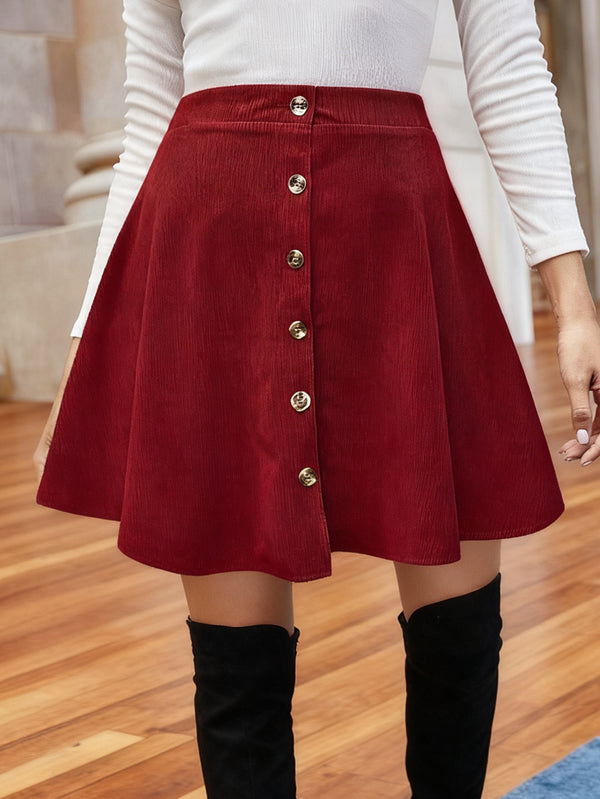
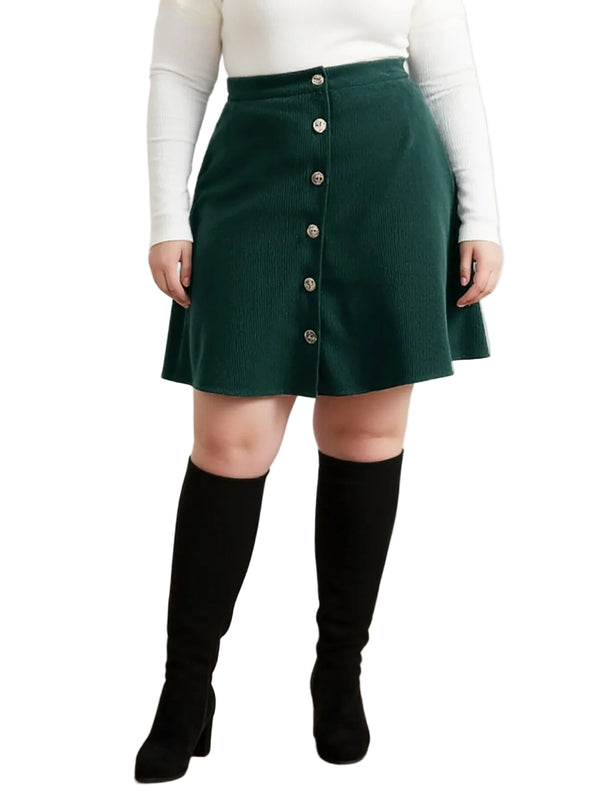
A midi or mini skirt with a slouch sock and a chunky boot is one of the strongest fall outfits around. Choose a knee high sock so the scrunch sits below your knee and above the boot, leaving a small band of leg visible. This layering creates texture and interest without asking you to do anything complicated. Tights and a slouch sock can also be worn together if the temperature drops.
With shorts
Slouch socks with shorts lean into the Y2K energy of the trend. A pair of denim shorts, a slouchy crew sock and trainers is playful and easy. For cooler days, swap the shorts for a skort or a short A-line skirt and add a light sweater. The scrunch at the calf keeps the look from feeling too bare and ties the whole outfit together.
Colour and contrast
Do not feel limited to black and grey. Cream, oatmeal, burgundy and forest green all work beautifully for fall. A cream knee high socks set with a navy skirt is an instant classic. If you like a bolder look, a striped or ribbed sock can be the one playful detail in an otherwise neutral outfit. The sock is a low-risk place to experiment with colour, so have fun with it.
Slouch Socks and Boots: Fall Layering That Works
Boots are where the slouch sock truly earns its place, and getting the pairing right is mostly about proportion. A few simple rules will keep your fall looks polished.
Ankle boots
With ankle boots, the slouch should sit just above the boot shaft. Choose a crew sock and let it bunch gently above the boot line. This creates a soft transition between the boot and your leg and keeps the ankle area from looking abrupt. A sock in a similar tone to the boot makes the leg look longer, while a contrasting sock makes the scrunch a feature.
Mid-calf and combat boots
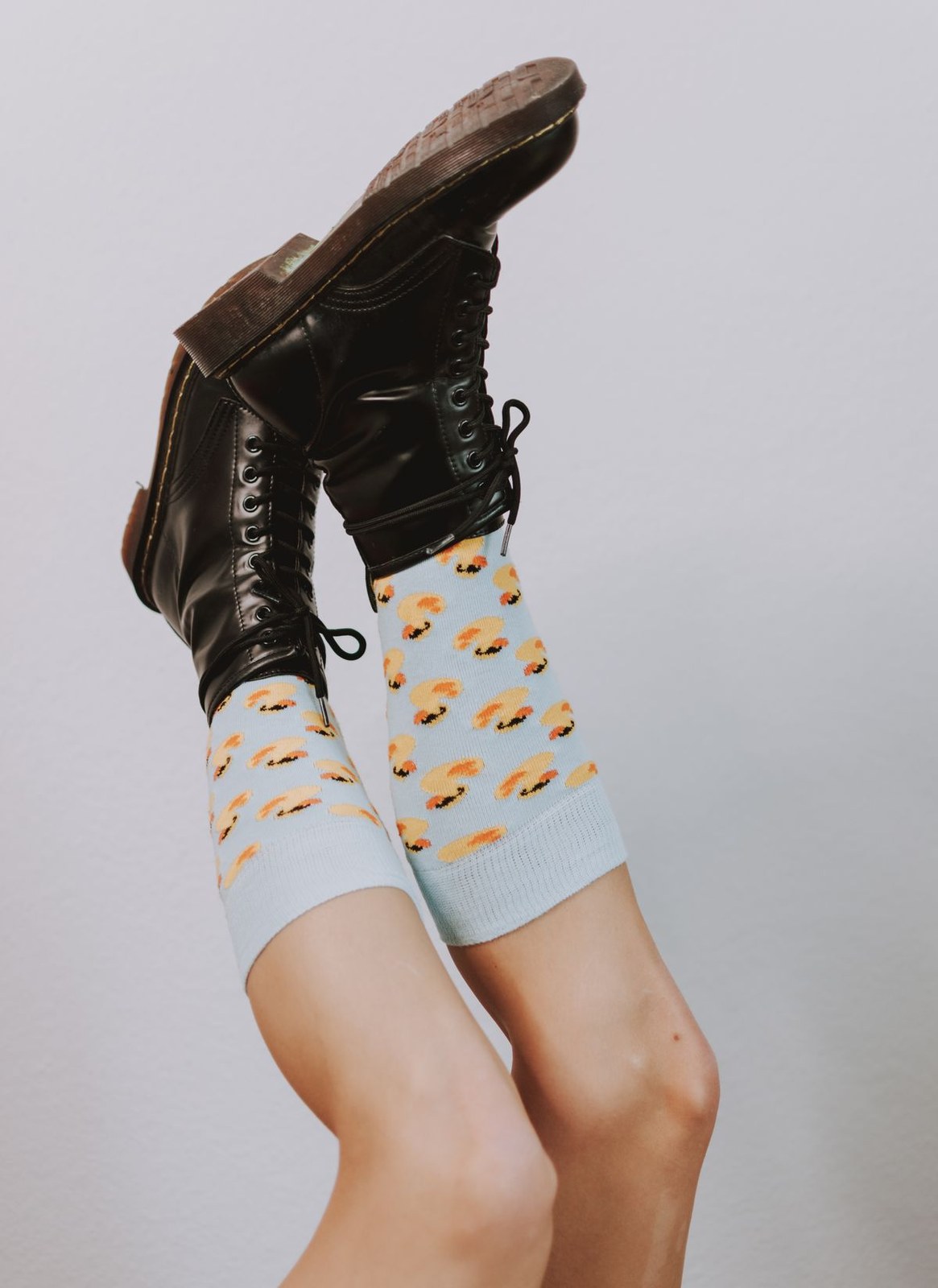
For taller boots, you can wear a knee high sock and let it slouch over the top of the shaft. This works especially well with lace-up combat boots or a chunky platform style. Push the sock down so the fold sits just over the laces, giving a relaxed, lived-in look. Make sure the sock is not so bulky that it bunches uncomfortably inside the boot.
Tall boots
With knee-high boots, the slouch usually shows at the very top, if at all. Tuck a thin slouch sock inside so nothing bulges, or choose a shorter boot if you want the scrunch to be visible. The goal is always comfort first: if the sock bunches painfully inside the boot, it is the wrong combination for that pair of shoes.
Matching the sock to the boot colour world
As a general guide, keep the sock in the same colour family as your boot when you want a smooth, long-leg effect, and use a contrasting sock when you want the scrunch to be a statement. Both approaches work; it just depends on the mood of the outfit. Having a few colours in your drawer makes this kind of mixing and matching genuinely easy.
Caring for Your Slouch Socks So the Cuff Holds
A slouch sock only slouches well if the knit stays healthy. Care is simple, but a few habits make a real difference to how long your socks keep their shape.
Wash them inside out and cool
Turning your socks inside out before washing protects the outer surface from friction and pilling. Wash on a cool or cold cycle, ideally in a mesh laundry bag, so the socks do not stretch out or tangle with heavier items. Hot water and high heat are the fastest way to relax elastic and shrink cotton, both of which reduce the sock's ability to hold a fold.
Skip the dryer when you can
Tumble drying is hard on elastic. Air drying your slouch socks, laid flat or hung over a drying rack, keeps the cuff springy and the knit soft. If you do use a dryer, choose the lowest heat setting and take the socks out while they are still very slightly damp.
Avoid fabric softener on the cuff
Fabric softener coats fibres and can make the fabric feel slicker, which reduces grip. That matters for a slouch sock because grip is what keeps the fold in place. A gentle detergent is all you need; skipping softener will actually help your socks perform better.
Rest them between wears
If you reach for the same pair every day, the elastic never gets a chance to recover. Rotating between a few pairs, which is easy when you buy a multi-pack, lets each sock rest and bounce back. This one habit will noticeably extend the life of your favourite slouch socks.
Store your socks folded rather than balled up. Balling stretches the cuff and can leave permanent dents. A simple fold keeps the knit relaxed and ready to slouch the next time you wear them.
FAQ: Plus Size Slouch Socks
Will slouch socks stay up on wide calves?
Yes, if you choose the right construction. A medium-weight cotton blend with a gentle, relaxed cuff will hold a fold far better than a thin or tight sock. The key is to start with a sock that comes up higher than where you want the slouch to sit, then push the fabric down into soft accordion folds. If a sock still slides, the cuff has likely lost tension or the yarn is too smooth to grip.
Can I wear slouch socks with leggings and boots?
Absolutely, and it is one of the easiest fall combinations. Wear a crew slouch sock so the scrunch sits just above your ankle boot, or pull a knee high sock over the top of a mid-calf boot for a relaxed layered look. Keep the sock and boot in similar tones for a lengthening effect, or contrast them for a bolder statement.
How do I keep the scrunch from stretching out over time?
Wash cool and inside out, skip the dryer when you can, avoid fabric softener, and rotate between a few pairs so the elastic can recover. These four habits will keep your slouch socks springy and comfortable for far longer than washing them on hot and drying them on high.
Are slouch socks comfortable for all-day wear?
They can be very comfortable, as long as the cuff is not too tight. Look for a relaxed band and a soft cotton blend, and make sure you can slip a finger under the top edge. When the fit is right, a slouch sock feels cosy and easy all day rather than tight or binding.