The best plus size bodysuits 2027 are not just sleek-looking basics; they are the quiet foundation that helps an outfit stay in place while you live in it. A good bodysuit can make a cardigan sit more cleanly, keep a high-waisted skirt visually connected, and give a jumpsuit or blazer a smooth starting layer. For plus-size shoppers, the real decision is not whether a bodysuit looks streamlined on a hanger. It is whether the neckline, sleeve, torso, and closure make sense for your body and your day. This guide takes a layering-first approach, using three live Moon Wood collection picks to show how to choose the right mood without turning comfort into an afterthought.
Browse the full plus-size-bodysuit collection when you are ready to compare the live options.
Begin with the outfit problem
A bodysuit should solve a real annoyance
Start with the moment that makes you reach for a bodysuit. Maybe your tee rides up beneath a skirt. Maybe a cropped jacket needs a clean base. Maybe you want a tucked-in look without constantly retucking. Naming the problem helps you select details that matter. A sleek sleeveless option may be useful under a blazer, while a long-sleeve option can carry a cooler-day outfit on its own. The point is not to collect every neckline. It is to choose a base that removes friction from outfits you already enjoy wearing.
Separate smoothness from tightness
Sleek does not have to mean restrictive. Look for a visual line that comes from the garment sitting where you want it, not from sizing down. You need enough room for normal breathing, reaching, sitting, and bending. Check the shoulder line, bust area, waist, and torso length as separate questions. If one zone is pulling while another has extra room, that is useful information about your proportions. Body-positive dressing means you adjust the garment choice to your body rather than asking your body to perform for the garment.
Three picks, three layering jobs
The black sleeveless base
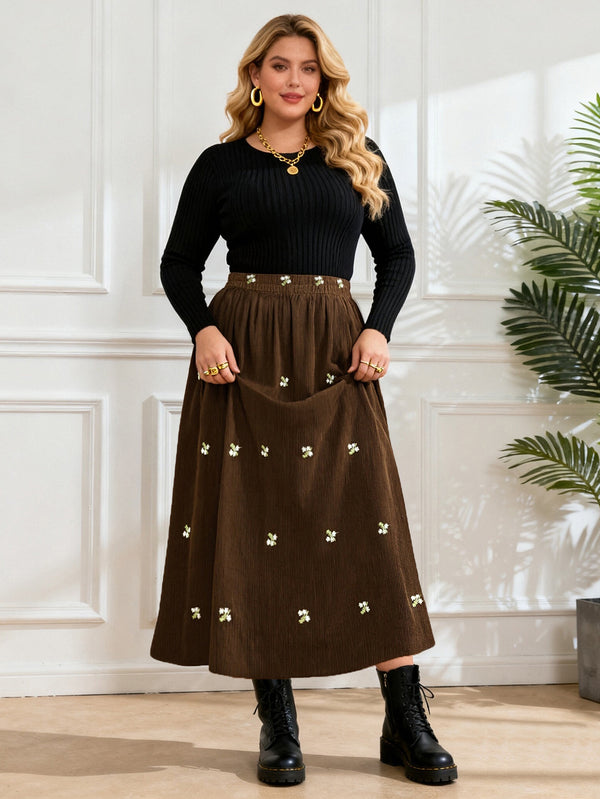
The Crew Neck Sleeveless Slick Plus Size Bodysuit for Women - Black is a natural option for a clean, minimal base. Black can sit beneath a bright overshirt, a printed skirt, or a light jacket when you want the layer underneath to recede. Keep the rest of the outfit varied in texture so the result does not feel flat: denim, a soft knit, or a woven skirt can each create contrast. Treat this pick as the dependable starting point for outfits where your outer layer does the talking. 
The long-sleeve black anchor
The Plus Size Bodysuit Crew Neck Long Sleeve-Black gives a different kind of usefulness: it can serve as both a base and a visible top in a cooler-season outfit. Pair it with a skirt, wide-leg trouser, or open shirt, then add a jacket only if you need more warmth. A long sleeve can make a simple outfit feel considered because the coverage is already doing visual work. Before wearing it for a full day, test how the sleeve and torso feel when you reach forward and sit. 
The white sleeveless lightener
The Plus Size Bodysuits for Women Sleeveless Crew Neck-White creates a brighter starting point for color and texture. Use it below a soft cardigan, an open shirt, a dark vest, or a patterned layer when you want the center of the outfit to feel lighter. White also makes a useful contrast with brown, navy, black, and denim. Let the neckline remain simple and use jewelry, a scarf, or the outer layer for personality. 
Check the fit in motion
The torso is the key zone
A bodysuit can fit well at the shoulders and still feel wrong through the torso. Move through the actions your day includes: sit at a desk, lift your arms, bend to pick something up, and walk up stairs. Pay attention to whether the fabric pulls upward, whether the closure becomes noticeable, and whether you start adjusting the garment. These observations are more useful than judging yourself in a static mirror. If the fit feels easy in motion, the clean line will look better because you are not bracing against it.
Use the neckline as a styling tool
A crew neck is a reliable frame for necklaces, open shirts, cardigans, and jackets. It can also create visual calm when your skirt or outer layer has more going on. Keep the neckline in proportion to the layer above it: a structured collar can create a crisp contrast, while a soft cardigan can make the same base feel relaxed. Your neckline does not need to be chosen to minimize your bust. Choose it for the amount of coverage and visual emphasis that makes you feel present and comfortable.
Create repeatable outfit formulas
The open-layer formula
Use a bodysuit as the center line beneath an open shirt or cardigan. Leave the outer layer open if you want movement, or close one or two buttons when you want more structure. A black base creates a strong column with a similarly dark bottom; a white base breaks up darker layers. Add one shoe or accessory that echoes the base color. The formula works for errands, casual dinners, and travel because the foundation stays put while the outer layer can change with temperature.
The skirt-and-jacket formula
A bodysuit can make a skirt feel easier to style because it prevents a bulky bunch at the waistband. Choose a skirt with the amount of volume you enjoy, then add a jacket or blazer with a clear shoulder line. If the outfit feels too formal, switch to sneakers or a soft boot; if it feels too casual, add a structured bag or jewelry. You are allowed to use the bodysuit as a practical tool and still let the rest of the look be playful.
Care and wardrobe planning
Keep the base layer in rotation
A bodysuit earns its space when it supports several outfits. Store your most useful neutral where you can see it, and group it with the skirts, trousers, or overshirts it helps you wear. A black and a white base can cover many combinations, while a sleeve variation can extend the season. Follow the product care information and allow the garment to dry fully. Good storage reduces the temptation to buy another piece simply because the reliable one was hard to find.
Notice what your body tells you
If you feel yourself tugging at the closure or pulling down the torso, treat that as design feedback, not a personal failure. Write down when the issue appears and what you were doing. The note can guide a future choice about length, layering, or ease. Comfort is part of the style result: a garment that lets you move naturally creates a more convincing silhouette than one that looks smooth only when you stand still.

FAQ: plus size bodysuit layering
Can a bodysuit be worn as a top?
Yes. A simple crew neck can be the visible base of an outfit, especially with a skirt, trouser, open shirt, cardigan, or jacket. Choose the sleeve and layering level for your temperature and comfort.
How do I stop a bodysuit from feeling restrictive?
Check torso length, closure comfort, and movement before judging the overall fit. Try sitting, reaching, and bending. Do not size down for a smoother look; smoothness should come from the garment sitting well.
Which color is the most versatile?
Black and white are practical anchors because they can either recede or create contrast. Your most versatile color is the one that supports the outfits you already wear, so start with your actual wardrobe.
What should go over a crew neck?
Open shirts, cardigans, denim jackets, blazers, vests, and lightweight coats all work. Use the outer layer to add texture, color, or structure while the crew neck keeps the base calm.
Layering works best when each layer has a job. The bodysuit manages the base line, the second layer manages texture or color, and the outer layer manages warmth or structure. When an outfit feels crowded, remove one job rather than adding another piece. A simple black base with a textured cardigan may be more effective than several competing details. This approach is especially helpful on busy mornings because it turns dressing into a sequence you can repeat.
For a plus-size wardrobe, a tucked-in effect can be powerful without being restrictive. It gives a skirt or trouser a clear starting point and lets a jacket open naturally. The trick is to protect movement. Walk around your room, raise your arms, and sit before committing to the day. If the base follows you, you can focus on accessories and mood. If it fights you, listen early and change the combination.
Color can do more than create contrast. A dark base can make a bright overshirt feel intentional, while a white base can soften an autumn palette. Repeat a color once elsewhere so the outfit feels connected. Repetition does not mean matching everything; it simply gives the eye a path through the look.
A reliable bodysuit is also a travel tool. It can reduce the number of decisions in a suitcase because one base supports several bottoms and layers. Pack it with the garment it helps most, then add one alternate outer layer. Keep a second option only if it solves a different temperature or occasion. Practical packing is a form of personal style because it leaves room for the parts of a trip you actually want to enjoy.
The best layering pick is not necessarily the most dramatic. It is the piece that helps you wear the clothes you already love with fewer adjustments. If it makes a cardigan sit better, a skirt feel more finished, or a jacket feel less fussy, it is doing useful work. Let that usefulness count as style.
A helpful way to keep this purchase personal is to begin with a layering-first decision guide for building reliable outfits without overthinking the base. That question gives every styling suggestion a real purpose. Instead of saving an outfit for an imaginary perfect day, picture the ordinary version: the morning you are running late, the afternoon when the temperature changes, or the evening when you want to feel put together without effort. The live product title gives you a starting point, while your own routine supplies the final decision. Comfort is not a compromise made after style; it is the condition that lets style show up naturally.
Try the complete outfit before you judge any single item. Put on the base, the featured piece, the layer, and the shoe you expect to wear. Sit down, walk across the room, reach forward, and change direction. This short rehearsal reveals more than a static mirror because clothing is experienced through movement. If you notice an adjustment, name it precisely and decide whether a different layer or a different product role would solve it. A clear observation is more useful than a vague feeling that an outfit is somehow wrong.
Proportion can be adjusted without hiding the body. A shorter layer can highlight a high waist, a longer layer can create ease, and an open layer can add movement. These are options, not rules. Use them to create the amount of structure you enjoy on a particular day. If the outfit starts to feel overworked, remove one detail and let the central piece breathe. The most polished look is often the one with enough space for the wearer to be visible.
Color planning can be simple. Pick one anchor, one supporting neutral, and one optional accent. The anchor may be a dark base, a warm seasonal shade, a crisp light piece, or a visible pattern. The neutral gives the eye somewhere to rest, and the accent can be as small as a bag, sock, scarf, or piece of jewelry. This method keeps a recommendation practical because it translates a product into several outfits instead of treating it as a single-use purchase.
For shoppers who prefer low-maintenance wardrobes, repeatability is a feature. A good piece should work with at least two familiar items and one item that feels a little more special. Photographing a successful combination or writing down the layers can make the next morning easier. You do not need a large wardrobe to have variety; you need a few combinations that are easy to remember and comfortable enough to wear again.
Temperature changes are easier to manage when warmth comes from removable layers. Start with the main outfit, then add a cardigan, jacket, sock, leg warmer, or coat depending on the room and the route between rooms. This also lets you change the mood without changing the entire look. A practical outfit can still feel expressive when the removable layer carries color or texture. Plan for the place you will be, not only the weather app.
Shopping with a body-positive mindset means replacing comparison with evidence. Notice how a waistband rests, how a hem behaves when seated, how a sleeve moves, or how a shoe feels after a few minutes. Those details are actionable. They do not ask your body to become different before it deserves the outfit. They help you choose clothing that cooperates with the body you have today, which is the body that gets to live the day.
Use the product images and live title as confirmation of what is actually available, then keep your expectations grounded in those facts. Do not invent a feature because it would be convenient. If you need a particular construction, coverage level, or care method, read the current product information and choose accordingly. Honest selection makes recommendations more useful and prevents a beautiful idea from becoming an uncomfortable surprise.
A small wardrobe audit can make the final choice clearer. Pull out the bottoms, tops, shoes, or layers you wear most often and look for a missing role. Maybe you need a dependable neutral, a warmer option, a color that lifts dark outfits, or a playful piece for weekends. Choose the product that fills that gap rather than the one that duplicates what you already have. The result will feel more intentional immediately.
Give the first wear a fair but specific review. Ask whether you could forget about the garment while talking, eating, commuting, working, or relaxing. Ask whether the outfit still feels like your style when the novelty fades. If the answer is yes, you have found more than a trend; you have found a useful relationship between your clothes and your day. That is the standard worth carrying into the next purchase.
A useful recommendation should leave room for preference. Two shoppers can choose different colors or silhouettes and both be making excellent decisions because their days, temperatures, and styling habits differ. Use the product list as a set of starting points, not a ranking of bodies. The strongest choice is the one that answers your own question clearly and gives you a reason to wear it again.