Latzhosen in großen Größen im Herbst kombinieren: T-Shirts, Rollkragenpullover, Pullover und Jacken
Sep 14, 2026

Warum Overalls die vielseitigste Schicht für den Herbst sind, die Sie besitzen
Wenn Sie wissen möchten, wie man Plus-Size-Overalls für den Herbst stylt, ist die Antwort einfacher, als Sie vielleicht erwarten: Sie schichten sie genau wie alles andere, nur besser. Overalls sind das seltene Kleidungsstück, das mit sinkenden Temperaturen nützlicher wird, denn der Latz und die Träger rahmen natürlich alles ein, was Sie darunter tragen, und das weite oder gerade Bein lässt Platz für Strumpfhosen, Thermokleidung oder gar nichts. Ein einziger Overall kann Sie von einem kühlen Septembermorgen bis zu einem kalten Novemberabend begleiten, nur durch einen Wechsel der Schichten.
Das Anziehen im Herbst ist wirklich ein Spiel des Hinzufügens und Entfernens. Ein Tag, der bei zehn Grad beginnt, kann bei einundzwanzig Grad enden, und ein Büro kann zehn Grad wärmer sein als die Straße. Overalls bewältigen diese Schwankung wunderbar, weil die Basisschicht konstant bleibt, während alles darüber verhandelbar ist. Sie bauen kein Outfit neu auf, Sie passen es an.
Es gibt auch einen praktischen Vorteil, der in einer Plus-Size-Garderobe wichtig ist. Das Schichten unter einem Latz spannt nichts und zieht nichts, wenn die Basisschichten dünn und gut sitzend sind. Wenn Sie jede Schicht als eine dünne, glatte Fliese betrachten, die flach auf der nächsten liegt, bleibt das gesamte System den ganzen Tag über bequem und glatt.
Es hilft, den Herbst als eine Reihe von Bausteinen statt als einen festen Look zu betrachten. Der Latz ist Ihr Rahmen. Die Basis ist Ihr Fundament. Die mittlere Schicht ist Ihre Wärme. Die äußere Schicht ist Ihr Wetterschutz. Wenn Sie wissen, wie Sie Plus-Size-Overalls auf diese Weise stylen, können Sie sich für jede Wettervorhersage anziehen, indem Sie einen einzelnen Block austauschen, anstatt von vorne anzufangen.
Ein Wort zum Latz selbst. Viele Herbstoutfits scheitern an der Brust, nicht am Bein. Wenn Ihre Basisschichten dünn und der Latz verstellbar sind, erhalten Sie eine glatte Vorderseite, die es Ihnen ermöglicht, Wärme hinzuzufügen, ohne dass sich unter den Trägern ein Grat bildet. Wenn Sie eine Beule oder eine Falte spüren, ist die darunterliegende Schicht normalerweise zu dick oder zu lang, tauschen Sie sie also gegen etwas Feineres aus, anstatt den Overall größer zu wählen. Diese eine Angewohnheit wird jeden Herbst-Look von September bis November sauber halten.
Ein gutes Paar zum Aufbau ist eines mit verstellbaren Trägern und etwas Elasthan, damit der Stoff mit einem Pullover flexibel ist, sich aber im Laufe der Zeit nicht ausdehnt. Stöbern Sie durch die gesamte Auswahl an Plus-Size-Overalls, wenn Sie die Gewichte vergleichen möchten, bevor Sie eine Herbstrotation planen.
Beginnen Sie mit der Basis: T-Shirts, die an Ort und Stelle bleiben
Die Basisschicht ist die am wenigsten sichtbare und die wichtigste. Sie gibt den Ton für das gesamte Outfit an, und wenn sie sich bauscht oder hochrutscht, kann keine noch so geschickte Schichtung darüber den Look retten. Das Ziel ist ein dünnes, glattes T-Shirt, das den ganzen Tag ordentlich eingesteckt bleibt.
Was ein gutes Basis-T-Shirt ausmacht
Suchen Sie nach feinem Baumwollgewebe oder einer Modalmischung mit etwas Stretch. Eine taillierte, leicht lange Silhouette ist ideal, da sie beim Bewegen im Bund bleibt. Ein lockeres oder kastenförmiges T-Shirt ist bequem, muss aber normalerweise halb eingesteckt oder leicht geknotet werden, um die Linie unter dem Latz sauber zu halten.
Ausschnitte, die hart arbeiten
Ein Rundhalsausschnitt ist am einfachsten und am klassischsten. Ein V-Ausschnitt lenkt den Blick nach oben und verlängert die Brust optisch etwas, was manche unter einem höheren Latz lieben. Ein U-Boot-Ausschnitt funktioniert gut, wenn Ihr Latz tief sitzt, da der Ausschnitt sichtbar bleibt, anstatt unter dem Stoff zu verschwinden.
Farben und Muster
Im Herbst wird ein Basis-T-Shirt in Creme, Haferflocken, Oliv oder Schwarz zum ruhigen Anker des Outfits. Ein gestreiftes oder dezent bedrucktes T-Shirt verleiht Persönlichkeit und wirkt absichtlich, wenn nur die Ärmel und der Ausschnitt sichtbar sind. Wenn die Overalls der Star sein sollen, halten Sie die Basis tonal und lassen Sie die Textur sprechen.
Schichten über einem Tanktop oder einem Cami
Ein einfaches Cami oder Tanktop ist die leichteste mögliche Basis und eine gute Wahl für den frühen Herbst, wenn eine langärmelige Schicht zu viel ist. Tragen Sie es als einzige Basis unter dem Latz an warmen Nachmittagen und fügen Sie dann abends einen Pullover oder eine Jacke hinzu. Dies ist der Teil, den die Leute übersehen, wenn sie fragen, wie man Plus-Size-Overalls für wechselhaftes Wetter stylt, und es ist die einfachste Lösung, die es gibt.
Sobald die Basis stimmt, wird alles darüber einfacher, was der Grund ist, warum dünne Schichten in einem Herbstsystem gewinnen.
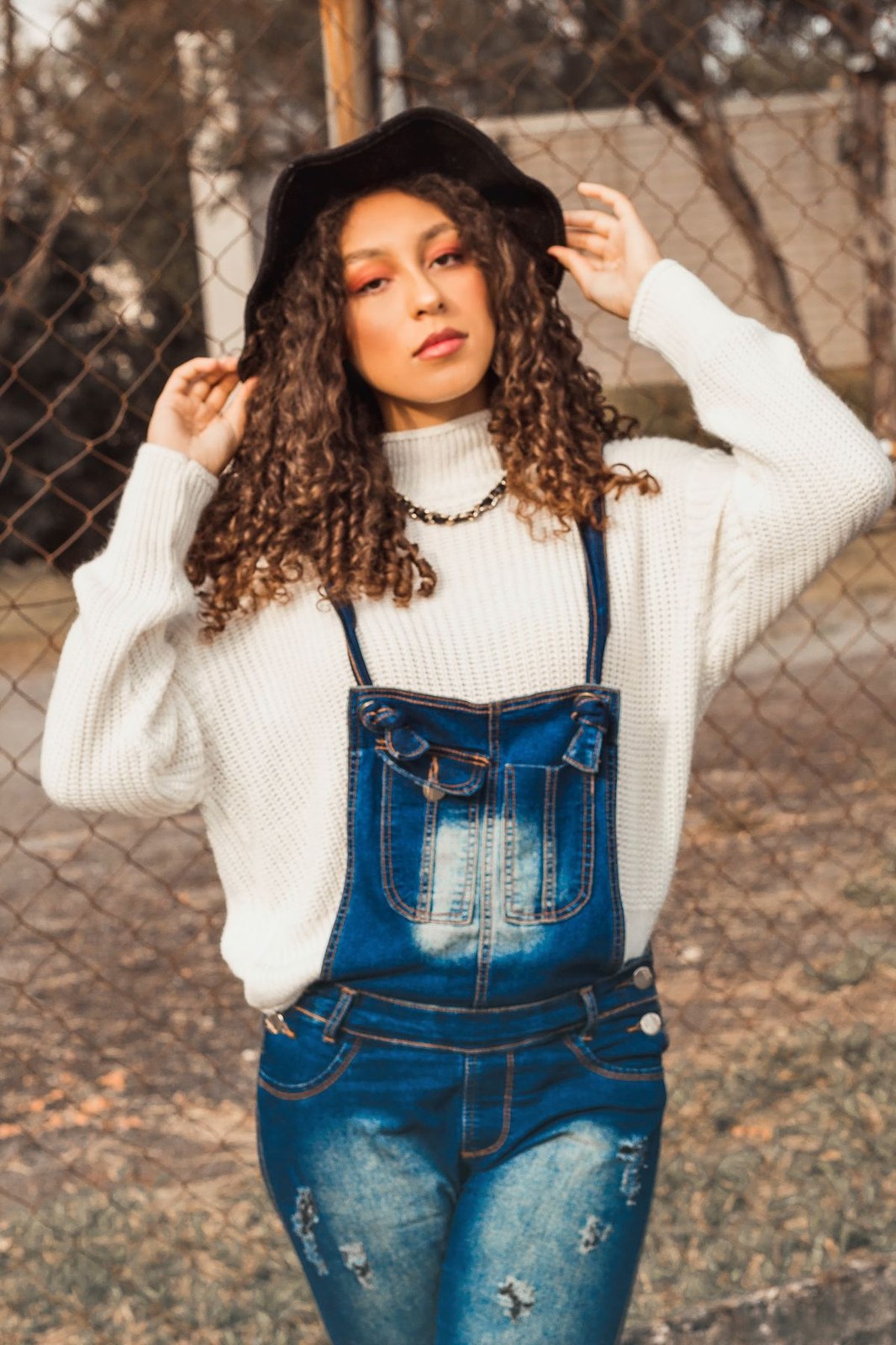
Rollkragen und Mock Necks: Wärme ohne Volumen
Wenn es eine einzelne Helden-Schicht für den Herbst gibt, dann ist es der Rollkragenpullover. Unter Overalls getragen, spendet er Wärme an Hals und Brust, umrahmt das Gesicht und schafft eine klare Linie von der Schulter bis zum Latz. Der Trick besteht darin, das richtige Gewicht zu wählen.
Feines Merino und leichter Rippenstrick
Feines Merino oder ein leichter Rippenstrick verleiht echte Wärme, ohne Volumen hinzuzufügen. Dies ist die Schicht, die es Ihnen ermöglicht, an einem milden Tag auf eine schwere Jacke zu verzichten. Da sie dünn ist, gleitet sie unter den Latz, ohne einen Grat an der Brust zu bilden.
Mock Necks für ein leichteres Gefühl
Ein Mock Neck sitzt direkt am Schlüsselbein, anstatt den Hals hochzuklettern. Es ist eine sanftere Option für wärmere Herbsttage und funktioniert wunderbar mit einem tieferen Latz. Es lässt sich auch unter einer Jacke oder einem Schal schichten, ohne dass es am Hals stört.
Passform ist wichtiger als Stoff
Ein Rollkragenpullover sollte Ihrer Form bequem folgen, ohne zu komprimieren. Wenn er an den Schultern zieht oder der Latz absteht, ist er zu klein. Wenn er an der Taille aufbläht, ist er zu groß, um sauber einzustecken. Streben Sie eine enge, bequeme Passform an. Eine vollständige Auswahl an Plus-Size-Oberteilen macht es einfach, Basisschichten in den Gewichten zu finden, die der Herbst tatsächlich verlangt.
Schals und der Ausschnitt
Ein Schal ist der schnellste Weg, die Stimmung eines Overalls zu ändern und Wärme hinzuzufügen, ohne unter dem Latz aufzutragen. Ein grob gestrickter Schal sorgt an einem kalten Tag für eine gemütliche Textur. Ein feiner Woll- oder Seidenmix verleiht an einem milden Tag Eleganz. Lassen Sie den Schal direkt außerhalb des Kragens Ihres Rollkragenpullovers sitzen, damit die beiden Schichten nicht am Hals knittern, und wählen Sie eine Farbe, die entweder Ihre Basis widerspiegelt oder einen sanften Kontrast dazu bildet.
Der Rollkragenpullover ist auch die Schicht, die am ehesten sichtbar ist, wählen Sie also eine Farbe, die Sie wirklich lieben, anstatt eine, die Sie tolerieren.
Passende Pullover: Die Schicht, die die meiste Arbeit leistet
Ein passender Pullover über einer Basisschicht und unter einer Jacke ist der Motor eines herbstlichen Overalls-Outfits. Er sorgt für die Wärme des Tages, fügt Textur und Farbe hinzu und kann den gesamten Look von lässig bis elegant verschieben, je nachdem, wie er geschnitten ist.
Rippenstrick und feine Wolle
Rippenstrickpullover dehnen sich passend und springen zurück, was sie hervorragend unter einem Latz macht, da sie keinen dauerhaften Grat hinterlassen. Feine Wolle ist warm und elegant. Beides funktioniert gut als sichtbare Schicht, wenn der Latz mit heruntergelassenen Trägern getragen wird oder der Pullover ganz über dem Latz getragen wird.
Wo der Pullover enden sollte
Die Länge des Pullovers ist das Detail, das entscheidet, ob der Overall absichtlich aussieht. Ein Pullover, der an der Taille oder knapp darunter endet, lässt das weite Bein sauber beginnen. Ein sehr langer Pullover über Overalls halbiert das Bein und kann schwer wirken, stecken Sie ihn also entweder ein oder wählen Sie einen kürzeren.
Textur als Stilwahl
Zopfmuster, Lochmuster und leicht flauschige Texturen sorgen für Abwechslung zum Denim. Wenn Ihr Overall aus glattem Chambray ist, sorgt ein strukturierter Pullover für Kontrast. Wenn der Denim selbst Cord oder strukturiert ist, wählen Sie einen glatteren Pullover, damit das Outfit nicht miteinander konkurriert.
Cardigan oder Pullover?
Beides funktioniert, aber sie erfüllen unterschiedliche Aufgaben. Ein Pullover ist die wärmste Option und schafft eine klare, ununterbrochene Linie unter einer Jacke. Ein Cardigan ist flexibler, da Sie ihn zuknöpfen, offen lassen oder entfernen können, ohne die darunterliegende Schicht zu stören. Wenn Sie nur eine Sache ändern, wenn Sie lernen, wie Sie Plus-Size-Overalls stylen, ändern Sie die Länge Ihres Pullovers, nicht den Stil. Ein kurzer Cardigan und ein kurzer Pullover lösen beide mehr Probleme als ein langer jemals.
Ein gut sitzender Pullover, den Sie zu allem tragen würden, ist mehr wert als fünf, die nur halb funktionieren.
Der Cropped-Layer-Trick
Hier ist der Trick, der Overalls gestylt statt einfach übergeworfen aussehen lässt: Fügen Sie eine verkürzte Schicht hinzu. Da Overalls bereits eine definierte Taille und ein volles Bein haben, ist das stärkste abschließende Stück eines, das direkt an oder knapp über der Taille endet.
Kurze Cardigans
Ein kurzer Cardigan, offen über dem Latz getragen, wärmt den Oberkörper, ohne die Form des Overalls zu verdecken. Knöpfen Sie ihn für einen ordentlichen Look zu oder lassen Sie ihn für einen entspannten Look offen. So oder so bewahrt der kurze Saum die Proportionen.
Kurze Pullover und Westen
Ein kurzer Pullover oder eine Pulloverweste über einem passenden T-Shirt ist eine gemütliche, moderne Kombination. Da sie an der Taille endet, lässt sie sowohl den Latz als auch das Bein deutlich zur Geltung kommen. Dies ist eine großartige Möglichkeit, einer einfachen Basis eine dritte Textur hinzuzufügen.
Wie man es mit einem heruntergelassenen Träger trägt
Wenn Sie das Styling mit einem Träger mögen, fügt eine verkürzte Schicht auf der offenen Seite Struktur hinzu und verhindert, dass das Outfit unfertig wirkt. Es ist auch eine clevere Möglichkeit, Abdeckung hinzuzufügen, wenn Sie dies wünschen, ohne zu einer vollständigen Oberschicht zurückzukehren.
Wie man eine verkürzte Schicht mit einem weiten Bein trägt
Eine verkürzte Schicht ist besonders effektiv bei Overalls mit weitem Bein, da sie das Volumen des Beins als Hauptereignis beibehält und keine Breite hinzufügt, wo Sie sie nicht benötigen. Wenn Ihre Overalls ein voll weites Bein haben, wählen Sie eine verkürzte Schicht, die an der Schulter tailliert ist, anstatt übergroß. Der Kontrast zwischen einer enganliegenden Oberschicht und einer fließenden unteren Hälfte lässt das Outfit durchdacht wirken.
Die verkürzte Schicht ist die einzige Änderung, die den größten Unterschied macht, daher lohnt es sich, eine in einer neutralen Farbe bereitzuhalten.
Welche Jacke passt über Overalls?
Die äußere Schicht entscheidet über Erfolg oder Misserfolg von Herbstoutfits, denn eine Jacke muss über Latz, Träger und mindestens einen Pullover passen, ohne an den Schultern zu ziehen oder eine Lücke am Rücken zu hinterlassen. Hier ist, was tatsächlich funktioniert.
Kurze und kastige Jacken
Eine kurze Jeansjacke oder eine kastige Wolljacke, die an der Hüfte endet, ist der natürliche Partner für Overalls. Sie folgt der gleichen Taillenlogik wie die kurze Schicht und stört das weite Bein nicht. Sie lässt auch den Latz und die Träger sichtbar, was der ganze Sinn des Tragens von Overalls ist.
Lange Mäntel offen getragen
Ein langer Mantel funktioniert wunderbar, wenn Sie ihn offen tragen. Ein Trenchcoat oder ein Wollmantel, der ungeknöpft bleibt, schafft zwei starke vertikale Linien auf beiden Seiten des Körpers und wirkt mühelos. Ein gegürteter Mantel, der geschlossen getragen wird, kann über einem Latz voluminös wirken, also halten Sie ihn offen, wenn Sie können.
Puffer- und Steppjacken
Ein Puffer ist warm, aber voluminös, wählen Sie also einen kürzeren, taillierten Stil, der an der Hüfte endet, anstatt einen langen, übergroßen. Eine gesteppte Innenjacke sorgt für Wärme ohne viel Volumen. Halten Sie die Schicht unter der Jacke in jedem Fall dünn, damit die Schulter nicht überlastet wird.
Regnerische Herbsttage
Bei nassem Wetter hält eine beschichtete oder wasserabweisende Jacke, die an der Hüfte endet, den Latz trocken und verhindert, dass der Saum eines langen Mantels schleift. Eine kürzere Regenjacke ermöglicht es Ihnen auch, sich zu bewegen, ohne dass der Stoff an den Trägern hängen bleibt. Kombinieren Sie sie mit einem Stiefel, der eine Pfütze verträgt, und Sie sind bereit. Die äußere Schicht ist der Punkt, an dem die meisten Leute hängen bleiben, wenn sie recherchieren, wie man Plus-Size-Overalls stylt, aber die Regel ist einfach: Die Jacke sollte in der Nähe der Hüfte enden und Ihre Arme frei bewegen lassen.
Wenn Sie an einem Ort mit echtem Winter leben, bringt Sie die kurze Jacke plus eine Thermobasis weiter als ein schwerer Mantel, denn Sie können sich anpassen, wenn der Tag wärmer wird. Verlängern Sie die Wärme an kalten Morgen bis zur Basis und nehmen Sie sie ab, wenn die Sonne herauskommt. Eine Herbstgarderobe ist wirklich eine Reihe von Werkzeugen, keine einzelne Antwort.
Die beste Jacke für Overalls ist die, mit der Sie Ihre Arme frei bewegen können, testen Sie das also immer, bevor Sie sich festlegen.
Ein Temperatur-für-Temperatur-Schichtplan
Eines der schönsten Dinge an einer Herbst-Overall-Garderobe ist, dass Sie sie um das Thermometer herum planen können, anstatt jeden Morgen zu raten. Hier ist ein einfaches System, dem Sie folgen können.
Milde Tage, etwa 18 bis 24 Grad Celsius
Nur die Basis, ein eng anliegendes T-Shirt oder ein leichtes Tanktop unter dem Latz. Halten Sie eine leichte Schicht wie einen dünnen Cardigan oder eine Jeansjacke für den Abend in Ihrer Tasche bereit. Dies ist die einfachste Version und die, die die Overalls am deutlichsten zur Geltung bringt.
Kühle Tage, etwa 10 bis 18 Grad Celsius
Fügen Sie ein Langarm-T-Shirt oder einen feinen Rippen-Rollkragenpullover unter dem Latz hinzu. Ein kurzer Cardigan oder ein passender Pullover darüber rundet den Look ab. Dies ist der optimale Bereich, in dem sich Overalls am wohlsten fühlen, und es lohnt sich, Ihre Rotation darum herum aufzubauen.
Kalte Tage, etwa 2 bis 10 Grad Celsius
Schichten Sie einen passenden Pullover über eine dünne Basis und fügen Sie dann eine warme Jacke über allem hinzu. Wählen Sie warme Socken und Stiefel, um die Knöchel bequem zu halten. Da das Bein des Overalls weit ist, können Sie Thermoleggings darunter tragen, ohne dass es jemand merkt.
Kälteste Tage, unter 2 Grad Celsius
Volles System: eine Thermo- oder Merinobasis, ein passender Pullover, eine warme Jacke, ein Schal und eine Mütze. Der Latz hilft hier tatsächlich, da er eine zusätzliche Wärmeschicht über der Brust bietet, die eine normale Hose niemals bieten würde.
Eine schnelle Formel zum Merken
Dünne Basis, warme Mitte, wetterfeste Außenschicht und ein Schuh mit ausreichend Gewicht, um das Bein auszugleichen. Wenn Sie sich an diesen einen Satz erinnern, können Sie sich an fast jedem Herbsttag anziehen, ohne zweimal die Wettervorhersage zu überprüfen. Halten Sie die Schichten an der Brust dünn, halten Sie die Außenschicht kurz oder offen getragen, und lassen Sie die Overalls der Anker des gesamten Looks bleiben. Das ist die gesamte Antwort darauf, wie man Plus-Size-Overalls im Herbst stylt.
Sobald Sie diesen Rahmen haben, hört das Anziehen für den Herbst auf, ein tägliches Rätsel zu sein.

FAQ: Plus-Size-Overalls für den Herbst schichten
Wie schichte ich Overalls, ohne am Latz aufzutragen?
Halten Sie die Schichten dünn und eng anliegend und fügen Sie Wärme mit der äußeren Schicht anstelle der inneren hinzu. Ein feiner Merino-Rollkragenpullover plus ein passender Pullover fühlt sich normalerweise wärmer an mit weniger Volumen als ein einziger dicker Zopfstrickpullover und liegt flacher unter dem Latz.
Kann ich einen Pullover über Plus-Size-Overalls tragen, anstatt darunter?
Absolut. Einen kurzen Pullover oder Cardigan über dem Latz zu tragen, ist eine der schmeichelhaftesten Möglichkeiten, sie im Herbst zu stylen. Achten Sie nur darauf, dass der Pullover kurz ist, sodass er in der Nähe der Taille endet und die Proportion des Beins intakt bleibt.
Was trage ich unter Overalls, wenn es am Nachmittag warm ist?
Ein dünnes Basis-T-Shirt oder ein Tanktop ist perfekt. Dann ziehen Sie einfach den Pullover oder die Jacke aus, wenn der Tag wärmer wird. Da die Basisschicht eingesteckt bleibt, können Sie eine Schicht ablegen, ohne dass das ganze Outfit auseinanderfällt.
Funktionieren Overalls mit Strumpfhosen oder Thermoleggings darunter?
Ja, und das ist ein großartiger Herbst- und Wintertrick. Wählen Sie eine glatte, dünne Leggings oder Thermounterwäsche, damit das Overall-Bein immer noch sauber fällt, und passen Sie die Farbe den Overalls an für einen nahtlosen Look. Ein Stiefel darüber hält den Knöchel warm und den Saum frei beweglich.