Plus Size Overall Dress Sizing and Fit Guide: Getting the Bib, Straps and Length Right
Sep 14, 2026

How to Start: Getting Ready to Size a Plus Size Overall Dress
Buying a plus size overall dress online should not feel like a gamble, and with a tape measure and ten quiet minutes it does not have to be. Overalls are a little different from a standard dress because they sit on your shoulders as well as your waist, so a good fit depends on three numbers working together rather than one. Get those numbers right and you will know exactly which size to choose before you check out.
This guide walks you through every measurement that matters, explains how adjustable straps and bib width change the fit, and helps you decide what to size up or down for. Keep a soft tape measure, a mirror, and a piece of string nearby. If you do not have a helper, the string trick will let you measure your own back without twisting around.
Why overall dress sizing feels trickier than it is
Most sizing confusion comes from the fact that a dress size is not a single measurement. On an overall dress you are fitting the bust and waist through the bodice, the hip through the skirt, and the torso through the straps. When one of those is off, the whole dress feels wrong, even if the label size is technically correct. Breaking the fit into parts makes it much easier to solve.
What you will need
A flexible tape measure is ideal. If you do not have one, a piece of string and a ruler work just as well. Wear the bra or base layer you plan to wear under the dress, stand naturally, and keep the tape snug but never tight. Measuring over a bulky sweater will give you a number that is too large, so keep the layers thin.
Read the size chart for each dress
Even within one shop, a denim overall dress and a corduroy one can size differently, so always check the chart on the product page rather than assuming. Our plus size dress overalls collection lists measurements for each style so you can compare like with like.
Measuring Bust, Waist, and Hip the Right Way
These three measurements form the foundation of your fit, so it is worth getting them exactly right. Take each one twice to be sure, and write them down in inches or centimetres, whichever the chart uses.
Bust
Wrap the tape around the fullest part of your bust, usually across the nipple line, keeping it level all the way around your back. The tape should sit flat and snug without pressing in. Stand relaxed with your arms down for the final reading, because raising your arms can change the number. This measurement tells you whether the bib and bodice will sit comfortably across your chest.
Waist
Find your natural waist by bending gently to one side; the crease that forms is your waistline, and it usually sits above your belly button. Measure around that point, keeping the tape level. Do not pull your stomach in; measure the body you actually have, because that is the body the dress will fit. A comfortable waist measure is the key to an overall dress that does not dig in when you sit.
Hip
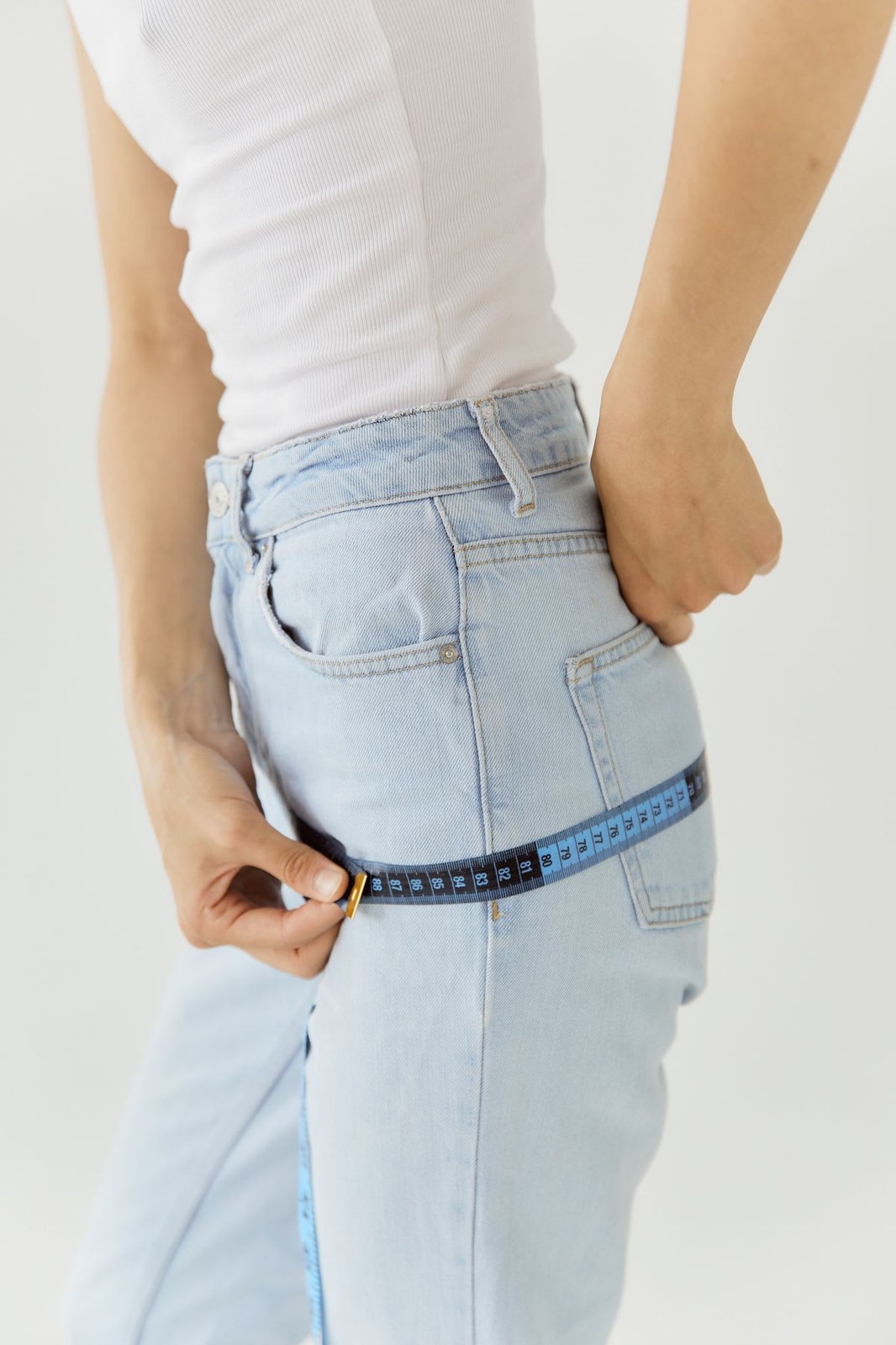
Measure around the fullest part of your hips and seat, usually about eight inches below your waist. Keep your feet together and the tape level. The hip measurement matters most for how the skirt falls, especially on a fitted or straight-cut overall dress. If your hip is larger than the chart's measurement for a given size, size to your hip and adjust the waist with a belt or the straps.
When your measurements span two sizes
This is extremely common and completely normal. As a general rule, choose the size that fits your largest measurement and then use straps, a belt, or a tailor to bring in the rest. Fabric with a little stretch gives you more room to move between sizes, so factor that in as well.
Measuring for the skirt, not just the body
Two more numbers make sizing much easier: the shoulder-to-hem length you prefer and the finished skirt width. Measure a dress you already love from the shoulder to the hem, then compare it with the chart. For width, hold the tape around your hips at their fullest and add a couple of inches of ease so the skirt hangs rather than clings. This is the measurement that tells you whether an overall dress will skim comfortably or pull across the seat.
Torso Length: The Measurement Most Shoppers Forget
Torso length is the quiet hero of overall dress fitting. It decides where the waist seam sits, how the bib rests on your chest, and whether the straps stay on your shoulders. If you have ever tried on an overall dress and felt it was pulling down or riding up, torso length was almost certainly the reason.
How to measure your torso
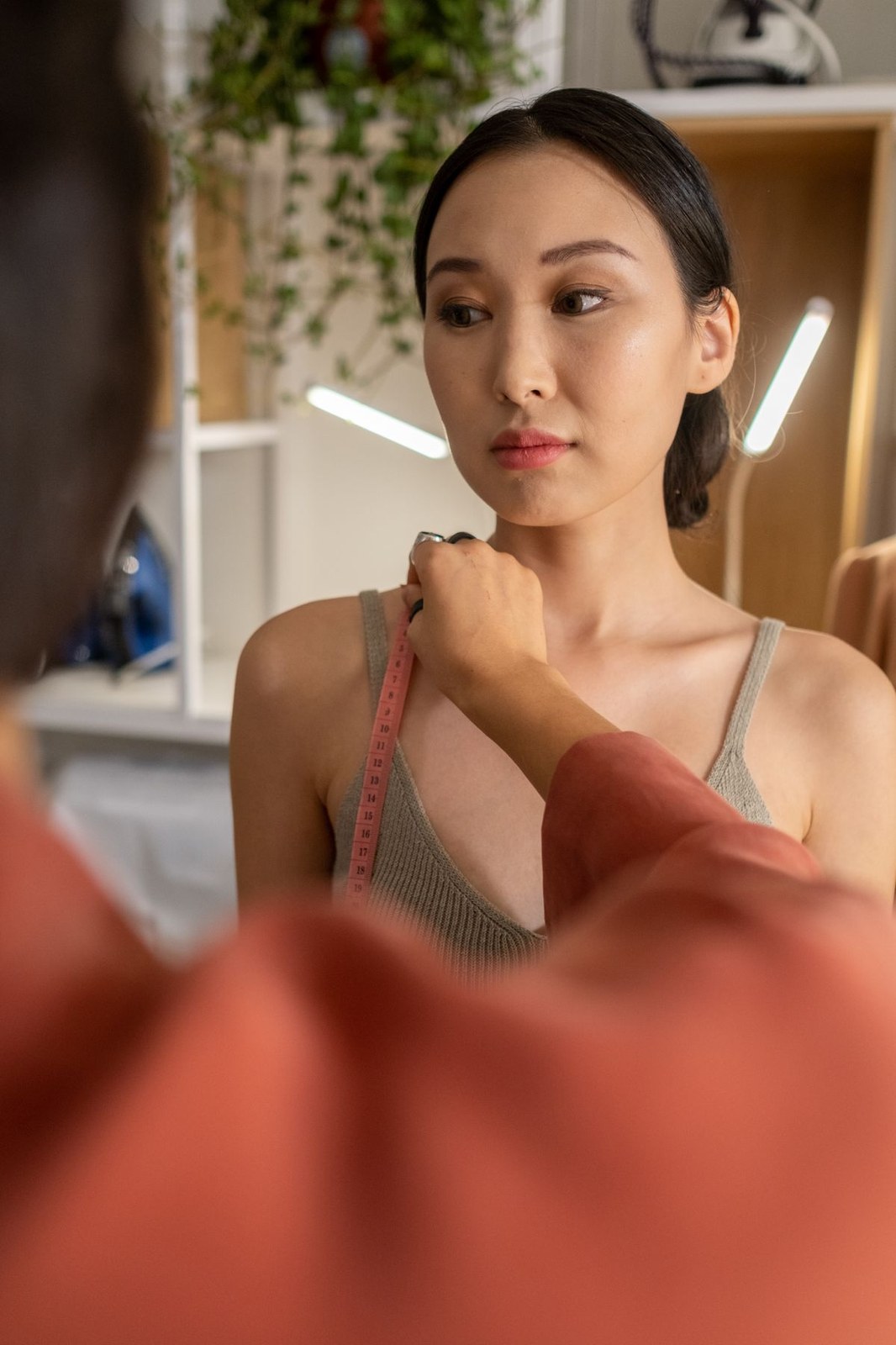
Measure from the top of your shoulder, near the base of your neck, straight down the front to your natural waist. Then, if you can, measure the same distance down your back. Compare the two numbers. This tells you how much strap length you need and whether a style designed for a shorter or longer torso will suit you better.
Long torso, short torso, and average
If your torso is long, choose styles with generous adjustable straps so you can add length where you need it, and look for a bib that sits slightly lower for comfort. If your torso is short, you will want shorter straps so the waist seam lands at your true waist rather than your hips. Most overall dresses can be adjusted to suit either, which is why the straps matter so much.
How to fake a better torso fit
A tailor can shorten or lengthen straps, move buttons, and take in the waist for a modest cost, and the difference is often dramatic. If a dress is close but not perfect, a small alteration is well worth it. It turns an almost-right overall dress into one you reach for constantly.
Adjusting for a fuller bust
A fuller bust changes how a bib sits. If the bib pulls away from your chest or the straps dig in, you likely need to size for your bust first and adjust the waist afterwards. Look for styles with a slightly deeper bib, a fuller strap, and a fabric with a little give. A supportive bra in the shape you normally wear makes the measurement, and the fit, more accurate.
Adjustable Straps and How They Change the Fit
The straps do more than hold the dress up; they are your main tool for dialling in the fit. Learning to use them properly transforms how an overall dress sits on your body.
How adjustable straps work
Most straps use a slider or a button-and-loop system that lets you shorten or lengthen them. Shortening the straps lifts the bib higher on your chest and raises the waist seam, which is flattering when you want a defined, vintage-inspired line. Lengthening the straps lowers the bib for a more relaxed, slouchy feel. Adjust both sides by the same amount to keep the bib level.
Setting the straps for your body
Start with the straps at their loosest setting, put the dress on, and gradually shorten each side until the waist seam sits at your natural waist and the bib rests flat against your chest without gaping or cutting in. Walk a few steps and sit down. If the straps slip off your shoulder, shorten them a little more; if the dress pulls, lengthen them.
When straps still slip
Some shoulder shapes simply shed straps. A tiny stitch, a hidden snap, or a small silicone strap grip can solve it, and a tailor can add a discreet keeper in minutes. If you prefer an easier fix, a cross-back strap design keeps everything in place without extra fuss.
Bib Width, Coverage, and Neckline
The bib is the face of an overall dress, and its width decides both the coverage and the mood of the piece. Getting this right is as important as getting the size right.
Wide bib versus narrow bib
A wide bib covers more of your chest and creates a strong, structured front, which suits anyone who likes a clean, framed look. A narrow bib feels lighter and shows more of your base layer, which can be lovely with a pretty blouse underneath. Try holding the dress up against a top you plan to wear and see which proportion you prefer.
Getting the coverage you want
Check where the top edge of the bib sits: higher for more coverage, lower for a more open neckline. Pair the bib with a high-necked top underneath if you want more coverage overall, or a scoop neck for a softer line. There is no right answer, only the level that makes you feel comfortable and confident.
Neckline balance under the bib
Because the bib covers your centre, the neckline of whatever you wear beneath is what people see. A v-neck lengthens, a boat neck adds width across the collarbone, and a turtleneck reads cosy and polished. Match the neckline to the strap width: wide straps like a closer neckline, narrow straps suit a wider one.
Choosing Mini, Midi, or Maxi by Height
Length is deeply personal, but your height gives you a useful starting point. What matters is how the hem lands on your leg and how the silhouette makes you feel, not a fixed rule. If you are still deciding which everyday silhouette suits you, browse our plus size casual dresses for more easy options in the same spirit.
If you are petite
A mini or a midi often feels most balanced on a petite frame, because a very long hem can swallow your proportions. If you love a maxi, choose one with a straighter, narrower skirt and pair it with a shoe that adds a little height so the hem does not sit at a heavy point on the ankle. Hemming a long dress is also a simple, affordable fix.
If you are average height
You have the widest range to play with. Mini, midi, and maxi will all work; choose by the occasion and the weather. A midi is the safest everyday pick, a maxi is the easiest for long days, and a mini is the most playful. Measure a dress you already love to predict how any new one will land.
If you are tall
A maxi is your natural match and will usually hit mid-calf or lower, giving a beautiful unbroken line. Watch out for minis that may feel very short on a longer leg, and midis that can land awkwardly at mid-shin. Check the product measurement from shoulder to hem and compare it with a dress that hits where you like.
The hem and your shoes
As a simple guide, a longer hem likes a shoe with some substance or lift, while a shorter hem can carry a lighter shoe. If you plan to wear boots, hold the dress against them to see where the hem and boot meet, since that junction shapes the whole silhouette.
Reading length from the product page
Product photos are styled, so lean on the numbers. A centre-front or side-length measurement from shoulder to hem is the most useful figure you can have. Compare it with a dress where the hem lands exactly where you like it. If the new number is longer, expect the hem to sit lower; if it is shorter, higher. That single comparison removes most of the guesswork from shopping online.
Fabric, Stretch, and What to Size Up or Down For
The fabric decides how forgiving a plus size overall dress will be, and it also tells you whether to size up, down, or stay true to your measurements. Understanding it saves returns and disappointment.
How stretch changes sizing
Denim with two to three percent elastane, ponte, and stretch twill all give a little, which means a close-fitting dress will still move with you. If a fabric has no stretch, choose the size that matches your largest measurement, because there is nothing to give. If it has plenty of stretch, you can sometimes size down for a closer fit without losing comfort.
Structured versus fluid fabrics
Structured fabrics such as heavier denim and corduroy hold their shape and create a defined silhouette, so fit through the waist matters more. Fluid fabrics such as viscose blends and lighter cottons drape softly and follow your body, so comfort and length matter more. For a first overall dress, a mid-weight stretch fabric is usually the easiest to love.
When to size up
Size up if you carry your weight through the bust and want the bib to lie flat, if you have a fuller hip and want the skirt to hang without pulling, or if the fabric is structured with little stretch. Sizing up costs you nothing if the straps and waist can be adjusted, and it protects you from a dress that feels tight across the chest.
When to size down
Size down when the fabric has generous stretch and the style is intended to be fitted, or when the chart's measurements sit closer to your smallest measurement than your largest. Be careful here: a dress that is too small through the hip will ride up and twist. When in doubt, it is usually safer to choose your true size and adjust.
Care tips that protect the fit
Wash structured fabrics in cold water and hang them to dry so they keep their shape and size. Heat from a tumble dryer can shrink cotton denim and relax stretch fibres, which changes the fit you worked so hard to get right. Follow the care label and your overall dress will keep its shape for years.
Sizing for the season and the layer
Think about what you will wear underneath. If you plan to layer a thick knit under the bib in winter, you may want a touch more room through the chest and waist. If you will wear an overall dress mostly over a thin tee in summer, your true size is usually right. The same style in a plus size overall dress can feel different depending on the layer, so buy for the outfit you wear most.
Frequently Asked Questions About Plus Size Overall Dress Sizing
What size overall dress should I order if I am between sizes?
Order the size that fits your largest measurement, then use the adjustable straps and a belt to fine-tune the waist. If the fabric has good stretch, you can often choose the smaller of the two sizes for a closer fit. When in doubt, size to your hip for a skirt that hangs cleanly.
How do I know if my torso is long or short?
Measure from the top of your shoulder down to your natural waist. If that distance is longer than average for your height, you have a long torso and will want longer adjustable straps. If it is shorter, shorten the straps so the waist seam sits at your true waist rather than sliding to your hips.
Should the bib sit high or low on my chest?
That is a personal choice. A higher bib gives more coverage and a defined, vintage look, while a lower bib feels relaxed and shows more of your top. Adjust the straps until the bib lies flat and you feel comfortable, and make sure both sides are even.
Can a plus size overall dress be tailored for a better fit?
Yes, and it is often the smartest upgrade you can make. A tailor can shorten straps, move buttons, take in the waist, and hem the length to suit your height. Small alterations turn a nearly right fitting plus size overall dress into one that feels made for you.