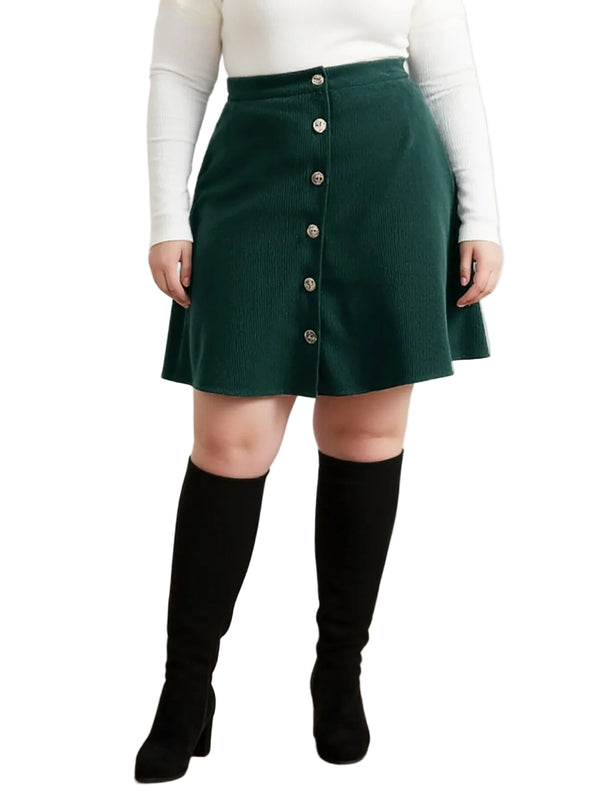
If you have ever tugged a pair of thigh highs into place in the morning only to feel them creeping toward your knees by lunch, you are in very good company. Learning how to keep thigh high stockings up is not about willpower or “having the right body” — it is about fit, fabric and a little bit of skin prep. Thigh highs roll down for ordinary, fixable reasons: a band that is too narrow for your thigh, dry skin that gives the silicone nothing to hold on to, lotion applied minutes before you dress, a size that never matched your measurements, or detergent residue quietly breaking down the elastic. This guide works through every one of those causes and hands you the fixes that genuinely work on plus size legs, from measuring yourself properly to caring for a silicone band, timing your moisturiser, and knowing when a garter belt is the smarter backup.
Why Thigh High Stockings Roll Down: The Real Causes
When a stocking rolls, gravity is only half the story. The other half is friction. A thigh high stays in place because the band grips your skin with just enough tension to resist the downward pull of the fabric below it. The moment either the tension or the grip disappears, the band starts to slide, then fold, then roll into a tight little ring that feels more like a tourniquet than a stocking. Working out which of those two things is failing is the fastest route to a real fix, and it is the difference between buying another pair that lets you down and finally getting the answer to how to keep thigh high stockings up.
The band is too narrow for your thigh
This is the single most common cause on curvy legs, and it is almost never explained at the point of sale. A narrow elastic band distributes its grip over a very small strip of skin, so the pressure per centimetre is high but the total contact area is tiny. On a fuller thigh, a slim band simply cannot hold enough surface to resist the weight of the leg of the stocking. A wider band — ideally a soft silicone lace band of three to five centimetres — spreads that grip across more skin, which means more friction and far less rolling. If your stockings have a thin, round elastic top, that band is fighting a losing battle no matter how carefully you put them on.
Dry skin gives the silicone nothing to grip
Silicone is not glue. It works by creating gentle friction against the surface of your skin, and dry, flaky or dusty skin offers it very little to hold. In winter, when indoor heating strips moisture from your legs, roll-down gets dramatically worse. Very smooth, freshly shaved skin can also be surprisingly slippery, because there is no texture for the band to catch. The goal is soft, supple, slightly tacky skin — not bone dry, and definitely not slick.
Lotion, oil and body butter applied too soon
Here is the trap: you moisturise because dry skin causes slippage, then you dress immediately, and the same moisturiser becomes a lubricant that sends the band straight down your leg. Oils and rich body butters are the worst offenders because they leave a film that never quite absorbs. Timing is everything, and we will come back to that.
Detergent and fabric softener residue
Silicone grip bands pick up residue the way a lint roller picks up fluff. Fabric softener, dryer sheets and too much detergent leave a waxy coating that clogs the silicone and kills its tackiness. If your stockings used to stay up beautifully and now refuse to, residue build-up is a strong suspect.
A size that never matched your measurements
Thigh high sizing is based on the circumference of your thigh, not your dress size, and not your shoe size. Many plus size shoppers are sold a “one size” or “queen” stocking that technically stretches over the leg but sits under so much tension that the band is already stretched to its limit before you take a single step. A band at maximum stretch has no reserve grip left, so it creeps down within minutes.
Why “One Size Fits Most” Fails on Plus Size Legs
“One size fits most” is one of the least helpful phrases in hosiery. It usually means the stocking will stretch to fit a wide range, but stretch and fit are not the same thing. A stocking that has been pulled to its maximum circumference is under constant tension, and constant tension is exactly what forces a band to migrate downward. Think of it like a hair tie stretched around a thick ponytail: it holds, but it also slides and digs in.
Thigh circumference on plus size legs can range widely — two people who wear the same dress size may have thighs that differ by several centimetres, especially if one carries more muscle and the other more softness, or if one is taller. That is why genuine plus size hosiery is sold in real size bands with a stated fit range, and why the honest answer to how to keep thigh high stockings up often begins with admitting the pair in your drawer is simply the wrong size. A stocking that matches your thigh measurement will need far less fussing than a stretched-out substitute, and it will also feel dramatically more comfortable across a long day.
Length matters too. A stocking that is too short will pull constantly at the band as it tries to reach its full extent, while one that is too long will bunch at the ankle and add weight below. A well-fitting plus size thigh high sits smoothly from ankle to upper thigh with a little ease, not a stretch.
There is also the question of elastane content and recovery. Cheap hosiery uses a low percentage of elastane, which means it stretches but does not spring back. Over a few wears it sags permanently, and the band slowly loses the ability to grip anything. Better quality plus size hosiery uses a higher elastane content with good recovery, so the stocking returns to shape after each wear and keeps the same tension on your leg month after month. If your stockings bag at the knee or ankle after an hour, the fabric is not recovering, and no amount of adjusting will keep them up. That is a quality problem, not a you problem.
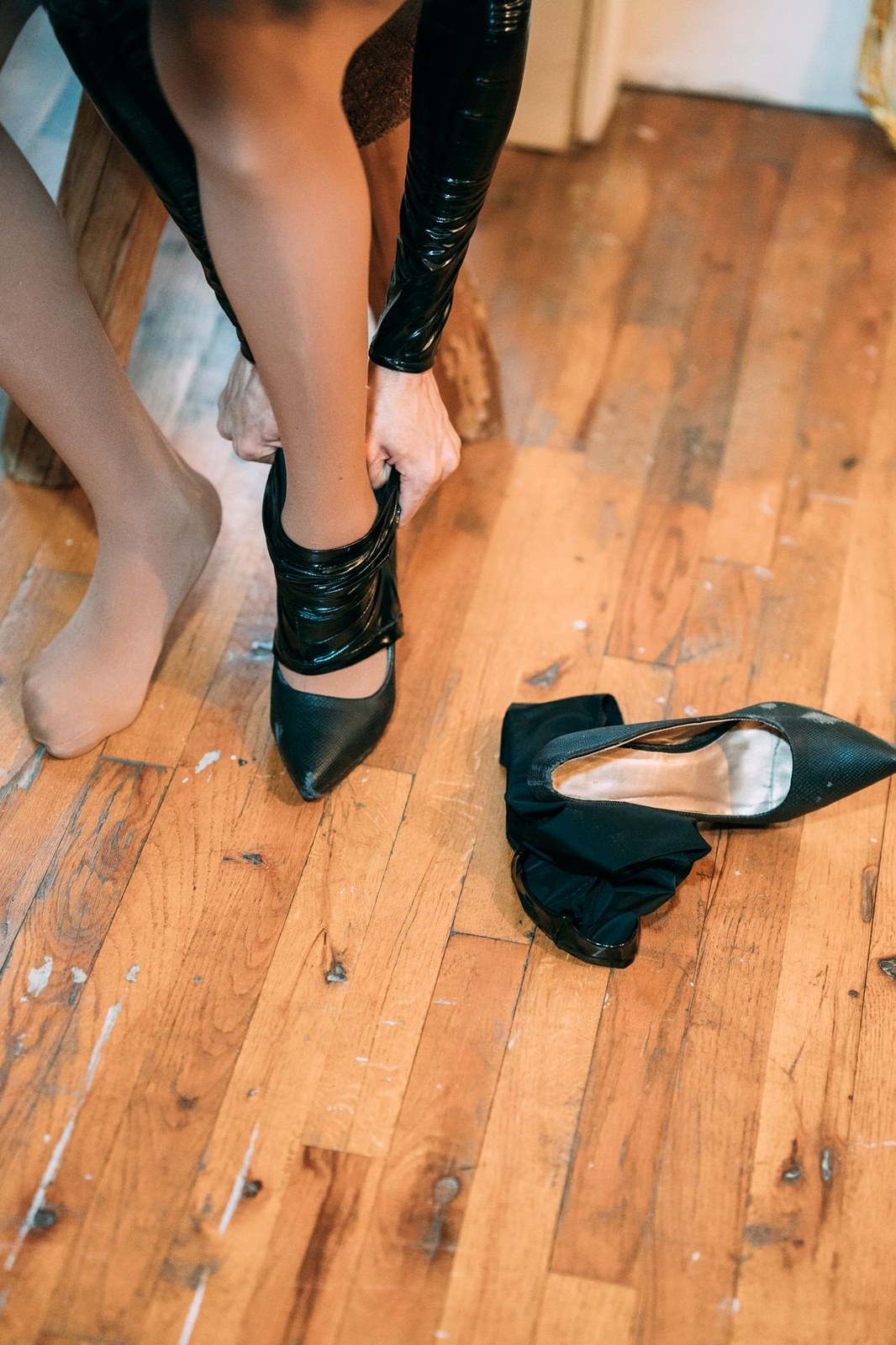
One more thing worth knowing: how you put them on shapes how they behave. If you bunch the stocking all the way down to the toe and then drag it up in one hard pull, you stretch the band unevenly and set it up to slide. Gather it loosely, ease it over the foot, then guide it up your leg in gentle stages, letting the band settle on clean, dry skin. Small habits like this add up to a stocking that quietly stays where you put it.
How to Measure Your Thigh in 60 Seconds
Getting this right once saves you from a drawer full of stockings that will not behave. You only need a soft tape measure, and you can do it over bare skin or thin leggings. Write the numbers down — guessing is how roll-down starts.
Step 1 — measure the fullest part
Wrap the tape around the fullest part of your upper thigh, usually about five to eight centimetres below the crease where your leg meets your body. Keep the tape snug but not tight, and make sure it is level all the way round rather than sloping at the back. That number is your thigh circumference, and it is the number that decides your size.
Step 2 — check the length you actually want
Decide where you want the band to sit — mid-thigh, upper thigh, or right up near the crease. Then measure from your ankle to that point to get your ideal length. If you are between two lengths, choose the longer option and let the band sit slightly higher, where a fuller part of the thigh gives the silicone more to hold.
Step 3 — measure both legs
Most people are not perfectly symmetrical. If your thighs differ by more than a centimetre, size to the larger leg. A stocking sized to the smaller thigh will always be the one that rolls.
How to Choose Stockings That Stay Put All Day
Armed with your measurements, choosing becomes straightforward. You are looking for a stocking whose stated fit range comfortably includes your thigh circumference — ideally with a little room at the top end, so the band is never stretched to its limit.
Look for a wide silicone lace band
The band is the whole game. A soft, wide silicone lace top spreads pressure across more skin, grips gently rather than pinching, and looks lovely if a little lace peeks out. Our stay up stockings are built around exactly this kind of band, which is why they hold without a garter. If you prefer a knitted, cosy finish for cooler days, a well-sized pair of thigh high socks with a wide ribbed cuff follows the same principle: broad contact area, gentle tension, no rolling.
Match circumference, not clothing size
Ignore the label on your jeans and read the hosiery size chart. If a brand only offers “one size” or “S/M” with no circumference range, treat it with caution. A good plus size brand will tell you the thigh measurement each size fits, because that is the only number that determines whether the band will hold.
When a garter belt is the smarter backup
For very long wear, for dancing, or for stockings you adore that have no silicone at all, a garter belt is not a defeat — it is smart engineering. A suspender belt takes the downward load off the band entirely and anchors the stocking at the waist, where it is easy to keep snug. Choose one with wide straps and metal clips rather than plastic, and adjust the straps so the stockings hang with slight tension rather than being dragged taut.
Silicone Band Care: The Fix Most People Skip
Even a perfect band will stop gripping if you neglect it. Caring for silicone takes seconds, but it roughly doubles the working life of the grip — and it is one of the most overlooked answers to how to keep thigh high stockings up.
Wash the band after every wear
Skin oils, sweat and body lotion all collect on silicone. Rinse the band in cool water with a drop of gentle soap, then rub it gently between your fingers to lift the film. Do not scrub it with a brush or a rough cloth, and do not wring it out. A clean band is a grippy band.
Reactivating a tired silicone band
If the grip has faded, wash the band with a little mild soap to remove residue and let it air dry completely. Avoid fabric softener on any part of the stocking, and never put silicone in the dryer — heat degrades it permanently. If the band still will not hold after a proper clean, it has simply worn out, and it is time for a new pair.
Store them flat, never knotted
Knotted, bunched or hung-by-the-toe storage creates creases and permanent stretch in the band and the leg. Fold each stocking loosely and lay it flat in a drawer, or roll it gently. Keep silicone away from direct sunlight and radiators, both of which dry it out.
A quick rotation habit helps too. If you wear thigh highs often, own three or four pairs and alternate them, so each one has time to rest and recover its elasticity between wears. A stocking worn five days in a row will always lose its grip faster than one worn every fourth day. And when you travel, pack them in a soft pouch rather than cramming them into a corner of a suitcase, where zips and buckles can snag the band and the knit.
Moisturiser Timing: The 30-Minute Rule
Here is how to have soft skin without sabotaging your grip: moisturise after your shower, then wait at least thirty minutes before you put your stockings on. That gives a light lotion time to sink in fully so it conditions the skin without leaving a slippery film on the surface.
Choose your product with care. A lightweight body lotion is ideal. Heavy body butters, oils and anything with a high oil content will sit on the skin and act like grease under the band. If your legs are very dry, apply your richer moisturiser at night instead, and use a light lotion in the morning. If you are dressing in a hurry and your skin still feels slick, dust just the area under the band with a little translucent powder — it gives the silicone a slightly matte surface to grip and stops the band from sliding down. On very hot days, a light dusting of powder before you dress is one of the simplest tricks for keeping thigh highs in place.
Exfoliation and shaving play a role as well. Freshly shaved skin can feel silky-smooth and slightly slippery, so if you shave your legs, give the band a powder-dusted, dry surface to sit on, or shave the night before rather than the morning of. A gentle exfoliation once or twice a week keeps skin smooth without stripping it, which helps the band glide into position rather than dragging or bunching. If you have very sensitive skin, patch test any new lotion or powder on a small area first, since irritation under a snug band is genuinely uncomfortable and worth avoiding.
Finally, think about the temperature on the day. Cold, dry air makes skin tight and the stocking stiff, while humid heat makes both skin and fabric damp, and dampness reduces friction. If you are getting ready somewhere warm, let your legs cool and dry completely in front of a fan or open window before you pull the stockings on. A few extra seconds of patience here is often the difference between a stocking that holds all evening and one that is already halfway down the leg.
What NOT to Do When Your Stockings Keep Rolling Down
When you are frustrated, it is tempting to reach for quick fixes that damage your stockings, your skin, or both. Skip all of these.
Don’t roll the top down over itself
Folding the band down creates a thick, tight cuff that digs in, cuts off circulation and adds bulk that pulls the stocking lower. It also stretches the band out of shape so it grips even less next time. If the band will not stay, the problem is fit or cleanliness — not the width of the fold.
Don’t use hairspray, glue or double-sided tape on skin
These are uncomfortable, can irritate sensitive skin and will ruin the delicate fabric of the stocking. Hairspray also leaves a sticky residue that traps lint and destroys the silicone. Nothing you would not put on your face belongs on your thigh.
Don’t yank them up by the toe seam
Pulling hard on the toe stretches the leg of the stocking unevenly and can tear the fine knit. Always gather the stocking up the leg gently, guiding it upward with both hands, then smooth it into place from ankle to thigh.
Don’t size down to “make them tight”
Tighter is not grippier. An over-stretched band has no reserve elasticity, digs into your leg and rolls faster than a correctly fitted one. Size to your measurement, not to a feeling.

FAQ: How to Keep Thigh High Stockings Up
Why do my thigh highs roll down even though they feel tight enough?
Because tightness and grip are different things. If the band is narrow or the stocking is stretched near its limit, it will roll no matter how snug it feels. The fix is a wider silicone band sized to your actual thigh measurement, plus clean, lightly moisturised skin.
How often should I wash my thigh high stockings?
Wash them after every one or two wears. Rinsing the silicone band after each wear keeps the grip working and prevents skin oils and lotion from building up into a slippery film.
Can I wear thigh high stockings without a garter belt?
Yes, if the band is wide, made of soft silicone and correctly sized. A garter belt is a useful backup for very long days, dancing or non-silicone stockings, but a good pair of stay up stockings holds perfectly well on its own.
What is the best way to stop stockings slipping on hot days?
Keep skin clean and lightly powdered rather than heavily moisturised, let any lotion absorb for at least half an hour, and choose a wide silicone band that is not stretched to its limit. Heat and sweat reduce friction, so a well-fitted band matters even more in summer.