Chaussettes de randonnée grandes tailles : Le guide de coupe et de performance 2026
Aug 13, 2026

Pourquoi les femmes grandes tailles ont besoin d'une véritable stratégie en matière de chaussettes de randonnée
Si vous aimez partir en randonnée à l'automne 2026, mais que vos chaussettes actuelles vous laissent des marques rouges et des ampoules douloureuses sur les talons, vous n'imaginez pas le problème. La plupart des chaussettes de randonnée sont conçues pour un pied et un mollet étroits et de volume moyen, ce qui explique précisément pourquoi les chaussettes de randonnée grandes tailles méritent une discussion sérieuse axée sur la performance, plutôt qu'une solution de dernière minute consistant à prendre une taille au-dessus. Ce guide s'adresse aux femmes rondes ayant des mollets larges, des pieds larges et des cou-de-pied hauts qui veulent des chaussettes vraiment performantes, et pas seulement une étiquette douillette et une rayure pastel.
Nous n'allons pas répéter les conseils de style confortables de notre article sur les chaussettes de botte. Ce guide a pour but de garder vos pieds au sec, au chaud et sans ampoules lorsque le sentier se transforme en éboulis, lorsqu'une traversée de ruisseau trempe vos bottes et lorsqu'une longue descente fait gonfler vos chevilles. La différence entre une bonne et une mauvaise randonnée se résume souvent à ce que vous avez aux pieds.
L'écart d'ajustement entre le mollet et le pied
Les problèmes d'ajustement sur le sentier sont une question de physique, pas de vanité. Une chaussette qui serre le haut d'un mollet large réduit la circulation sanguine, rendant les pieds plus froids et plus sujets à l'enflure. Une boîte à orteils étroite comprime votre avant-pied ; un talon bas laisse la chaussette glisser et se tasser sous votre voûte plantaire. Tout cela se voit sur le sentier, pas sur une photo de catalogue. Une fois que vous savez quoi chercher, vous pouvez choisir des chaussettes conçues pour votre morphologie.
Commencez par votre corps, pas par le tableau des tailles
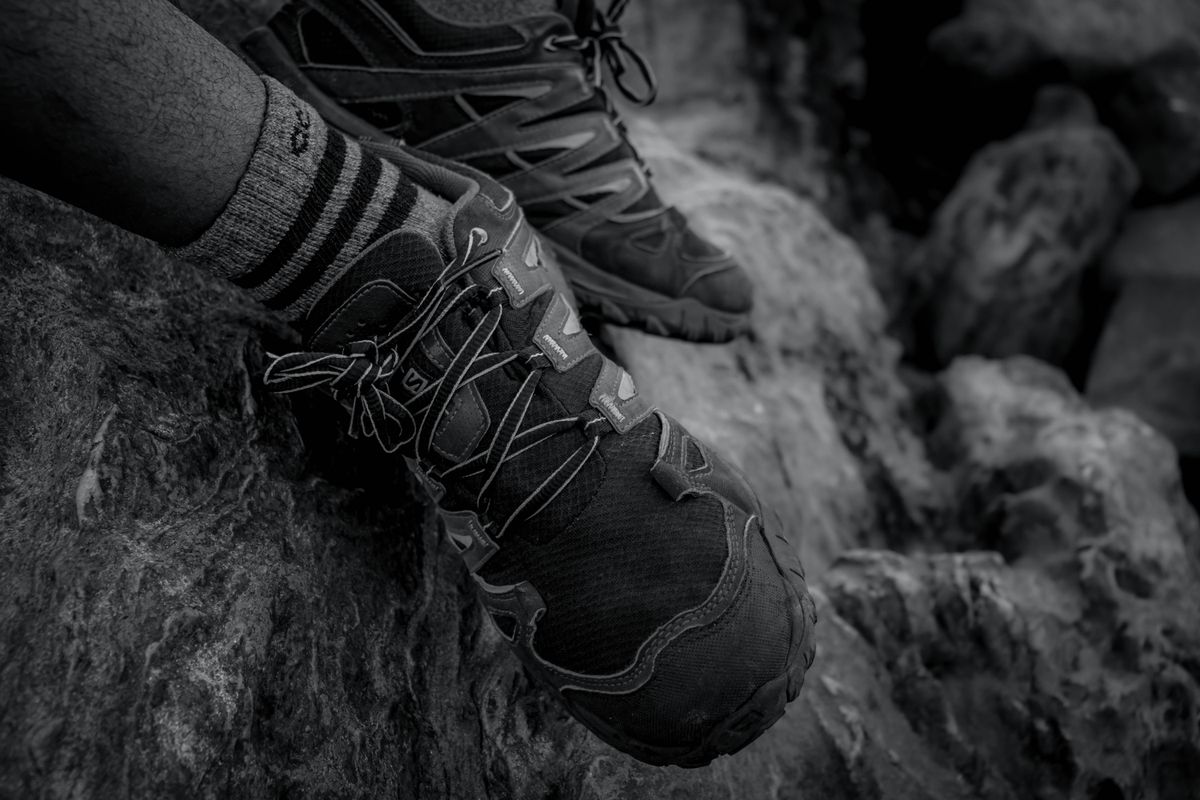
Trop de randonneurs achètent des chaussettes comme des t-shirts : choisissez une taille, espérez le meilleur. Pour les femmes grandes tailles, ce jeu de devinettes échoue plus souvent parce que les variables sont multiples, et que le dimensionnement en fonction de la longueur du pied ignore le reste.
Les mollets larges changent tout au niveau du poignet
Une chaussette de type « crew » standard suppose une circonférence de mollet d'environ 35 à 40 cm. Si votre mollet mesure 43, 46 ou 50 cm, le revers de la chaussette doit s'étirer au-delà de sa limite de conception, devenant un garrot avec des indentations profondes et des pieds froids. Une chaussette de randonnée grande taille appropriée utilise un tricot de jambe plus large et plus élastique et un bord doux et non contraignant au sommet.
Les pieds larges et les cou-de-pieds hauts ont besoin d'espace
Les pieds larges sont la partie évidente. Moins évident est le cou-de-pied haut, la voûte plantaire relevée sur le dessus de votre pied. Un panneau de cou-de-pied bas et serré peut donner l'impression de couper le dessus de votre pied même si la boîte à orteils est spacieuse. Recherchez un cou-de-pied extensible ou un tricot anatomique qui s'étire verticalement et horizontalement. Si le tissu forme des lignes serrées sur votre cou-de-pied lorsque vous l'essayez, il est trop petit à cet endroit.
Comment mesurer la circonférence de votre mollet
La mesure prend deux minutes et élimine presque toutes les incertitudes. Asseyez-vous avec votre pied à plat et votre jambe détendue, puis enroulez un mètre ruban souple autour de la partie la plus large de votre mollet, à quelques centimètres sous le genou. Mesurez à nouveau debout car le mollet grossit sous charge, et utilisez le plus grand nombre. Nos chaussettes à taille étendue couvrent des circonférences de mollet d'environ 38 à 56 cm, avec une manchette qui reste plate plutôt que de serrer.
Mesurer votre pied et votre cou-de-pied
Pour votre pied, tracez-le sur du papier en vous tenant debout et mesurez du talon aux orteils, puis la largeur maximale d'un côté à l'autre. Pour le cou-de-pied, passez le mètre ruban sur le dessus de votre pied à la base de votre cheville, là où se trouve la languette d'une chaussure. Comparez ces chiffres à un tableau de chaussettes : la plage de longueur de pied doit couvrir votre mesure talon-orteils et les spécifications de largeur et de mollet doivent couvrir vos mesures d'un côté à l'autre et du cou-de-pied. Si un tableau n'indique que la pointure, c'est votre premier signal d'alarme.
Les choix de tissus qui méritent leur place sur le sentier
La fibre au contact de votre peau fait plus pour prévenir les ampoules et réguler la température que tout autre facteur. Voici comment se comportent les principales options après des kilomètres et une traversée de ruisseau.
Laine mérinos : la bête de somme par temps froid
Le mérinos est une laine fine et douce qui ne gratte pas. Son plus grand atout est la thermorégulation : il vous garde au chaud quand il fait froid, respire quand vous avez chaud, et reste chaud même humide. Il résiste également aux odeurs, vous pouvez donc porter la même paire pendant plusieurs jours. L'inconvénient est la durabilité ; le mérinos pur s'use aux talons et aux orteils, donc la plupart des chaussettes performantes le mélangent avec du nylon. Pour l'automne et l'hiver, un mélange d'environ 60 à 70 pour cent de mérinos est difficile à battre.
Fibres synthétiques : rapides et résistantes
Les chaussettes en polyester et en nylon sèchent plus vite que celles en mérinos et coûtent moins cher. Elles sont le meilleur choix pour les randonnées par temps chaud, les traversées de cours d'eau ou toute situation où vous avez besoin que la chaussette sèche rapidement. Les synthétiques modernes évacuent l'humidité efficacement. L'inconvénient est l'odeur ; les fibres synthétiques retiennent davantage les odeurs que le mérinos, alors rincez-les tous les soirs lors de voyages de plusieurs jours.
Mélanges : le juste milieu pratique
La plupart des chaussettes de randonnée sérieuses sont des mélanges, et pour une bonne raison. Un mélange typique pourrait être 60 % mérinos, 35 % nylon et 5 % élasthanne. Le mérinos assure le confort et la température, le nylon prolonge la durée de vie dans les zones de forte usure, et l'élasthanne donne de l'élasticité pour les mollets larges et les cou-de-pieds. Sur l'étiquette, le talon et les orteils doivent être plus denses tandis que la jambe et le cou-de-pied restent extensibles. Cette combinaison permet à une seule chaussette de s'adapter à une jambe standard et à une jambe de grande taille.
Pourquoi le coton à 100 % échoue sur les sentiers
C'est la règle que tout randonneur devrait mémoriser : ne jamais randonner avec des chaussettes 100 % coton. Le coton absorbe l'eau et la retient, de sorte qu'au moment où vous transpirez ou marchez dans une flaque d'eau, vos chaussettes deviennent lourdes, froides et lentes à sécher. Le coton mouillé contre la peau est la cause la plus fréquente d'ampoules de sentier car il ramollit la peau et permet à la friction de causer un maximum de dégâts. Il perd également une grande partie de sa valeur isolante lorsqu'il est mouillé, ce qui, par une froide matinée d'automne, peut faire chuter rapidement la température de votre pied. Les meilleures chaussettes de randonnée grande taille évitent totalement le coton.
Une note sur les odeurs et la durabilité
Si la gestion des odeurs est importante, le mérinos l'emporte clairement. Si l'impact environnemental est important, recherchez du nylon recyclé ou du mérinos d'origine responsable avec une chaîne d'approvisionnement traçable. Vous n'avez pas à choisir entre la performance et les valeurs ; les meilleures chaussettes de grande taille combinent désormais des synthétiques recyclés avec du mérinos certifié. Évitez les allégations antimicrobiennes à base d'argent si vous êtes sensible, et préférez les solutions au niveau des fibres comme la résistance naturelle du mérinos.
Niveaux d'amorti adaptés au sentier et au volume de la botte
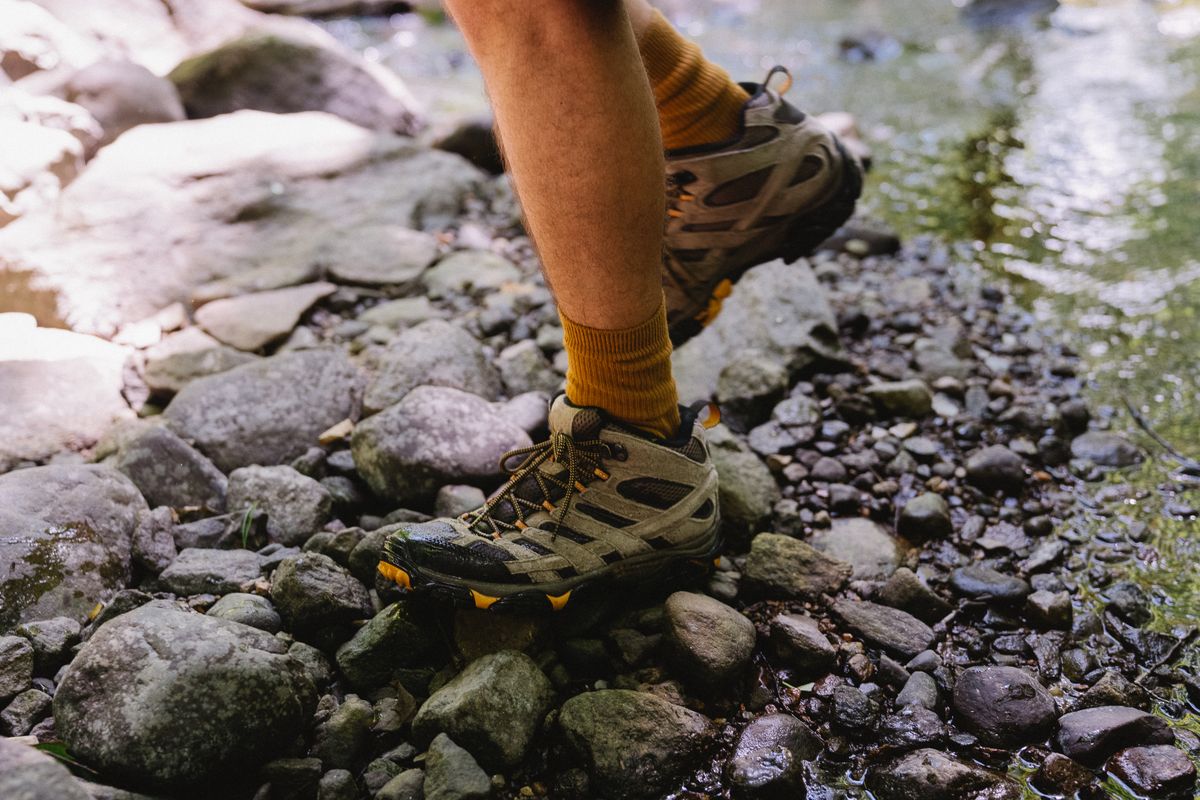
L'amorti n'est pas une question de douceur pour la douceur. Il s'agit d'absorption des chocs, de chaleur et de l'espace que votre chaussette occupe à l'intérieur de votre botte. Choisir le mauvais amorti peut faire en sorte qu'une botte soit trop serrée ou trop lâche. La plupart des chaussettes de randonnée grande taille sont proposées en plusieurs niveaux d'amorti, et l'adaptation du niveau à votre terrain est la clé.
Amorti ultraléger pour les randonnées rapides d'une journée
Les chaussettes ultralégères ont un tissu fin et respirant avec un rembourrage minimal, parfois juste un léger souffle sous la plante du pied. Elles conviennent aux sentiers de randonnée bien entretenus, aux conditions estivales et aux randonneurs qui souhaitent une sensation maximale du sol. Elles sèchent le plus rapidement et prennent le moins de place dans un sac. Sur un terrain rocheux ou racinaire, une chaussette ultralégère transmet plus d'impact à vos articulations.
Amorti léger pour les sentiers de mi-saison
Un amorti léger ajoute une fine couche sous la semelle et parfois le talon, offrant un peu de rembourrage sans volume. C'est le niveau le plus polyvalent et un excellent choix par défaut pour les randonnées d'automne entre 7 et 18 degrés Celsius. Il se marie bien avec les chaussures de trail à faible volume et la plupart des chaussures de randonnée légères.
Amorti intermédiaire pour les portages d'une journée entière
Les chaussettes de poids moyen ajoutent un rembourrage plus dense sous le pied et autour du talon, ainsi qu'un peu plus d'isolation le long de la jambe. Elles sont le bon choix pour les randonnées d'une journée complète, les terrains rocheux et le transport d'un sac à dos chargé. Attendez-vous à un confort entre environ 1 et 13 degrés Celsius, mais notez le compromis : un poids moyen nécessite une botte avec un volume interne suffisant, sinon vos orteils se sentiront à l'étroit dans la descente.
Amorti épais pour le froid et les terrains accidentés
Les chaussettes épaisses sont chaudes et conçues pour la randonnée hivernale, la raquette ou les approches rocheuses où une absorption maximale des chocs est essentielle. Elles sont plus performantes en dessous d'environ 4 degrés Celsius et nécessitent une botte à grand volume. Portées dans une botte trop serrée, une chaussette épaisse causera en fait des ampoules en comprimant la zone des orteils, alors choisissez la taille de vos chaussures en conséquence.
Associez l'amorti au volume de la botte
La règle d'or est que l'amorti plus le volume de la botte doivent équivaloir à un ajustement sûr mais non serré. Si votre botte est ajustée, choisissez un amorti léger. Si votre botte a une zone des orteils spacieuse et un volume plus élevé, un poids moyen ou lourd la remplira et empêchera votre pied de glisser. Un pied qui glisse ne serait-ce que de quelques millimètres à l'intérieur de la botte est une ampoule en puissance.
Hauteur des chaussettes et prévention des frottements aux revers
La hauteur de la chaussette doit être juste au-dessus du revers de votre botte, et non à son niveau. Lorsque le haut d'une chaussette arrive là où se termine le rembourrage de la botte, les deux bords se frottent et vous obtenez le redoutable frottement du revers et souvent une zone irritée.
Chaussettes invisibles et chaussettes basses
Les chaussettes invisibles se placent sous la cheville et les chaussettes basses arrivent juste au-dessus. Elles conviennent aux chaussures de trail basses lors de randonnées chaudes et sèches. Le risque pour les randonneuses de grande taille concerne moins le mollet que le revers de la chaussure : si votre chaussure a un col rembourré, assurez-vous que le haut de la chaussette est bien dégagé. Pour la plupart des randonnées d'automne, réservez-les aux journées faciles et sans risque.
Chaussettes crew et le problème de la compression
Les chaussettes crew montent à mi-mollet environ et sont la hauteur la plus populaire pour la randonnée. Pour les mollets larges, c'est aussi là que le problème de la compression se manifeste le plus, car le revers se situe là où le mollet est le plus volumineux. Un revers crew standard roulera, rentrera ou laissera une marque dès le premier kilomètre. Parcourez notre gamme complète de chaussettes crew dans la collection de chaussettes crew grande taille pour découvrir des revers conçus pour les mollets plus épais plutôt que repris d'un modèle unisexe. Une chaussette crew grande taille bien conçue utilise un tricot de jambe plus large et un bord doux pour que le haut soit lisse.
Chaussettes montantes pour les bottes hautes
Les chaussettes montantes s'étendent jusqu'en dessous du genou et se portent avec des bottes de randonnée ou d'alpinisme hautes. Elles éliminent complètement l'espace entre la chaussette et la botte, ce qui est idéal pour la neige, les broussailles et la protection contre les insectes. Pour les mollets larges, les chaussettes montantes doivent avoir une grande élasticité verticale ; une chaussette trop courte va soit serrer, soit glisser. Vérifiez que la plage de circonférence du mollet indiquée vous convient avant d'acheter.
La doublure du revers : là où la chaussette rencontre la botte
Quelle que soit la hauteur que vous choisissez, la couture au sommet de la chaussette doit se situer au moins un demi-pouce au-dessus du revers de la botte. Si votre botte a un rebord interne dur, envisagez une chaussette avec une bande supérieure rembourrée qui amortit cette zone de contact. Un revers non-serrant ne signifie pas un revers lâche ; il doit tenir sans serrer, ce qui est un exploit d'ingénierie plus subtil qu'il n'y paraît.
Bien choisir sa taille : pourquoi les tableaux de pointures trahissent les randonneuses grandes tailles
Voici la vérité tacite de l'industrie de la chaussette : la plupart des tableaux de tailles de chaussettes pour femmes associent uniquement la taille de la chaussette à la pointure, ignorant complètement la circonférence du mollet et la largeur du pied. Cela fonctionne pour un pied étroit et un corps de taille moyenne, et échoue pour toutes les autres.
Le problème avec les tableaux de correspondance pointure/taille de chaussette pour femmes
Un tableau typique pour femmes indique qu'une pointure 8 à 11 équivaut à une grande taille de chaussette. Mais un pied de taille 10 sur une jambe standard étroite et un pied de taille 10 sur un mollet de 50 cm ne donnent pas du tout le même ajustement. Le pied peut convenir tandis que la jambe est impossible à tirer au-delà du mi-mollet. Les randonneurs de grande taille achètent régulièrement la taille indiquée sur le tableau, constatent que le pied convient, puis ne parviennent pas à faire passer la chaussette sur leur mollet. Traitez toujours la pointure comme l'un des trois seuls chiffres. Les meilleures chaussettes de randonnée grande taille publient les plages de circonférence des mollets à côté des pointures.
Lisez la plage de circonférence du mollet
La spécification la plus utile sur l'emballage d'une chaussette de randonnée est la plage de circonférence du mollet. Les chaussettes de qualité pour grande taille l'indiquent clairement, par exemple : convient aux mollets de 38 à 56 cm. Si une marque ne l'indique pas, la chaussette n'a probablement pas été conçue pour vous. Faites correspondre votre mesure debout à cette plage avec au moins un pouce de marge afin que le revers soit ajusté, et non strangulateur.
Ajustement de la zone des orteils et du talon
Au-delà de la longueur, surveillez la zone des orteils et le talon. Une bonne chaussette de randonnée a une zone des orteils plus profonde et plus spacieuse qui permet à vos orteils de s'étaler naturellement, réduisant les ongles noirs et les points chauds. Le talon doit reposer exactement sur votre talon sans que le tissu ne s'accumule sous votre voûte plantaire. Essayez les chaussettes avec les bottes avec lesquelles vous allez randonner et marchez quelques minutes. Si vous sentez un pli sous la plante de votre pied, la chaussette glisse et vous avez besoin d'une taille différente ou d'une doublure.
Le revers non-compressif, expliqué
Un revers non-compressif n'est pas un revers lâche ; c'est un revers conçu avec un tricot plus doux et plus ouvert et un bord plus large et plus plat au sommet. Il maintient la chaussette en place tout au long de la journée en utilisant une tension douce et uniforme sur une plus grande surface au lieu d'une bande élastique serrée qui s'enfonce. Vous pouvez le sentir : un revers compressif laisse une marque nette une heure après le retrait, tandis qu'un revers non-compressif ne laisse aucune marque ou seulement une ligne faible. Pour les mollets larges, cette seule caractéristique fait la différence entre supportable et torture lors d'une longue randonnée.
Systèmes pour les vraies randonnées
Une fois que vous avez la bonne chaussette, quelques systèmes transforment une bonne paire en une stratégie fiable pour les conditions difficiles.
Sous-chaussettes et système à deux couches
Une sous-chaussette est une chaussette fine portée sous votre chaussette de randonnée principale, de sorte que le frottement se produit entre la sous-chaussette et la chaussette extérieure plutôt que sur votre peau, réduisant considérablement le risque d'ampoules lors de randonnées longues ou humides. Les sous-chaussettes sont généralement en soie, en mérinos fin ou en synthétique léger. Elles vous permettent de ne changer que la chaussette extérieure si elle est trempée, gardant une couche sèche contre votre peau. Pour les randonneuses de grande taille sujettes aux frottements du talon, une sous-chaussette est une amélioration très rentable.
Compression versus soutien gradué
Les chaussettes de compression appliquent une pression quasi-uniforme et sont souvent de qualité médicale, destinées à des affections circulatoires spécifiques et à utiliser de préférence avec un avis médical. Les chaussettes de soutien gradué, courantes en randonnée, appliquent une pression plus ferme à la cheville qui diminue vers le mollet, repoussant le liquide vers le haut et réduisant l'enflure lors des longues descentes. Pour la plupart des randonneurs, un soutien gradué léger est suffisant. Si vous avez un problème circulatoire diagnostiqué, parlez-en d'abord à un clinicien. Notre gamme complète de chaussettes grandes tailles comprend des options de soutien gradué pour les treks de plusieurs jours.
Superposition saisonnière pour les randonnées par temps froid
Par grand froid, la superposition ne concerne pas seulement le torse. Une astuce que certains randonneurs hivernaux utilisent est une fine doublure sous une chaussette en laine épaisse à l'intérieur d'une botte isolée et spacieuse, maintenant une couche d'air chaud même si la chaussette extérieure s'humidifie. Plus simplement, passez au mérinos de poids moyen ou lourd lorsque les températures descendent en dessous de 4 degrés, et ajoutez une genouillère pour bloquer le vent au-dessus de votre botte. Gardez des chaussettes de rechange sèches dans un sac étanche ; un changement à mi-journée évite une demi-journée de misère. Planifier à l'avance avec des chaussettes de randonnée grande taille adaptées aux couches chaudes et froides permet à votre système d'être flexible.
Entretien des chaussettes qui préserve le gonflant et l'élasticité
Les bonnes chaussettes sont un investissement, et la façon dont vous les lavez détermine leur durée de performance. Retournez-les à l'envers, lavez-les à froid en cycle délicat, et évitez l'adoucissant, qui recouvre les fibres et nuit à l'évacuation de l'humidité. Évitez la chaleur : séchez-les à basse température ou à plat à l'air libre pour préserver l'élasthanne qui donne à vos mollets larges leur élasticité. Bien entretenu, un mélange de mérinos de qualité conserve son gonflant et sa forme pendant plusieurs saisons.
Emballage et rotation pour les voyages de plusieurs jours
Pour une randonnée de plusieurs jours, prévoyez une paire de chaussettes par jour de randonnée plus une de rechange, et faites-les tourner pour que chaque paire ait une nuit pour sécher. Une rotation simple ressemble à ceci :
- La paire portée est lavée et suspendue chaque soir pour sécher pendant la nuit.
- Une paire de rechange entièrement sèche reste dans un sac étanche comme assurance.
- Une paire légère de campement permet de garder vos chaussettes de randonnée plus propres autour du camp.
- Ajoutez une paire supplémentaire si vous prévoyez des traversées de ruisseaux ou de fortes pluies.
Emballez les chaussettes dans un sac étanche, pas en vrac dans votre sac, car un sac mouillé signifie des rechanges mouillées. Une rotation constante vous permet de garder des chaussettes sèches et performantes du premier au dernier kilomètre.
Foire aux questions
Les chaussettes de randonnée à compression sont-elles sûres pour les randonneuses grandes tailles ?
Les chaussettes de soutien gradué sont généralement sûres et utiles pour réduire l'enflure lors de longues descentes, et elles conviennent bien à de nombreuses randonneuses grandes tailles. La véritable compression médicale ne doit être utilisée qu'avec les conseils d'un clinicien, surtout si vous avez des problèmes circulatoires ou cardiaques. Commencez par un soutien gradué léger plutôt qu'une pression maximale.
Combien de paires dois-je emporter pour une randonnée de trois jours ?
Prévoyez une paire par jour de randonnée plus une de rechange, soit quatre paires pour un voyage de trois jours, avec une paire supplémentaire si vous prévoyez des traversées de ruisseaux ou de la pluie. Faites-les tourner chaque nuit et gardez une paire entièrement sèche en cas de besoin. Une paire de campement est facultative mais permet de mieux entretenir vos chaussettes de randonnée.
Puis-je porter mes chaussettes de randonnée grandes tailles avec des chaussures de trail plutôt que des bottes ?
Oui. Les chaussures de trail sont plus légères et sèchent plus vite, et la plupart des chaussettes de randonnée fonctionnent bien avec elles. Choisissez un amorti léger ou ultraléger pour que la chaussure ne soit pas trop serrée, et assurez-vous que le haut de la chaussette dépasse le col de la chaussure pour éviter les frottements. Pour les terrains rocheux ou froids, les bottes avec des chaussettes de poids moyen offrent une meilleure protection, alors gardez les deux options dans votre équipement.
Comment empêcher le haut d'une chaussette montante de me couper le mollet ?
Achetez des chaussettes dont la taille est basée sur la circonférence du mollet, et pas seulement sur la pointure, et recherchez un bord non compressif en haut. Si vos chaussettes actuelles serrent, prenez une taille de jambe au-dessus ou passez à un modèle montant spécialement conçu pour les grandes tailles. Évitez de retrousser le haut, ce qui crée une bande doublée qui serre encore plus qu'un bord plat.