Accessoires d'hiver grandes tailles : écharpes, bonnets et gants pour femmes rondes
Sep 01, 2026

L’hiver a une façon de s’immiscer sournoisement dans notre garde-robe. Un matin, vous saisissez votre cardigan habituel et réalisez que l’air extérieur est soudainement mordant. C’est précisément à ce moment-là que les accessoires d’hiver pour grandes tailles se révèlent indispensables : l’écharpe qui s’enroule deux fois sans tirer, le bonnet qui tient confortablement sans pincer, les gants qui couvrent vos phalanges sans difficulté. Les accessoires sont les plus petites pièces de votre placard et souvent les plus joyeuses, car ils sont un pur choix. Rien n’est obligatoire à leur sujet. Ils existent pour vous tenir au chaud et pour vous permettre de jouer.
Chez Moon Wood, nous entendons la même frustration chaque automne. Les manteaux et les tricots ont énormément progressé en matière de tailles étendues, mais les touches finales sont à la traîne. Les bonnets sont coupés pour un seul tour de tête. Les écharpes sont décrites comme « oversize » et arrivent à peine assez longues pour être nouées une fois. Les gants sont de « taille unique » ce qui suppose une paume étroite. Ce guide porte donc spécifiquement sur le cou, la tête et les mains, avec de vraies mesures, des discussions concrètes sur les tissus et des idées de tenues que vous pouvez assembler cette semaine.
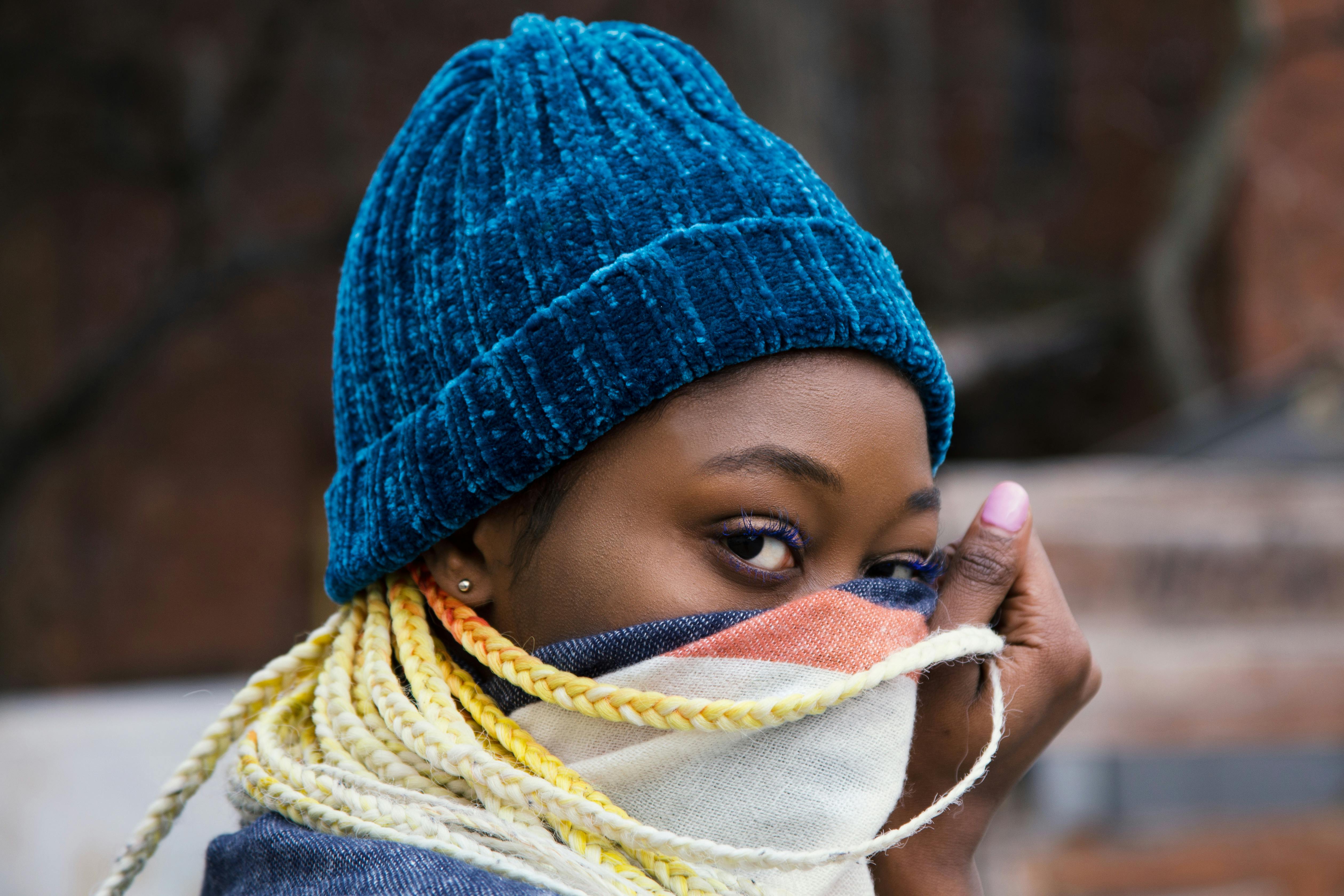
Pourquoi les accessoires pour le cou, la tête et les mains ont besoin d'une conversation inclusive sur les tailles
Voici quelque chose que l’industrie de la mode dit rarement à voix haute : les corps ne sont pas des versions proportionnées les uns des autres. Une acheteuse de taille 24 n’a pas automatiquement une tête proportionnellement plus grande qu’une acheteuse de taille 8, et une acheteuse de taille 16 peut avoir des paumes larges et des doigts courts, ou des doigts longs et des poignets étroits. Le tour de tête, la largeur de la main et la profondeur du cou varient indépendamment de la taille de la robe. C’est pourquoi les accessoires d’hiver pour grandes tailles peuvent être une étiquette légèrement trompeuse lorsqu’ils sont traités comme une taille unique. Ce dont nous avons réellement besoin, c’est d’une gamme de dimensions, clairement publiées, afin que vous puissiez choisir celle qui correspond à vos mesures.
Le résultat pratique d'ignorer cela est familier. Un bonnet qui laisse une ligne de pression rouge sur votre front après vingt minutes. Une écharpe que vous ne pouvez draper que à plat devant car la longueur est insuffisante pour la boucler. Des gants qui tirent si fort à la base du pouce que vos doigts ont plus froid que si vous n'aviez rien porté. Rien de tout cela n'est un problème corporel. C'est un problème de fabrication, et il est soluble avec de meilleurs chiffres.
Il y a aussi un mythe de style à déconstruire. Pendant des années, on a dit aux femmes rondes de garder des accessoires minuscules et neutres afin de ne pas « ajouter de volume » près du visage. Ce conseil n’a jamais vraiment porté sur la chaleur ou la beauté ; il s’agissait de se minimiser. Une grande écharpe douillette près de votre visage attire l’attention sur votre sourire, vos boucles d’oreilles, vos cheveux. Une couleur saturée au niveau de votre clavicule illumine tout votre teint. Le volume n’est pas un risque. C’est un choix de design, et vous êtes libre de l’assumer aussi bruyamment que vous le souhaitez.
Des écharpes qui s'enroulent réellement : infini, couverture et tricot classique
Les foulards sont l'accessoire d'hiver qui a le plus d'impact, car ils sont placés là où les gens regardent. C'est aussi la catégorie où les plaintes concernant les tailles sont les plus fréquentes, et la solution est simplement la longueur. Une écharpe a besoin de suffisamment de tissu pour faire le tour de votre cou et laisser des pans à travailler. Si ce n'est pas le cas, toutes les options de style se réduisent à un simple drapé plat.
De quelle longueur avez-vous réellement besoin ?
Mesurez lâchement autour de la partie la plus large de votre cou où un foulard se poserait, puis ajoutez le facteur d'enveloppement. Pour une seule boucle lâche avec des extrémités pendantes, recherchez environ 70 pouces de longueur totale. Pour un double enveloppement ajusté et haut, visez 80 pouces ou plus. Les foulards couverture sont généralement vendus sous forme de carrés, et un carré de 55 par 55 pouces vous donne une réelle liberté de pliage, tandis que tout ce qui est inférieur à 40 pouces carré se comporte davantage comme un bandana une fois plié en diagonale. La largeur compte aussi : un rectangle de 12 à 16 pouces de large a suffisamment de corps pour avoir l'air intentionnel plutôt que filandreux.
Les écharpes tubulaires et le détail de l'ajustement que personne ne mentionne
Les écharpes tubulaires sont des boucles pré-cousues, ce qui les rend merveilleusement rapides le matin : on les passe par la tête, on ajuste, et c'est fait. L'inconvénient est qu'une boucle fixe ne peut pas être allongée. Vérifiez la circonférence de la boucle, pas seulement la mesure de la chute. Une boucle d'environ 60 pouces de circonférence se double confortablement sur la plupart des cous et des épaules. Une boucle de 40 pouces ne peut passer sur votre tête qu'avec effort, et si elle convient à votre tête, elle peut être trop serrée autour du cou et sembler restrictive avec un manteau à col en dessous. Recherchez un tricot côtelé extensible ou un mélange de jersey si vous voulez que la souplesse soit intégrée au tissu lui-même.
Les écharpes plaid pour un maximum de caractère
Le foulard couverture est l'option la plus généreuse disponible et, honnêtement, la plus amusante. Pliez le carré en triangle, drapeze le long côté sur votre dos, et laissez la pointe pendre devant ou croisez les extrémités et rentrez-les dans une ceinture. Parce qu'un foulard couverture est véritablement grand, il se porte magnifiquement sur une doudoune ou un manteau de laine sans paraître englouti. Le carreau est le classique, mais le camel uni, le vert forêt, le bordeaux et le crème sont tous élégants et plus faciles à assortir avec différentes tenues. Bonus : lors d'un long trajet en voiture ou dans un cinéma froid, il fait également office de véritable couverture.
Rectangles en tricot classique et grosses mailles torsadées
Le cheval de bataille. Un rectangle en grosse maille torsadée en mérinos ou un mélange acrylique doux vous offre le plus de permutations de style : le tour de cou simple avec des pans égaux, le nœud parisien, le drapé lâche sous un manteau ouvert, ou le look ascot rentré pour un col montant. Les tricots côtelés se compressent légèrement, donc une écharpe côtelée est moins volumineuse à la gorge qu'une écharpe torsadée du même poids, ce qui est utile si vous n'aimez pas la pression près de votre cou. Si vous avez chaud, un mérinos plus fin procure de la chaleur sans la masse.
Bonnets pour têtes plus grandes : extensibilité, profondeur et tombant
Les bonnets sont l'endroit où le "taille unique" fait le plus de dégâts, et où une petite quantité d'informations change tout. Le tour de tête chez les adultes varie généralement d'environ 21 à 25 pouces. La plupart des bonnets du marché de masse sont tricotés pour environ 22 pouces avec une élasticité limitée. Si votre tête mesure 23,5 pouces, ce chapeau ne sera pas confortable, aussi mignon qu'il ait pu paraître en ligne.
Prenez une mesure et magasinez en toute confiance pour toujours
Enroulez un ruban souple autour de votre tête, à environ un pouce au-dessus de vos sourcils et autour du point le plus large à l'arrière. Gardez-le ajusté mais pas serré. Notez le chiffre dans votre application de notes. Vous pouvez maintenant comparer avec les spécifications du produit au lieu de deviner. Deux autres chiffres méritent d'être notés : la profondeur de la calotte (du bord du bord au sommet du chapeau, idéalement 9 à 10 pouces pour un look slouchy et 8 pouces pour un look ajusté) et la plage d'étirement, que les bonnes marques publient comme quelque chose comme "convient pour 22 à 25 pouces".
Slouchy, à revers et béret : quelle forme fait quoi
Un bonnet slouchy (décontracté) a une profondeur de calotte supplémentaire, de sorte que l'excédent de tissu se drape doucement à l'arrière. C'est la forme la plus accommodante car la longueur supplémentaire absorbe le volume plutôt que de le combattre, et elle est vraiment charmante avec des cheveux épais ou bouclés, des tresses, des dreadlocks et des chignons. Un bonnet à revers a une bande repliée, ce qui ajoute une double couche d'élasticité au front — une excellente chaleur, mais vérifiez que le revers est côtelé plutôt que rigide. Un béret ou une casquette gavroche se pose sur la tête plutôt que de la serrer, donc la circonférence importe moins ; ce sont d'excellentes options si vous trouvez tout chapeau ajusté inconfortable.
Détails du tissu et de la doublure qui comptent
Les tricots côtelés s'étirent beaucoup plus que les tissus serrés ou feutrés. La laine et le mérinos s'étirent et reprennent bien leur forme ; le pur coton s'étire puis reste étiré. Si votre cuir chevelu est sensible, recherchez une doublure en satin ou en polaire, qui prévient également les frisottis et protège les cheveux. Les gros pompons ajoutent de la hauteur, ce qui est une astuce de proportion amusante à côté d'une grande écharpe. Et si vous avez déjà repoussé un bonnet de votre front toute la journée parce qu'il vous serrait, c'est le signal pour augmenter la plage d'étirement plutôt que de supposer que vous devez simplement le supporter.

Gants et moufles pour mains larges et poignets pleins
Les mains sont la frontière des accessoires la plus souvent oubliée, et les mains froides gâchent une promenade hivernale plus vite que presque n'importe quoi d'autre. La taille des gants est malheureusement incohérente d'une marque à l'autre, donc deux mesures sont votre meilleure défense.
Les deux chiffres qui décodent la taille des gants
Premièrement, la circonférence de la paume : enroulez un ruban autour de votre main dominante au point le plus large, juste en dessous des phalanges, en excluant le pouce. Deuxièmement, la longueur de la main : mesurez du bout de votre majeur au pli de votre poignet. La plupart des marques taillent en fonction de la circonférence de la paume, environ 7 pouces pour la taille S, 7,5 à 8 pouces pour la taille M, 8,5 à 9 pouces pour la taille L, et 9,5 pouces et plus pour la taille XL. Si votre paume mesure 9 pouces mais que vos doigts sont plus courts, choisissez la taille la plus large et acceptez des bouts de doigts légèrement longs ; un gant trop serré à travers la paume restreint la circulation et sera toujours plus froid.
Moufles, convertibles et le compromis chaleur
La physique favorise les moufles. Les doigts partageant une seule chambre se tiennent chaud mutuellement, donc une moufle bat toujours un gant fait de matériaux identiques. Les moufles sont également plus tolérantes en termes de taille, car il n'y a pas de canaux individuels pour chaque doigt à ajuster précisément. Les moufles convertibles à rabat offrent la chaleur des moufles et l'accès du bout des doigts pour les clés et les téléphones, ce qui est un compromis vraiment pratique pour les trajets quotidiens. Les gants traditionnels à cinq doigts l'emportent en dextérité et en apparence soignée avec un manteau ajusté.
Ouvertures de poignet, manchettes et manches de manteau
Vérifiez la mesure de l'ouverture du poignet si vous avez des avant-bras plus pleins, car un poignet élastiqué étroit peut vous serrer et laisser une marque. Les longues manchettes qui s'étendent sur la manche du manteau résolvent le problème classique de l'espace hivernal au poignet et valent la peine d'être recherchées. Les poignets en tricot côtelé sont les plus adaptables. Les bouts de doigts compatibles avec les écrans tactiles sont désormais courants et vous évitent de tâtonner votre téléphone à mains nues à l'arrêt de bus. Et une note sur la catégorie voisine : les chauffe-bras en tricot sont une jolie pièce séparée à porter sous des manches courtes à l'intérieur, mais ils résolvent un problème différent de celui des gants, alors traitez-les comme un ajout plutôt qu'un substitut.
Texture, couleur et motif : la partie amusante
Une fois l'ajustement pris en compte, les accessoires d'hiver pour grandes tailles deviennent le moyen le moins cher et le moins risqué de changer l'allure d'une tenue. Un manteau anthracite avec une écharpe moutarde a un rendu complètement différent du même manteau avec une écharpe crème. C'est là que vous pouvez expérimenter sans vous engager dans une toute nouvelle garde-robe.
Quelques combinaisons qui fonctionnent toujours : un pull en grosse maille torsadée avec une doudoune élégante, car le contraste entre la texture mate et le nylon lisse semble délibéré. Le crème et le camel ensemble pour un monochrome doux qui prend de belles photos. Une seule touche de couleur saturée — cobalt, framboise, émeraude — sur un vêtement d'extérieur neutre, qui place la couleur près de votre visage où elle illumine votre teint. La superposition ton sur ton, où l'écharpe, le bonnet et les gants se déclinent en trois nuances de la même famille, donne un look cohérent avec presque aucun effort.
Le motif est également très ouvert. Les carreaux, les jacquards, les rayures et les blocs de couleurs ont tous leur place sur n'importe quel corps. La seule directive réellement utile concerne la répétition : si votre foulard présente un motif chargé, laissez le bonnet et les gants unis pour que l'œil ait un endroit où se reposer. C'est un principe de composition, pas une restriction. Parcourez la gamme complète d'accessoires grandes tailles lorsque vous souhaitez voir comment les textures s'accordent en pratique.
Une autre idée à essayer : les métalliques et le brillant. Un bonnet doublé de satin, une écharpe avec un subtil fil de lurex, ou des gants en simili cuir couleur lie-de-vin ajoutent une touche d'éclat nocturne aux tenues de jour. L'hiver est sombre et long. Les paillettes sont autorisées.
Cinq formules de tenues n'utilisant que des pièces pour le cou, la tête et les mains
Les formules éliminent la fatigue décisionnelle les matins froids. Chacune d'elles suppose que vous possédez déjà les couches de base et les complète simplement avec des accessoires.
1. Le classique de la sortie d'école
Legging doublé en polaire, un sweat-shirt oversize, des bottines, une doudoune. Complétez avec un bonnet épais crème, une écharpe tube crème assortie et des moufles gris foncé. Le bonnet et l'écharpe clairs apportent de la lumière près de votre visage par un matin gris, et les moufles vous permettent de rester dehors pendant vingt minutes complètes sans regret.
2. Le jour des courses en manteau de laine
Jean droit, col roulé en maille fine, manteau long en laine. Ajoutez une écharpe-couverture camel pliée en triangle dans le dos, un bonnet côtelé ajusté dans le même ton et des gants en cuir tanné avec une manchette longue. C'est le look discrètement luxueux, et il est presque entièrement dû aux accessoires assortis en ton.
3. La journée en ville axée sur la couleur
Base entièrement noire : jean noir, pull noir, bottes noires et manteau noir. Ensuite, une écharpe torsadée vert émeraude éclatante, un bonnet noir avec un pompon émeraude et des gants noirs compatibles écran tactile. Une seule couleur, répétée deux fois, sur un fond neutre. Extrêmement efficace et prend quatre secondes à assembler.
4. La flânerie au marché le week-end
Pantalon en velours côtelé, chemise en flanelle sur un t-shirt, surchemise ou veste sherpa. Complétez avec un bonnet slouchy couleur avoine, une écharpe rectangulaire à carreaux nouée à la parisienne, et des moufles convertibles à rabat pour manipuler de l'argent et du café. Détendu, chaud et photogénique sans effort.
5. La soirée d'hiver
Une robe pull avec des collants opaques et des bottes à talons. Ajoutez une écharpe fine en mérinos couleur baies profondes, un béret plutôt qu'un bonnet pour que vos cheveux restent coiffés, et des gants courts en similicuir. Élégant sans être trop sophistiqué, et chaque pièce s'enlève facilement à l'intérieur. Pour plus d'idées d'associations complètes, la sélection plus large de mode grandes tailles est un bon point de départ.
Entretien, rangement et construction d'une petite capsule
De bons accessoires durent de nombreux hivers si vous les traitez avec soin, et un petit ensemble bien choisi vaut mieux qu'un tiroir rempli d'articles qui ne conviennent pas tout à fait.
Lavez les tricots à la main ou en cycle laine à l'eau froide avec un détergent doux, puis pressez l'eau – ne tordez jamais – et séchez à plat, en reformant le vêtement pendant qu'il est humide. Le séchage en machine transforme une belle écharpe en mérinos en une petite planche rigide. Rangez les tricots pliés plutôt que suspendus, car la suspension étire les épaules d'une boucle d'écharpe et déforme le bord d'un bonnet. Le cèdre ou la lavande dans la boîte de rangement découragent les mites, et un rasoir à tissu élimine le boulochage sur les zones de frottement intense comme là où une écharpe frotte le col d'un manteau.
Les gants en cuir et en similicuir bénéficient d'un séchage à l'écart de la chaleur directe ; un radiateur les craquera. Reformez les gants humides en les posant à plat avec les doigts redressés. Si vos gants ont une doublure en laine, aérez-les toute la nuit plutôt que de les enfermer dans un sac.
Une capsule d'accessoires d'hiver de cinq pièces
Si vous voulez un minimum vraiment utile, le voici : une écharpe épaisse neutre d'au moins 70 pouces de long, une écharpe colorée qui vous plaît, un bonnet extensible de votre circonférence mesurée, une paire de gants ou de moufles isolés de la taille de votre paume, et une paire de sous-gants compatibles écran tactile pour les jours plus doux. Cinq pièces, et toutes les tenues de votre rotation hivernale sont couvertes. Ajoutez ensuite des éléments saisonniers — un béret, une écharpe couverture, un bonnet à pompon vif — selon votre humeur.
Une dernière réflexion sur l'achat d'accessoires d'hiver pour grandes tailles : achetez en fonction de la température réelle de votre lieu de vie et des activités que vous pratiquez réellement. Une magnifique écharpe fine est un mauvais choix pour un trajet venteux, et de lourdes moufles de ski sont absurdes pour une voiture chaude et un bureau chauffé. Adaptez la pièce à la journée et vous la rechercherez constamment.
Foire aux questions sur les accessoires d'hiver pour grandes tailles
Comment trouver un bonnet qui convienne à une tête plus grande sans être trop serré ?
Mesurez votre tour de tête un pouce au-dessus de vos sourcils et magasinez en fonction des gammes d'étirement publiées plutôt que des étiquettes « taille unique ». Privilégiez les tricots côtelés en laine ou en mérinos, qui s'étirent et reprennent leur forme, et choisissez une forme souple avec 9 à 10 pouces de profondeur de calotte pour que le tissu supplémentaire ait de la place. Les bérets et les casquettes de gavroche se posent sur la tête plutôt que de la serrer, ce qui en fait une alternative confortable si les bonnets ajustés vous gênent.
Quelle longueur d'écharpe dois-je rechercher ?
Environ 70 pouces de longueur totale vous permettent de faire une seule boucle lâche avec des pans pendants, et 80 pouces ou plus vous offrent un double tour serré. Les écharpes couverture fonctionnent mieux à environ 55 par 55 pouces. Pour les écharpes tube, vérifiez la circonférence de la boucle — environ 60 pouces se double confortablement et passe toujours facilement sur votre tête.
Les moufles sont-elles vraiment plus chaudes que les gants ?
Oui, de manière significative. Dans une moufle, vos doigts partagent une seule chambre à air et se réchauffent mutuellement, tandis que les gants isolent chaque doigt et exposent plus de surface au froid. Si vous avez besoin de dextérité, les moufles convertibles à rabat vous offrent les deux, et un fin sous-gant porté à l'intérieur d'une moufle est la combinaison la plus chaude de toutes.
Les couleurs vives et les textures épaisses conviennent-elles aux silhouettes rondes ?
Absolument. Une couleur vive près de votre visage illumine votre teint, et les tricots épais sont douillets et intentionnels sur toutes les silhouettes. Le seul conseil pratique concerne l'équilibre visuel plutôt que votre forme : si une pièce présente un motif chargé, gardez les deux autres unies. Au-delà de cela, portez l'écharpe torsadée émeraude et le bonnet à pompon si cela vous fait sourire.
Les accessoires d'hiver sont la partie de l'habillement qui devrait ressembler à un jeu. Obtenez les bonnes mesures une fois, puis passez le reste de la saison à profiter de la couleur, de la texture et du petit plaisir d'être bien au chaud.