Le guide des tailles pour les sweat-shirts grande taille : Les cols ronds pour l'automne 2026
Aug 13, 2026

Pourquoi le sweat-shirt col rond est votre bête de somme de l'automne 2026
S'habiller pour l'automne lorsque l'on est une femme ronde est un véritable casse-tête de superpositions, et le sweat-shirt col rond est l'une des pièces les plus utiles que vous puissiez garder dans votre garde-robe. Lorsque nous parlons de sweats grande taille, la plupart des acheteuses imaginent par défaut un sweat à capuche, mais le col rond sans capuche mérite son propre moment cette saison. Un col rond vous offre une encolure nette et ininterrompue qui se superpose magnifiquement sous les manteaux et les vestes sans prendre de place. Il est un peu plus intentionnel qu'un sweat à capuche, et il permet de créer des tenues que vous pouvez réellement porter au bureau, à l'école ou pour un dîner le week-end. Ce guide est conçu pour les vraies femmes grandes tailles qui veulent des conseils concrets et pratiques sur l'ajustement et les proportions, pas des encouragements vagues.
Ce qu'est réellement un col rond
Un col rond est simplement un sweat-shirt avec un col rond et ajusté, sans capuche. L'encolure repose à la base du cou et est finie par une bande de tricot côtelé. Ce petit détail change tout dans la façon dont le vêtement interagit avec le reste de votre garde-robe. Parce qu'il n'y a pas de capuche accrochée à l'arrière du cou, la ligne d'épaule est plus nette et la silhouette reste compacte.
Pourquoi nous nous concentrons sur la silhouette sans capuche
Nous avons déjà un guide complet sur les sweats à capuche grande taille pour l'automne, donc cet article est délibérément axé sur le col rond en lui-même. La version sans capuche résout un problème spécifique : le volume. Lorsque vous superposez déjà des couches pour le temps froid, chaque centimètre de tissu supplémentaire autour du cou et des épaules compte, et un col rond maintient cette zone calme et plate.
À qui s'adresse ce guide
Si vous portez une taille US 14 et plus, si vos épaules sont plus larges, si votre poitrine est généreuse, si vos bras ont plus de circonférence, ou si votre ventre et vos hanches veulent une légère aisance, ce guide est fait pour vous. Nous aborderons les mesures, les grammages de tissus, et les petits choix de confection qui séparent un sweat-shirt que vous aimez d'un autre qui reste dans un tiroir.
Col rond vs Hoodie : Comment l'encolure et la couture d'épaule changent l'ajustement
Lorsque vous comparez des sweats grande taille côte à côte, la plus grande différence entre un col rond et un hoodie n'est pas la poche ou les cordons. C'est ce qui se passe au niveau de votre cou et de vos épaules, et comment cette zone se comporte une fois qu'un manteau est mis par-dessus.
L'équation de l'encolure
Un col rond s'ajuste parfaitement à la base du cou. Pour une poitrine plus généreuse ou un cou plus court, les côtes doivent être douces et généreuses, pas serrées et rigides. Un hoodie, en revanche, pousse le tissu vers le haut et autour du cou, ce qui raccourcit visuellement le cou et ajoute une épaisseur de tissu derrière la tête. Cette épaisseur est l'ennemi d'un col de manteau net.
Les coutures d'épaule et leur position
Sur un col rond, la couture d'épaule est l'ancrage de l'ensemble de l'ajustement. Lorsque la couture tombe juste au bord de votre épaule, le bras tombe naturellement et l'encolure reste en place. Sur un hoodie, la capuche est attachée à cette même couture et la tire vers l'avant et vers le bas, ce qui peut donner l'impression que tout le haut glisse. Pour de nombreux corps grande taille, le col rond s'ajuste simplement mieux avec moins de tracas.
Pourquoi une capuche ajoute du volume sous les manteaux
C'est le cœur pratique de l'argument. Un manteau en laine, une doudoune ou une veste en jean se ferment tous autour du cou et des épaules. Une capuche se plie en un paquet derrière votre cou, crée une bosse sous le col et force le manteau à s'éloigner de votre corps. Un col rond se superpose à plat, de sorte que le manteau se ferme proprement et que vous conservez votre véritable ligne d'épaule. Les jours plus froids, vous obtenez la même chaleur avec une fraction de l'encombrement visuel.
Quand un sweat à capuche garde sa place
Rien de tout cela ne signifie que les sweats à capuche sont à proscrire. Ils sont excellents pour se détendre, pour enfiler après une séance d'entraînement et pour les looks très décontractés du week-end. Mais si votre objectif est un sweat-shirt autour duquel vous pouvez construire une vraie tenue, le col rond est le point de départ le plus polyvalent, et le reste de ce guide explique exactement comment en choisir un.
Les fondamentaux du tissu : GSM, molleton non brossé, molleton gratté et sherpa
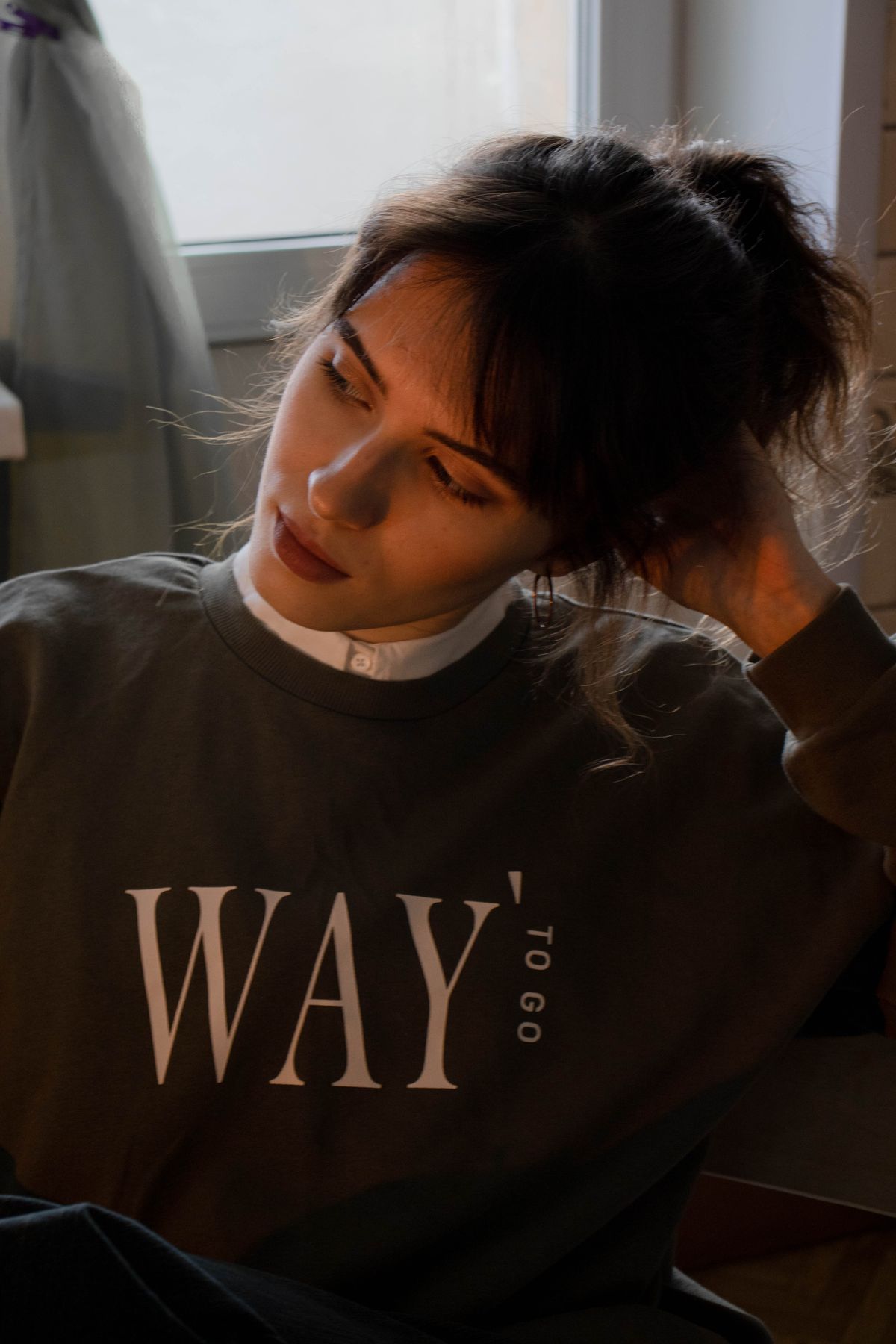
Le tissu des sweats grande taille est généralement décrit par le GSM, qui signifie grammes par mètre carré. Ce chiffre indique le poids du tissu et constitue le moyen le plus rapide de prévoir le toucher et le tombé d'un haut.
Comprendre le GSM et les niveaux de poids du molleton
Un sweat léger se situe entre 240 et 280 GSM. C'est un bon poids pour le début de l'automne et pour superposer sous une veste structurée, car il ajoute de la chaleur sans être trop lourd. Un sweat de poids moyen se situe autour de 300 à 340 GSM et est la véritable pièce quotidienne de l'automne. Un sweat lourd pèse 360 GSM et plus et commence à ressembler à une couverture, ce qui est merveilleux à la maison et les jours les plus froids, mais plus difficile à superposer. Lorsque vous magasinez, recherchez le GSM dans les détails du produit, et laissez le chiffre guider votre choix plutôt qu'une vague affirmation de douceur.
Molleton non brossé : la base respirante de tous les jours
Le molleton non brossé est tricoté avec des boucles à l'intérieur et une surface lisse à l'extérieur. Il est plus léger que le molleton classique, il respire et il a un tombé doux et fluide qui flatte un torse plus généreux. Pour les femmes grandes tailles qui ont chaud ou qui veulent un sweat-shirt qui fonctionne du matin au soir, le molleton non brossé dans la gamme 280 à 320 GSM est l'idéal. Il résiste également à l'aspect rigide et volumineux que les molleton plus lourds peuvent créer.
Polaire grattée : le juste milieu douillet
La polaire grattée est un tricot dont les fibres intérieures sont brossées pour créer un doux poil. Elle emprisonne plus d'air que le molleton non brossé, elle est donc plus chaude et plus moelleuse, tout en restant raisonnablement plate. C'est le tissu que la plupart des gens imaginent quand ils pensent à un sweat-shirt classique. Dans la gamme de 300 à 340 GSM, c'est le choix fiable pour l'automne, et il se marie bien avec les jeans et les bas de survêtement assortis dont nous parlerons plus tard.
Doublure Sherpa : chaleur maximale, volume maximal
La doublure Sherpa est une polaire moelleuse liée à l'intérieur du sweat-shirt. Elle est merveilleusement chaude, mais elle ajoute une épaisseur réelle, surtout au niveau de la poitrine et des bras. Sur une silhouette plus large, le Sherpa peut sembler volumineux à moins que la coque extérieure ne soit coupée généreusement. Gardez les cols ronds doublés Sherpa pour l'hiver profond et pour les looks où le sweat-shirt est la couche la plus extérieure, et non quelque chose que vous enterrez sous un manteau.
Construction des manches : Épaules tombantes ou montées pour les épaules plus larges
Sur les sweats-shirts grande taille, la façon dont une manche est attachée modifie l'apparence de vos épaules et la liberté de mouvement de vos bras. Il existe deux constructions principales, et elles se comportent très différemment sur les corps grande taille.
Mécanique des épaules tombantes
Une manche à épaules tombantes est coupée en une seule pièce avec le corps, de sorte que la couture tombe sous l'épaule naturelle, souvent à mi-chemin du bras. Cela crée une ligne décontractée et lâche et élimine toute tension sur le haut du corps. L'inconvénient est que cela peut donner l'impression que l'épaule est plus large et le bras plus court, donc cela fonctionne mieux lorsque la manche n'est pas trop longue et le corps pas trop oversize à la fois.
Mécanique des manches montées
Une manche montée est cousue à l'épaule au bord naturel, comme une chemise ajustée. Elle définit l'épaule et donne au bras un chemin plus net et plus structuré. Pour les femmes grandes tailles qui veulent avoir l'air soignées plutôt qu'engouffrées, une manche montée dans un col rond peut être le choix le plus flatteur, car elle respecte les lignes réelles du corps au lieu de les estomper.
Associer le type de manche à la largeur de vos épaules
Si vos épaules sont très larges, une manche montée dans un poids modéré est souvent plus élégante et évite que la silhouette ne prenne trop d'ampleur. Si vos épaules sont normales mais que vous aimez l'aisance, une épaule tombante en molleton non brossé donne cette sensation décontractée du week-end. Quoi qu'il en soit, assurez-vous que la circonférence de la manche au biceps a au moins un ou deux pouces d'aisance, car une manche supérieure trop serrée est le moyen le plus rapide de rendre un excellent sweat-shirt importable.
Longueur du corps, bande d'ourlet, et comment un sweat-shirt se pose sur les hanches et le ventre
La longueur est l'endroit où la coupe grande taille réussit ou échoue. Le même sweat-shirt peut paraître superbe ou maladroit en fonction de l'endroit où l'ourlet tombe sur votre corps.
Pourquoi la longueur du corps est plus importante que vous ne le pensez
Un sweat-shirt qui se termine juste à la partie la plus large de la hanche peut accentuer cette zone, tandis qu'un autre qui se termine un ou deux pouces en dessous a tendance à flatter et à libérer. En règle générale, mesurez de la couture de votre épaule jusqu'à l'endroit où vous voulez que l'ourlet se situe, puis comparez cela à la longueur indiquée du vêtement. La plupart des cols ronds grande taille mesurent de 27 à 31 pouces de long ; connaître votre chiffre cible élimine les devinettes.
Comportement de la bande d'ourlet : côtelée ou brute
De nombreux sweats-shirts terminent l'ourlet par une bande côtelée plus étroite que le corps. Une bande côtelée trop serrée peut coller au ventre et créer un pincement horizontal, alors recherchez une bande avec une bonne élasticité et un toucher doux. Un ourlet brut ou légèrement lié, en revanche, pend librement et bouge avec vous, ce que de nombreuses femmes rondes trouvent plus confortable au niveau du ventre. Aucune des deux n'est mauvaise, mais la bande côtelée ne doit pas être restrictive.
Reposant sur le ventre sans remonter
Le ventre est l'endroit où le confort de la coupe est gagné ou perdu. Un col rond avec une aisance suffisante drapé sur le ventre au lieu de s'étirer dessus. Si vous voyez l'ourlet remonter lorsque vous levez les bras, le corps est trop étroit ou trop court pour vous. Choisissez d'abord la taille en fonction de la circonférence du corps, puis ajustez la longueur, et le ventre sera traité en douceur plutôt que comprimé.
Le compromis de la couverture des hanches
Ourlet plus long, plus de couverture des hanches, plus de sécurité en se penchant ou en s'asseyant. Ourlet plus court, plus de jambes apparentes, énergie plus décontractée. Décidez en fonction des bas que vous portez le plus : avec des leggings ou des collants, un ourlet plus long ou une longueur tunique vous maintient couverte ; avec un jean taille haute, une longueur standard fonctionne très bien. Cette seule décision façonne la majeure partie du confort de votre tenue.
Détailler la taille : Poignets, bord-côte du col, boulochage et rétrécissement
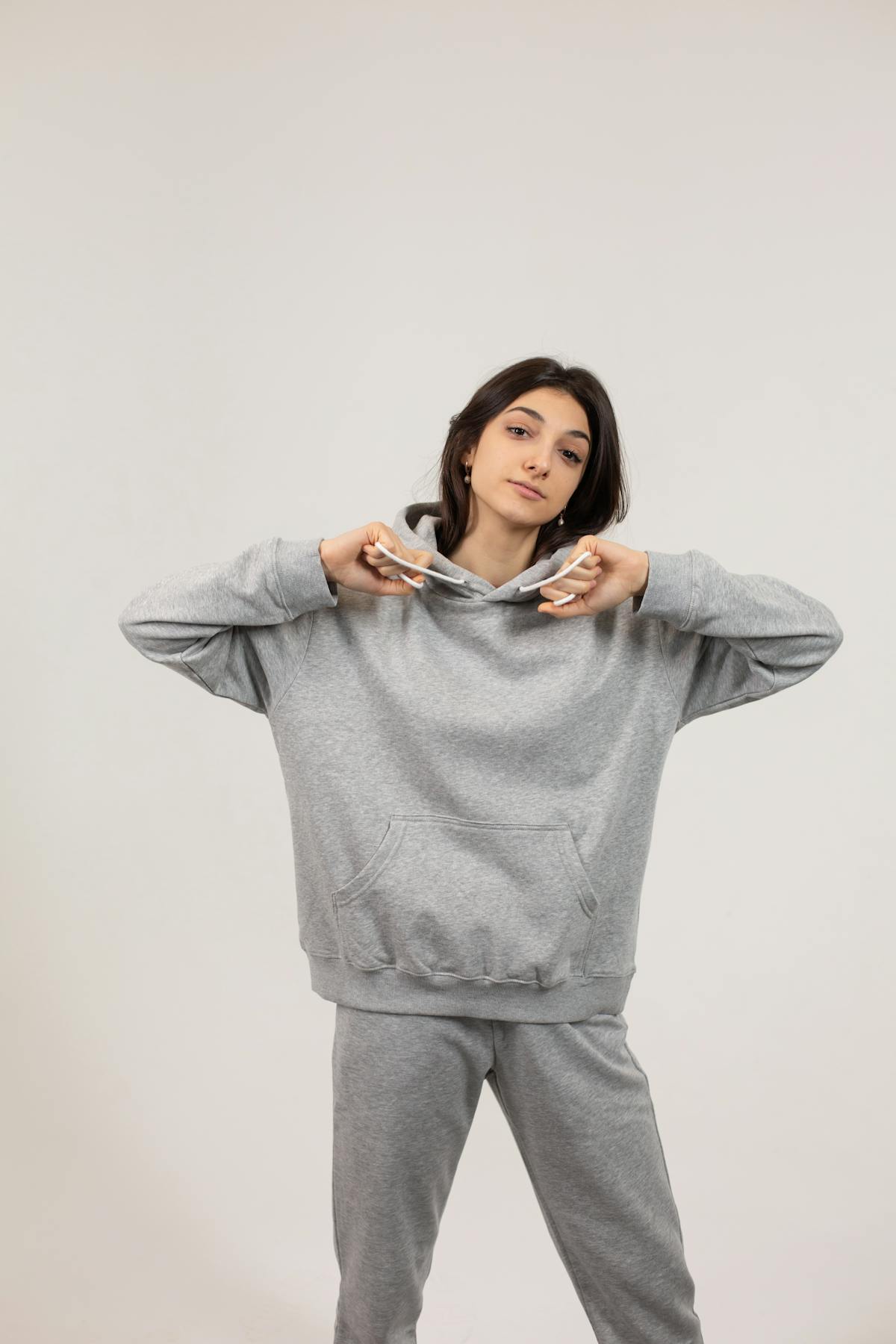
Les petits détails de construction sont ce qui fait qu'un sweat-shirt semble de qualité supérieure ou bon marché après dix lavages. Faites attention aux parties qui touchent le plus votre peau.
Longueur des poignets pour les bras plus forts
Les poignets doivent se fermer doucement au poignet sans serrer l'avant-bras. Sur les bras plus forts, un poignet trop serré est inconfortable et semble tendu, tandis qu'un poignet trop lâche glisse et semble bâclé. Recherchez des poignets côtelés avec une bonne élasticité, et si vos avant-bras sont substantiels, choisissez une taille où l'ouverture de la manche mesure au moins neuf pouces de circonférence, non étirée, afin qu'elle puisse se détendre sur votre poignet.
Le bord-côte du col qui n'étrangle pas une poitrine généreuse ou un cou plus court
Le col rond est le seul endroit où les choses peuvent vite mal tourner. Un bord-côte rigide et étroit serre un cou plus court et rend le haut entier restrictif. Un bord-côte plus doux, légèrement plus large et avec une bonne élasticité, s'adapte confortablement et encadre le visage. Si vous avez une poitrine généreuse, un col un peu plus haut aide en fait, car il équilibre l'avant et empêche l'encolure de s'affaisser sur la poitrine.
Le boulochage : ce qui le provoque et comment le ralentir
Le boulochage, ce sont les petites boules de peluche qui se forment là où le tissu frotte, généralement sous les bras et sur les côtes. Il provient du frottement des fibres, et il est pire sur les mélanges moins chers et sur les polaires brossées très douces. On ne peut pas l'arrêter complètement, mais on peut le ralentir : laver les sweats à l'envers à froid, utiliser un cycle délicat, éviter le sèche-linge quand vous le pouvez, et les éloigner des textures rugueuses comme les sacs en toile. Un rasoir anti-bouloches restaure la surface en quelques secondes.
Rétrécissement et comment choisir sa taille en fonction
Les sweats en coton rétrécissent, surtout lors des premiers lavages, et un col rond qui rétrécit en longueur remonte sur le ventre. Les tricots prérétrécis ou lavés en machine rétrécissent beaucoup moins, privilégiez-les donc si possible. Si une pièce est seulement en coton conventionnel, attendez-vous à une perte de longueur d'un à deux pouces et envisagez de prendre une taille au-dessus en longueur tout en conservant la largeur réelle. Vérifiez toujours l'étiquette d'entretien et lavez à froid pour protéger votre coupe.
Court, oversize ou tunique : longueur, ensembles assortis, superpositions et habillage
Une fois que vous maîtrisez le tissu et la confection, le plaisir du shopping des sweats-shirts grande taille consiste à choisir une proportion qui convient à votre morphologie et à votre vie.
Sweats-shirts courts sur des silhouettes plus généreuses
Court ne signifie pas peu flatteur. Pour les femmes rondes, un crop top qui se termine à la taille naturelle se marie parfaitement avec un jean taille haute ou les bas de jogging grande taille de notre collection, car la taille haute assure la couverture et le crop top ajoute une proportion ludique. La clé est que le crop top doit rencontrer une taille haute, jamais une taille basse, sinon vous perdez tout l'intérêt de la silhouette.
Oversize : le choix facile par défaut
Les cols ronds oversize sont indulgents et douillets, mais un volume excessif peut engloutir une silhouette plus généreuse. Gardez l'oversize au niveau du corps et des épaules, pas de la longueur, afin que l'ourlet tombe toujours au bon endroit. Associez-le à des bas fuselés pour équilibrer le volume du haut, et vous obtiendrez un look décontracté sans disparaître dans le tissu.
Longueur tunique pour la couvrance et la proportion
Un col rond longueur tunique s'étend jusqu'à mi-hanche ou juste en dessous, ce que de nombreuses femmes grandes tailles choisissent avec des leggings et des collants. Il couvre les zones que vous souhaitez couvrir lorsque vous êtes assise ou que vous vous penchez et crée une ligne longue et élégante. Choisissez une tunique avec des fentes latérales ou un léger ourlet asymétrique pour qu'elle ne ressemble pas à une tente, et la proportion reste moderne.
Ensembles coordonnés sweat-shirt et pantalon de survêtement
Un ensemble coordonné est la façon la plus simple d'avoir l'air intentionnel. Lorsque le haut et le bas partagent le même tissu et la même couleur, votre œil voit une longue colonne nette, ce qui est très flatteur sur les corps généreux. Notre collection de hauts grande taille est conçue pour être mélangée à la ligne de pantalons de survêtement, afin que vous puissiez créer un ensemble en molleton non brossé ou en polaire brossée et savoir que les poids correspondront. Ajoutez des baskets pour les courses ou des bottines pour un café.
Superposer une chemise à col ou un col roulé en dessous
Un col rond est le cadre parfait pour ce qui se trouve en dessous. Laissez une chemise à col net dépasser au niveau du cou et des poignets pour un look preppy et soigné, ou superposez un fin col roulé en dessous pour les matins froids. Comme le col rond est épuré, le col de la chemise ou le col roulé est clairement visible au lieu de se battre avec une capuche. Gardez la couche inférieure fine pour que le col rond reste plat.
Habiller un sweat-shirt plutôt que de le décontracter
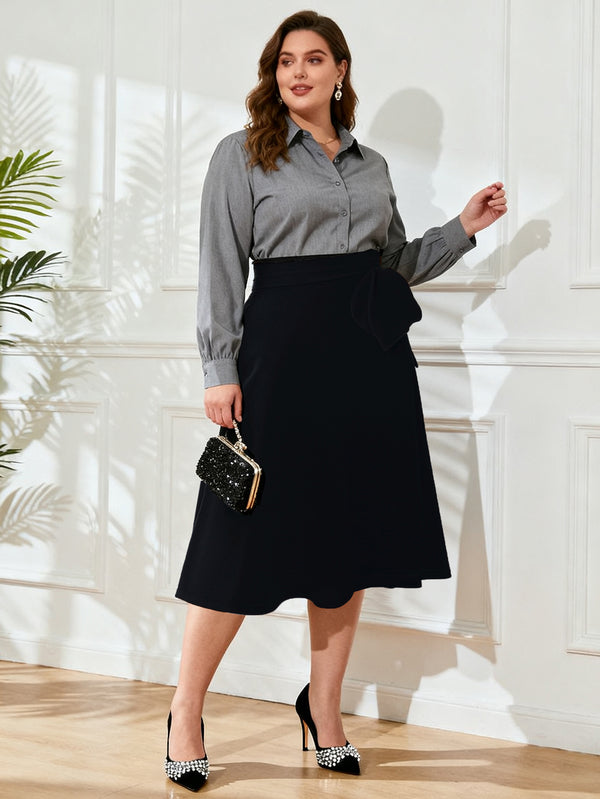
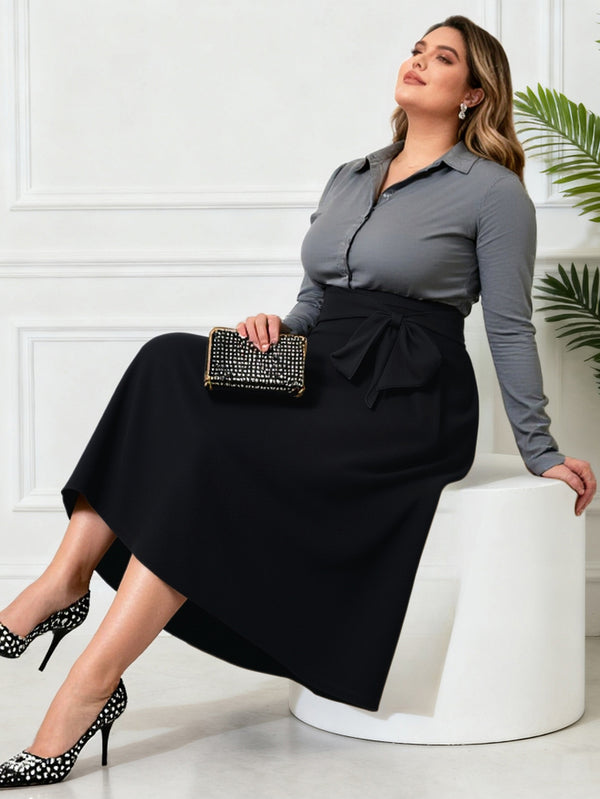
Les sweatshirts ne sont pas seulement pour le canapé. Rentrez le devant d'un sweat-shirt à col rond de longueur tunique dans une jupe midi, ajoutez une ceinture, et vous avez une tenue pour le dîner. Choisissez un sweat-shirt à col rond dans une couleur plus riche comme le bordeaux ou le vert forêt, associez-le à un pantalon tailleur et complétez avec des mocassins. La structure du col rond aide ici, car son encolure nette semble réfléchie à côté de bijoux et d'un bon manteau.
Questions fréquemment posées sur les sweats-shirts grande taille
Comment un sweat-shirt col rond grande taille doit-il tomber au niveau des épaules ?
La couture de l'épaule doit se situer au bord ou juste après le bord de votre épaule naturelle, et la manche doit avoir au moins un ou deux pouces d'aisance au niveau du biceps. Si la couture tire vers l'intérieur ou si le haut de la manche est serré lorsque vous pliez le bras, le sweat-shirt est trop étroit et vous devriez prendre une taille au-dessus au niveau du corps tout en surveillant la longueur.
Quel grammage est le mieux adapté pour un sweat-shirt grande taille d'automne ?
Pour la majeure partie de l'automne, un molleton non brossé de poids moyen ou une polaire brossée dans la gamme de 280 à 340 GSM est idéal. Il est suffisamment chaud pour être porté sous une veste et suffisamment léger pour être porté à l'intérieur. Réservez les 360 GSM et plus, y compris les styles doublés en sherpa, pour les semaines les plus froides lorsque le sweat-shirt est votre couche extérieure.
Pourquoi choisir un col rond plutôt qu'un sweat à capuche pour les superpositions ?
Un col rond se superpose à plat sous les manteaux car il n'y a pas de capuche qui se froisse derrière le cou. Le col épuré maintient votre ligne d'épaule visible et permet à une chemise à col ou à un col roulé de se voir clairement. Un sweat à capuche ajoute une masse de tissu qui éloigne les manteaux du corps et raccourcit l'apparence du cou.
Comment empêcher un sweat-shirt grande taille de rétrécir ?
Privilégiez les tricots prérétrécis ou lavés en machine, lavez à froid à l'envers sur un cycle délicat, et évitez le sèche-linge chaud si vous le pouvez. Si la pièce est en coton conventionnel, attendez-vous à une perte de longueur et envisagez de prendre une taille au-dessus en longueur tout en conservant la largeur réelle afin que l'ourlet tombe toujours où vous le souhaitez.