Plus Size Fleece Lined Tights: The Complete Warmth, Fit and Styling Guide for Fall/Winter 2026
Aug 04, 2026

If you have ever pulled on tights in late October and still felt the cold cut through your thighs before you reached the car, you already understand the case for plus size fleece lined tights. These are not simply thicker tights. They are a different category of legwear, built with a brushed thermal interior that traps warm air against your skin while the outer face stays smooth, matte and wearable with a work dress or a denim skirt. Shopping for them in August is not early — it is smart, because the sizes that actually fit curvy legs sell out first.
This guide covers what matters past the marketing copy: how brushed lining works, how to read warmth claims, why tights fit differently than leggings, how to fix the sagging-crotch problem, and how to size yourself when the chart asks for your weight.
Why Fleece Lined Tights Earn a Permanent Spot in Your Cold-Season Rotation
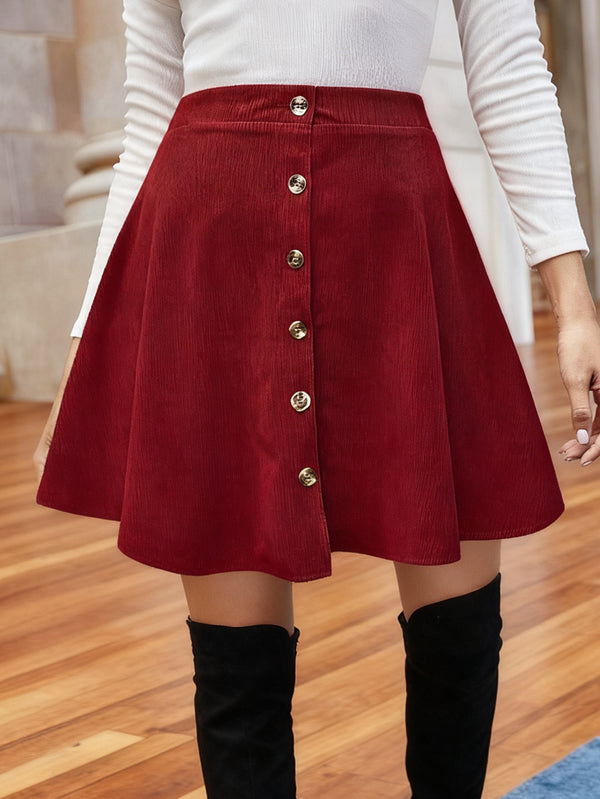
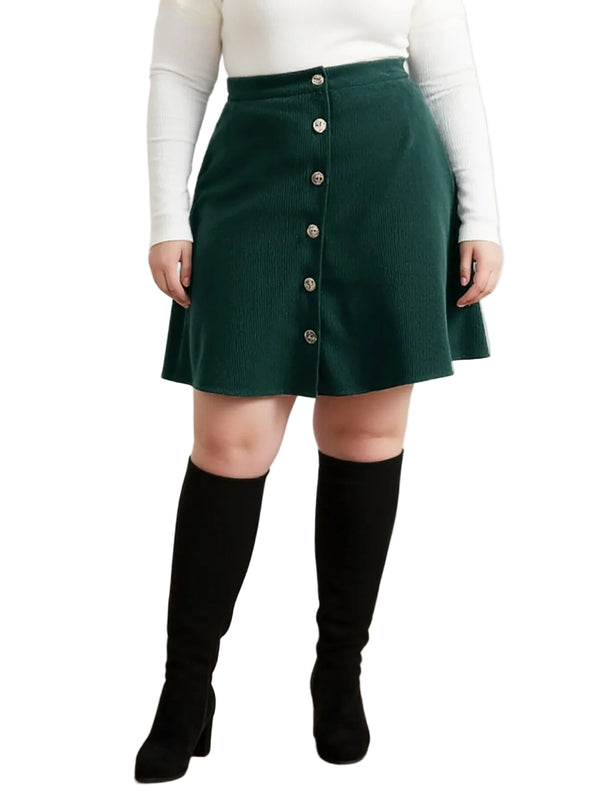
Most of us start cold-weather dressing by giving something up. We retire skirts until spring and default to jeans for five straight months, not because we prefer them but because bare legs in February are not a real option. Lined tights quietly hand that wardrobe back to you — they turn a sleeveless midi dress into a January outfit and a corduroy skirt into a workable Tuesday.
They also solve coverage under pressure. A standard opaque tight works hard stretching over a full hip and thigh, and fabric stretched thin is cold fabric. A lined construction gives you two layers doing two jobs, so warmth does not evaporate where you need it most.
What "Fleece Lined" Actually Means
True fleece lining is not a separate sheet of fabric sewn inside a tight. It is a knit structure whose inner face has been mechanically brushed, raising the fibers into a soft nap that creates thousands of tiny air pockets — and trapped air is what insulates you. The outer face stays flat and dense so the tight still reads as hosiery rather than a wetsuit. That gives you three things at once:
- Insulation without bulk. The nap is thin but high-loft, so you get warmth without a tight that looks like a snow pant under your dress.
- Moisture management. Brushed synthetics move sweat off the skin, which matters more than expected going from a freezing sidewalk into an overheated office.
- Built-in opacity. A brushed inner face blocks light, so lined tights stay opaque at stretch points where a single-layer tight goes translucent.
True Brushed Fleece vs. Faux-Lined "Fleece Look"
This is the biggest thing to check before you buy, and product photos will not tell you. A large share of budget tights are what the industry calls faux-lined or "fleece look." They are knit to resemble a lined tight from the outside, with a heathered surface that mimics a real thermal knit. Inside they are flat — no nap, no loft, no meaningful air trapping. How to tell them apart:
- Read the construction words. Look for brushed, napped, thermal knit or double-layer. "Fleece look," "fleece effect" and "winter warm" with no construction language are warning signs.
- Check the weight. True lined pairs are described in GSM (grams per square meter) and have real heft in the hand.
- Look at the surface. Faux-lined pairs often have a faint marled or speckled sheen. Real brushed lining reads as a solid, deep matte.
- Flip the waistband. On a pair you already own, you should feel obvious fuzz inside, not smooth jersey.
Faux-lined pairs are fine for a 60-degree afternoon — just not for a forecast with a wind chill attached.
Why August Is the Right Time to Buy
Extended size runs sell through first and restock last. By the first real cold snap in late November, the 2X and 3X in the shades you actually wear are frequently gone. Buying now also lets you test fit at home with time to exchange, rather than discovering a rise problem an hour before a party.

Warmth Ratings and a Temperature Guide: What to Wear When
Warmth labeling in hosiery is inconsistent. Denier describes yarn thickness and works for sheer and opaque tights, but it breaks down for lined pairs because brushing adds loft denier cannot capture. A 200-denier lined tight and a 200-denier unlined tight are not the same garment.
How to Read Warmth Claims
- GSM is the most honest number. Roughly, 180 to 220 GSM is a light thermal layer, 220 to 280 GSM is a true winter tight, and above 300 GSM is cold-climate territory.
- Fiber blend matters. A polyester-dominant blend with 8 to 20 percent spandex gives warmth plus recovery. High-cotton blends feel cozy but stretch out and hold damp.
- Ignore "equivalent to X denier" claims. On lined tights that is marketing shorthand, not a standard.
50°F to 65°F: Transitional Fall
Light-thermal weather. A lower-GSM lined tight under a midi dress or knee-length skirt is plenty. Pair with ankle boots or loafers. This is where faux-lined pairs are genuinely fine.
35°F to 50°F: Everyday Winter
The core use case for plus size fleece lined tights. A mid-weight brushed lining under a sweater dress, ponte skirt or wool shift handles a normal commute and a walk at lunch. Add tall boots and you are covered for most of a temperate season.
20°F to 35°F: Genuine Cold
Move to a heavier GSM. A thick lined tight under a knee-length wool skirt with tall-shafted boots handles this well. Below-knee boot coverage matters as much as the tight, because the shin takes the wind. Wool socks over the foot inside a roomy boot add a surprising amount.
Below 20°F: Base-Layer Territory
No single tight solves this alone. Wear your heaviest pair as a base layer under something else: a midi skirt with a long coat, a wool maxi, or trousers. Tights become insulation rather than the finished look, and that is exactly what they are good at.
Why Tights Fit Differently Than Leggings on a Plus Size Body
People assume tights are just thin leggings, then blame themselves when tights fit badly. The difference is structural.
The Foot Changes the Entire Fit Equation
Leggings are footless. They end at the ankle, which gives the garment an escape valve — if fabric runs slightly short, the hem rides up your calf and nothing dramatic happens. Tights have a closed foot anchored at your heel, so there is no escape valve. Every inch of fabric needed to travel over your hip, seat and thigh has to come from somewhere, and if it does not exist, the garment pulls down from the waist to find it. That is why leggings and tights in the same size feel completely different: the leggings borrowed length from your ankle.
Total Rise and the Crotch-Drop Problem
Total rise is the measurement from the front waistband, down through the crotch, and up to the back waistband. On a curvy body the back rise requirement is longer than a straight-size pattern assumes, because a fuller seat needs more fabric. Draft a tight with too little total rise and two things happen, usually together:
- The waistband migrates down. The garment steals length from the top to cover the bottom, so the band slides below your natural waist and sits somewhere uncomfortable across the midsection.
- The crotch drops. You get the classic sag between the thighs, the hitch-up every twenty minutes, and thigh seams that no longer sit where they were designed to.
The fix: prioritize brands that publish a total rise measurement, size up for length rather than width if you are tall, and prefer tights graded by height as well as hip. A "long" in your hip size is a different garment from the next size up, and usually the one you need.
Waistband and Rise Across a Full Midsection
A narrow elastic band on a soft midsection is a recipe for rolling. It digs in, the fabric above pushes over, and by hour three you are adjusting constantly. What works better:
- Wide, knit-in waistbands of two to three inches, ideally the same brushed fabric rather than a separate elastic strip, so pressure spreads out instead of concentrating in a line.
- A genuinely high rise at or above your natural waist. High rise on a curvy body is not about smoothing; it gives the band a narrower part of the torso to anchor against so it stops sliding.
- No plastic boning or rigid panels. Those exist to compress, and they fail first after a few washes.
Gusset Construction Is Not Optional
A gusset is the small diamond or triangular panel set into the crotch, and it does real structural work in extended sizes. It adds width exactly where inner thigh, seat and front rise converge, so seams meet at four gentle angles instead of one stressed point. Ungusseted tights funnel all that tension into a single intersection, which is why they blow out there first. A gusset described as diamond-shaped or cotton-lined is one of the clearest signals a tight was engineered for curvy bodies, not scaled up from a medium.
Sizing: Height vs. Hip, and Why Weight-Based Charts Mislead
Hosiery is one of the last categories still asking customers for their weight, and it is why so many people are convinced tights just do not work on them.
Why Weight-Based Charts Fail
Weight tells a garment nothing about shape. Two people at identical weight and height can differ by six inches in hip circumference depending on where they carry it. A weight chart is a crude average, and averages get less accurate the further you move from the middle of the distribution — precisely where extended sizing lives. It also cannot see torso length, which determines whether the waistband stays up.
Take Three Measurements Instead
- Hip circumference at the fullest point, tape level all the way around. Your primary number for width.
- Height, because it drives total rise and leg length. Brands doing this properly grade into short, regular and long within a hip size.
- Torso length, or simply whether you have historically found rises too short. This predicts waistband roll better than anything.
When You Are Between Sizes
Size up. The reason is specific: a brushed interior loses insulating loft when stretched thin, because stretching compresses the air pockets doing the warming. A pair stretched to its limit is measurably less warm than the same pair with room, and more likely to go translucent across the thigh. Sizing up costs nothing in appearance — the fabric weight keeps the silhouette clean. Browsing a well-graded range of fleece lined tights built for curvy sizing makes this far easier than interpreting a generic hosiery chart.

Opacity, Boots and Static: The Wear-Day Details
Stretch-Thinning Across the Thigh and Hip
Every knit gets thinner as it stretches, and the highest-stretch zones on a curvy body are the outer thigh, the fullest part of the seat and the front of the knee. That is where a tight goes from opaque to patchy. Good plus size fleece lined tights are more forgiving, because the brushed inner face keeps blocking light as the outer knit opens up — but the effect is delayed, not eliminated. Check opacity in daylight, and treat lightening across the thigh as a sign you are one size too small.
Foot Construction and Toe Seams Inside Boots
- A flat or hand-linked toe seam. A bulky overlocked seam across your toes feels fine for an hour and turns painful inside a boot by afternoon.
- A reinforced heel. Lined tights are heavier and create more friction, so an unreinforced heel wears through fast.
- Foot length graded with the body. Some brands grade the leg but not the foot. If the heel seam is not on your heel, the tight is too short overall.
- Boot fit. Lined tights add real volume inside a shoe. If your boots are snug, plan on a half size up or a removable insole.
Static and Layering Under Dresses and Skirts
Brushed synthetics generate static, and dry winter air makes it worse. A skirt clinging to your thigh is not a fit problem, it is an electrical one. What works: light lotion on the leg before dressing, a wool dryer ball in the last cycle, anti-static spray inside the skirt lining rather than on the tight, or a slip. Natural-fiber linings cling far less than polyester. Lined tights also read as a solid dark leg, which makes a shorter hemline feel straightforward.
Cold-Weather Outfit Formulas That Actually Get Worn
Work
Ponte or wool sheath dress, black lined tights, tall boots or a block-heel ankle boot, longline blazer. The dark leg and boot create an uninterrupted line from hem to floor, so a knee-length dress needs no thought all day.
Weekend
Oversized sweater or sweatshirt dress, lined tights, chunky boots or sneakers, crossbody bag, scarf. The formula that replaces jeans without feeling like effort.
Holiday and Party
Velvet, satin or sequin slip dress, black lined tights, heeled boots or a low block heel, statement earrings. The tight makes a December party dress survivable between the taxi and the door.
Errands and Travel
Long cardigan or anorak, lined tights, denim or corduroy skirt, low boots. For flights, tights under a skirt beat jeans for comfort and take no bag space.
Care, Washing and Keeping the Fleece Nap Alive
Brushed lining is durable, but the nap is what wears out — and once it flattens, the tight stops being warm. Nearly all the damage comes from heat and friction.
Washing and Drying
- Cold water only. Heat permanently relaxes the spandex and mats the brushed fibers together.
- Turn them inside out so the nap rubs against itself rather than zippers and denim.
- Use a mesh laundry bag. The highest-value habit here: it stops the foot catching on other garments and the leg being stretched by the agitator.
- Skip fabric softener. It coats the fibers and reduces loft and wicking. Address static on the skirt, not the tight.
- Air dry flat or over a rod, never on a radiator or in a hot dryer. Hang by the waistband; hanging by the feet stretches the leg and undoes the rise.
Pilling Prevention and Storage
Pilling on plus size fleece lined tights happens at the inner thigh, where the legs rub, and across the seat. You cannot prevent it entirely, but you can slow it: rotate at least two pairs so none is worn on consecutive days, wash inside out, and remove pills with a fabric shaver rather than pulling them, which drags fibers out of the knit. Store them folded, since balling compresses the nap into creases that stay compressed. If you are building a broader rotation, shop the wider range of plus size tights in extended sizes for lighter weights on transitional days.
Frequently Asked Questions
Are plus size fleece lined tights warm enough to replace pants in winter?
In most temperate climates, yes — down to roughly 25 to 30°F with a knee-length skirt or dress and tall boots. Below about 20°F they work better as a base layer under a longer skirt or trousers. Wind exposure and time outside matter more than the temperature alone.
Will fleece lined tights look bulky under a fitted dress?
A true brushed lining adds loft on the inside, not volume on the outside, so a well-sized pair looks like a heavy opaque tight. Bulk shows up in two situations: when the tight is too small and fabric bunches at the ankle and knee, or when the waistband is a thick separate elastic that creates a ridge. A wide knit-in band solves the second entirely.
How do I stop tights from rolling down or sagging at the crotch?
Almost always a total rise issue rather than a waistband issue. Choose a pair graded by height, size up if you are tall or long through the torso, and look for a high rise with a wide knit-in band and a gusset. If a pair sagged within an hour, it lacked the length between front and back waistband to travel over your seat. Tugging does not fix that; the next size up usually does.
How many pairs should I own for a full cold season?
Three is a comfortable minimum: two black in your main weight so you always have a clean pair, and one lighter or alternate-color pair for transitional weather. Rotation is not only about laundry — giving the nap a day to recover between wears extends how long each pair stays warm.
Cold-weather dressing gets far easier when the base layer is genuinely doing its job. Get the rise and sizing right, learn to tell true brushed lining from a fleece-look imitation, wash gently, and a good pair quietly makes half your wardrobe wearable for another five months a year.