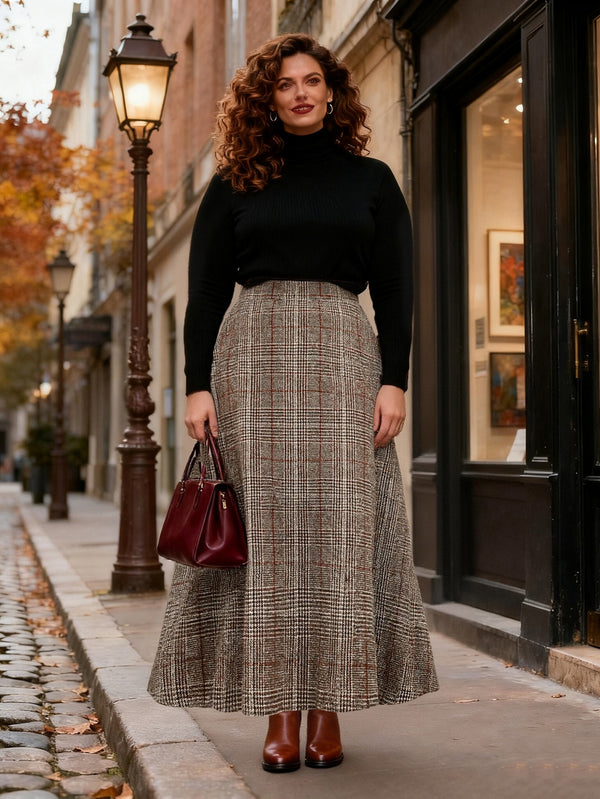
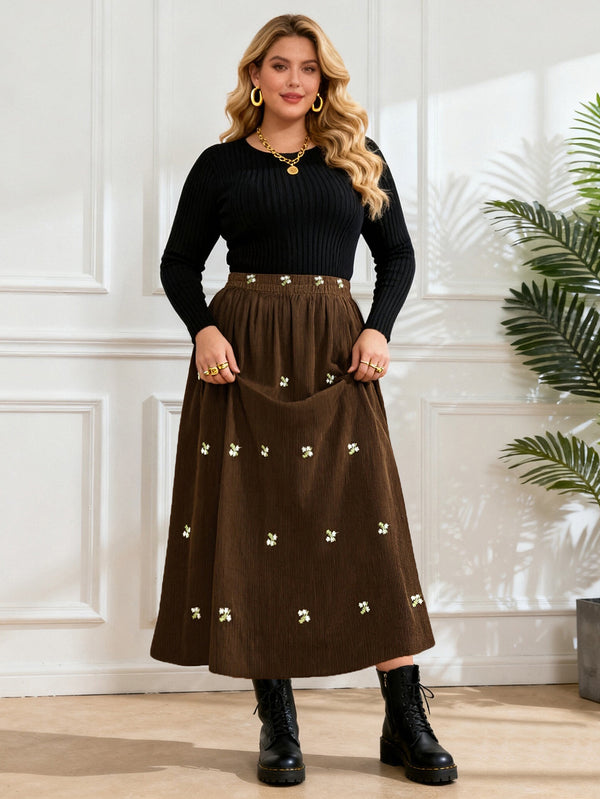
Plus size compression socks under wide-leg trousers can be part of a comfortable outfit when each garment has room to do its own job. The socks need their own correct fit; the trousers need to move freely over them. If you already wear compression socks and enjoy a flowing trouser shape, a few practical checks can help you bring the pieces together without repeatedly adjusting your clothes.
This guide focuses on the meeting points: the inside of the trouser leg, the sock cuff, the shoe opening, and the hem when you sit. It is not a reason to start wearing compression or change a prescribed garment. For questions about suitability, pressure levels, circulation concerns, or prolonged wear, consult a qualified healthcare professional. Your outfit preferences and your individual compression advice deserve separate consideration.
Give the socks and trousers separate fit checks
Start with socks that fit according to their own instructions. A generous trouser leg cannot correct a sock that is too short, too narrow, or unsuitable for you. Likewise, a sock that feels right does not guarantee that every pair of wide-leg trousers will move comfortably over it. Treating these as separate decisions makes outfit troubleshooting much clearer.
Use the measurements requested by the particular sock chart, which can include ankle, calf, leg length, and foot size. Read the measuring instructions rather than borrowing a label from your trousers. Plus-size clothing sizes do not translate into compression-sock sizes, and a wide calf does not automatically mean a long foot. Your measurements are useful information about garment fit, never a verdict about your body.
For trousers, check the seat, thighs, knees, and lower legs before adding the socks. Sit in the trousers with the underwear you normally wear and notice whether the waistband stays comfortable. A pair can have a dramatic hem opening but still feel close through the knee. That narrower point can affect how easily the fabric passes over a knee-high cuff.
Then combine the pieces. Keep the socks smooth, with the heel positioned correctly and the cuff unfolded as directed. Let the trousers fall into place without pulling them firmly downward over the socks. If you need to keep resetting either garment, pause and identify which one is moving. You deserve clothes that cooperate with your ordinary movements.
When browsing plus-size compression sock options, check each item's actual chart, construction, and instructions. A collection name does not establish a pressure level or promise that every style fits the same way. Ask for missing specifications before choosing, especially if you are trying to match an existing professional recommendation.
If you are comparing two pairs of trousers, keep the same socks and shoes for both checks. Otherwise, a thicker foot section or different sole height can obscure what changed. You can take a quick private outfit photo if that helps you remember the result, but your own sense of comfort matters more than how still the fabric appears in a picture.
Look inside the trouser leg before judging the silhouette
A wide-leg outline tells you about the outside shape. The inside surface tells you more about how the trousers interact with socks. Turn the lower leg inside out and feel along the seams and hem allowance. Look for rough stitching, an exposed fastening, or a loose thread that could catch the knit. You do not need a perfectly luxurious finish, just a combination that moves without repeated snagging.
If the trousers have a lining, inspect that separately. A roomy outer layer can conceal a narrower lining, especially around the knee. Sit and stand in the combined outfit to see whether the lining lifts the cuff or gathers against it. Do not assume that adding a lining always creates more space or a smoother result.
Compare fabrics you already own instead of buying a new wardrobe immediately. A structured woven pair might hold away from the calf, while a soft jersey pair might follow the sock's surface more closely. A fluid fabric could move easily or cling in a particular outfit. Fibre names alone do not settle the question; the weave, finish, lining, and actual cut all contribute.
Try a simple observation: stand comfortably, sit in a chair, then stand again without brushing the trouser legs down. See whether they return to a position you like. A little movement is normal. Fabric that remains caught above the calf or gathers in a tight ring gives you a specific reason to try another trouser shape or surface.
Avoid solving cling by applying a spray, powder, or oil directly to the socks. That adds an untested product to a garment with its own care instructions. If static or friction keeps bothering you, change the outer fabric or consult its care label. Keeping the experiment simple helps you discover a comfortable combination without altering the compression garment.

Choose the hem with your actual shoes on
Put on the shoes you intend to wear before deciding whether the trouser length works. A hem that looks right with one sole height can brush the floor with another. You want room to walk without stepping on the fabric or having it collect under your heel. There is no need to pursue a particular visual proportion at the expense of easy movement.
Check the shoe fit with the socks in place. Compression socks differ in foot thickness and seam construction; a shoe that works with a thin everyday sock can feel different with another knit. Notice the toe area, the heel, and the upper across your foot. Adjustable laces or straps can be useful, but they do not make an unsuitable size appropriate.
With full-length trousers, watch the front hem as you take a few ordinary steps. It should not repeatedly tuck under the shoe or catch on a buckle. Look at the back as well, perhaps with a mirror, to see whether fabric gets trapped beneath your heel. Choose a stable position to check this rather than bending awkwardly while balancing.
With cropped wide-leg trousers, the socks become a more visible part of the outfit. Decide whether you enjoy a continuous color from sock to shoe or a deliberate contrast. Either choice can look intentional. You do not need to hide the cuff or create an unbroken line to make the outfit suitable for a plus-size body.
Do not fold a compression-sock cuff to place it nearer the hem. Keep its position consistent with the garment instructions. If you want a different amount of visible sock, change the trouser length or select another appropriate garment. The outer outfit is the part you can readily restyle; the compression garment should keep its intended construction and fit.
Before arranging alterations, explain which shoes you expect to wear and whether you enjoy showing the socks. A tailor can assess the trouser hem without changing the socks themselves. Bring the complete outfit if practical, and check the pinned length while seated as well as standing. Keep pins and rough edges away from the sock knit during the fitting.
Check the outfit seated, standing, and moving
A standing mirror shows only one arrangement of the clothes. Sitting raises trouser hems and changes the relationship between fabric, cuff, and knee. Use a stable chair and check both legs without forcing a position. Notice whether the sock stays smooth and whether the trousers leave room behind the knee. Comfort does not need to be earned through tolerating a distracting pinch.
Stand again and let the fabric settle naturally. If a trouser seam repeatedly pulls at the cuff, inspect that contact point rather than tugging the socks higher. Try another pair of trousers to see whether the problem follows the outer garment. Changing one piece at a time gives you a more useful answer than replacing the whole outfit at once.
Walk across the room at your usual pace. Turn, reach for a bag, and sit again if those are ordinary parts of your plans. You are checking how clothes move together, not testing how much discomfort you can ignore. There is no universal movement routine or wear duration that makes a compression garment suitable for every person.
Pay attention to what you feel as well as what the mirror shows. Clothes can look smooth while a shoe seam rubs or a cuff bothers you. Pain, numbness, tingling, unusual color changes, or a cold feeling are not styling problems to work around. Stop the outfit trial and seek appropriate medical advice rather than adding a layer or choosing stronger compression.
A useful outfit note might read: charcoal trousers move freely with these socks and lace-up shoes, but the lined pair catches at the knee. That is specific enough to guide another choice. Avoid turning the note into a rule about your calves or your size. The result describes a relationship between particular garments.
Build outfits around the amount of sock you enjoy showing
For a quiet everyday combination, try charcoal wide-leg trousers, plain black knee-high socks, black lace-up shoes, and a soft cream top. The trousers provide the main shape, while the socks remain mostly covered when standing. A relaxed cardigan can add another texture without requiring the socks to become the focal point. Choose your preferred top length rather than following a rule about concealing your middle.
For a little contrast, pair cropped navy wide-leg trousers with burgundy socks and dark loafers that fit comfortably with the knit. A burgundy scarf or earring can repeat the color, but repetition is optional. The visible sock panel will change as you sit and walk. Decide whether you like that movement instead of expecting the hem to frame an identical rectangle all the time.
For a softer winter outfit, consider chocolate trousers, black socks, comfortable closed shoes, and an oatmeal knit. Check warmth with the full combination rather than assuming more layers are always better. If the outfit feels overly warm indoors, adjust an outer layer where possible. Do not use a styling guide to decide how long you should wear compression socks.
Patterns can work beneath wide legs too. A small motif visible when seated can be enjoyable even when it disappears while standing. You do not need to show an entire design for it to belong in the outfit. If the trousers already have a strong check or print, a plain sock can simplify the combination, though mixing prints remains a matter of taste.
Within the wider compression sock collection, compare colors only after checking the individual fit details. Treat any editorial outfit illustration as inspiration rather than evidence of a particular item's appearance, pressure, or availability. The right color is the one you enjoy in a garment that meets your actual requirements.

Use accessories to make the outfit feel personal rather than to correct it. A favorite necklace, a bright bag, or a familiar jacket can connect the trousers to clothes you already love. If every added detail starts to feel like another thing to manage, simplify. Comfortable styling can be as quiet or expressive as you want it to be.
Keep access and garment care practical
Think about getting dressed as well as the finished outfit. Putting socks on before trousers can leave the lower leg easier to reach, but use the method recommended for your garment and your circumstances. Choose a secure seated position if that suits you. Do not pull on a trouser hem to help drag the sock into position.
Check whether you can comfortably reach the cuff when you need to inspect the fit. A wide leg might slide upward easily, while a lining or narrow knee can make access awkward. Test that before leaving home. If reaching the socks is difficult, ask about suitable dressing assistance rather than assuming a different closure or wider trouser hem will solve every step.
Keep care instructions separate for each garment. Trousers and compression socks can need different washing methods even when their colors match. Wash the socks according to their own label, and avoid using a trouser pressing routine on them. A coordinated outfit does not need to become a shared laundry load.
After cleaning, check the trouser hem for loose stitching and the socks for visible damage or a change in fit. Deal with an outer garment's snagging edge before wearing the same combination again. Do not cut, stitch, or otherwise modify a compression garment to make it cooperate with the trousers; consult the manufacturer or your healthcare professional when its fit or condition raises questions.
Keep a small list of combinations that already work, including the shoes. That can be more helpful than collecting many nearly identical items. You might find one full-length pair for quieter looks and one cropped pair for visible color. A useful wardrobe can grow from a few specific successes, with room for your taste to change.
When shopping for another pair of trousers, bring the successful combination to mind: where the knee felt roomy, whether the lining moved freely, and how the hem behaved with your shoes. Those observations make better comparison points than an identical size label. Two garments can share a labeled size and still have very different shapes through the lower leg.
Frequently asked questions about socks under wide-leg trousers
Can I wear plus size compression socks under wide-leg trousers?
The combination can work when compression is suitable for you, the socks fit according to their instructions, and the trousers move freely over them. Check the complete outfit seated and standing, including the shoes. A wide trouser shape does not establish that the socks fit correctly or that a particular pressure level is appropriate for you.
Should I size up my socks so the trousers slide more easily?
Choose sock size from the item's measurement chart and relevant professional guidance, not from how the trousers move. If the outer fabric catches, inspect the trouser seams, lining, and cut first. Trying another trouser fabric is a clearer styling experiment than changing a compression garment's size to solve an outer-layer problem.
Can I fold the cuff if it shows beneath cropped trousers?
Do not fold or roll the compression cuff to change its appearance. Follow the garment's positioning instructions and keep the material smooth. If you prefer less visible sock, choose a different trouser hem or another suitable garment. You can also let the sock show as a deliberate color detail without altering it.
What if the outfit looks right but feels uncomfortable?
Take the discomfort seriously. Identify whether a trouser seam, shoe, or sock is bothering you without forcing yourself to keep wearing the combination. Seek medical advice for pain, numbness, tingling, unusual color changes, or other concerning symptoms. Questions about pressure levels and extended wear belong with a qualified healthcare professional, even when the outfit itself looks lovely.