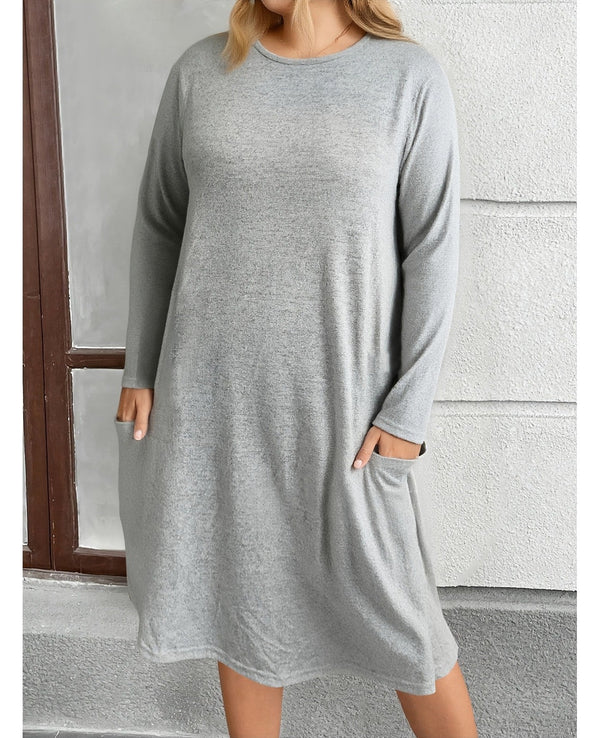
There is a particular kind of relief that comes at the end of a long day: shoes off, bra off, and one soft layer pulled over your head. For a lot of curvy sleepers, that layer is a plus size nightgown — a single, uninterrupted piece of fabric with no waistband to negotiate, no top riding up, and no bottoms twisting around your knees at 3 a.m. It is one of the simplest garments in a wardrobe and one of the most quietly generous.
This guide is about the gown silhouette specifically: how length changes the way it moves, which fabrics actually help you sleep, and the fit details worth looking for when you have a fuller bust, wider hips, or soft arms you would like to keep cool. Nothing here is about changing your shape. Sleepwear has exactly one job, which is to make rest easier, and every suggestion below is entirely optional.
Why a Gown Feels Different From a Two-Piece Set
Pajama sets are wonderful. They are also two garments that have to agree with each other, and that agreement is where a lot of comfort gets lost. A gown removes the negotiation entirely.
One layer, zero waistband
Any two-piece has a horizontal seam somewhere across your middle. Even the softest elastic sits in one place, and if you sleep on your side or shift positions often, that band becomes something you notice. A gown drapes from the shoulders and keeps moving with you. There is no pressure line across the stomach, nothing to tug back into place when you roll over, and no gap of exposed skin between top and bottom when you stretch. For anyone recovering from surgery, managing bloating, living with digestive sensitivity, or simply preferring nothing snug around the middle, this single detail is often the whole reason they switch.
Easier temperature swings
Two layers of fabric overlapping at the waist means one warm spot in the middle of your body. A gown gives air a clear path from hem to neckline, which matters enormously if you run hot, wake up warm, or are moving through perimenopause. Cooling down is as simple as lifting the hem or letting the fabric fall away from your legs, and you can do it half asleep without unbuttoning anything.
Getting dressed with less effort
Pulling on a gown takes about four seconds. There is no stepping into pants while standing on one leg, no matching a top to bottoms in the dark, no wondering which drawer the other half went into. On the days when energy is genuinely limited — illness, exhaustion, a new baby, chronic pain, a difficult week — a one-piece garment is not laziness. It is a reasonable adaptation, and it removes one small barrier between you and rest.
When a set is still the better call
Honesty helps here. If you share a home with roommates and want to feel fully covered on a hallway run to the kitchen, a set may suit you better. If you sleep with your legs apart and dislike fabric bunching between your thighs, bottoms solve that. If your bedroom is genuinely cold and you want ankles covered, a set plus socks wins. A gown is a strong option, not the only correct one.
Choose Your Length: Knee, Midi, or Maxi
Length is the single decision that changes a plus size nightgown the most. It affects how easily you move, how warm you sleep, and whether the garment feels appropriate for answering the front door. It helps to think about your actual nights rather than an abstract preference.
Knee-length: the mobility choice
Ending somewhere between mid-thigh and just below the knee, this length gives your legs the most freedom. You can pull your knees up, sleep in a curl, or swing out of bed without gathering fabric first. It is the coolest option for warm rooms and summer nights, and it dries fastest in the wash. Because there is less fabric overall, knee-length gowns tend to be the lightest in a suitcase too. The tradeoff is coverage: it will ride up as you move, so many people pair it with soft shorts or briefs underneath and stop thinking about it.
Midi: the everyday middle ground
Hitting somewhere between mid-calf and just above the ankle, midi length is the most versatile place to start if you are buying your first gown in a while. It covers enough to feel relaxed with the curtains open, keeps most of your legs warm without overheating, and still lets you take normal stairs without lifting the hem. If a brand offers only one length, this is usually it, and for good reason. For a fuller hip, look for a midi with a bit of sweep at the bottom so the fabric skims past rather than pulling across the widest point.
Maxi: the warm, dramatic one
Ankle to floor length is the coziest and, frankly, the loveliest to wear. A long gown in soft cotton or brushed modal feels like a proper garment rather than something purely functional, and it keeps your feet and calves warm in a cold bedroom. It is also the most likely to tangle. If you are a restless sleeper, look for a side vent or a slightly A-line cut that lets your legs move independently. If you use a cane, walker, or navigate stairs at night, check the hem clears your feet when you stand in your usual shoes or slippers — a maxi that drags is a genuine trip risk, and a mid-calf midi may simply be the safer version of the same comfort.
A quick way to decide
Stand up, sit down on the edge of your bed, and lift one knee toward your chest. Whatever length lets you do all three without adjusting anything is your length. That is the entire test.
Fabric Guide: What Actually Helps You Sleep
Fabric matters more than colour, print, or even cut when it comes to sleep quality. Your body loses roughly a degree of core temperature as you fall asleep, and the material against your skin either helps that happen or fights it. The right fibre is what turns a plus size nightgown from something you own into something you reach for every single night.
Cotton and cotton jersey
Cotton is breathable, washes well, and gets softer over years rather than pilling into sadness. Woven cotton — think poplin or lawn — feels crisp and cool and holds a relaxed shape. Cotton jersey, the same knit as a good T-shirt, has natural stretch and drapes closer to the body, which many people find more comforting. Both handle hot sleeping well. The main drawback is that cotton absorbs moisture and holds it, so if you sweat heavily at night you may wake up in a damp gown. A cotton blend with a small percentage of modal or elastane usually solves this.
Modal, micromodal, and bamboo
These are the fabrics that feel expensive. Modal is a plant-based fibre with a fluid, almost liquid drape and a cool, silky hand. It is significantly better than cotton at moving moisture away from your skin, which makes it the standout choice for hot flashes, night sweats, or a bedroom you cannot control. Modal also drapes over curves without clinging in a way that feels grabby, so it works beautifully in a midi or maxi. It is more delicate than cotton and prefers a gentle wash and low heat, but treated kindly it lasts for years.
Satin trim and satin panels
Full satin gowns look gorgeous and slide easily over the body, but polyester satin traps heat and can feel clammy against skin overnight. A smarter compromise is a breathable base fabric with satin used as trim: piping along the neckline, a bound edge on the sleeve, a contrast band at the hem. You get the polish and the smooth feel where it touches your shoulders, and cotton or modal everywhere that matters for temperature. Satin trim also happens to be gentler on hair and delicate skin at the neckline.
Waffle knit, brushed cotton, and fleece
For genuinely cold rooms, texture beats thickness. Waffle knit traps small pockets of warm air while still letting the fabric breathe, so it warms you without the stuffiness of fleece. Brushed cotton flannel is the classic winter gown fabric and feels wonderful for the first hour, though it can become too warm if you pile on blankets as well. Full fleece is the warmest and the least breathable — excellent for a freezing cabin, often too much for a heated bedroom.
Fit Details That Make Room for Curves
A plus size nightgown is a simple shape, which means a handful of construction details do all the work. These are the things worth checking in a product photo or a size chart before you commit.
Shoulders, straps, and armholes
The shoulder carries the entire weight of a gown, so this is where fit either works or does not. Wide-set straps or a proper set-in sleeve distribute weight comfortably and stay put; thin spaghetti straps on a longer gown tend to dig in and slip. If you have a fuller bust, check that the armhole is cut deep enough that it does not press into the side of your chest — a too-shallow armhole is the most common source of discomfort in plus size sleepwear and is easy to spot because the fabric pulls diagonally toward the underarm.
Bust room and necklines
Look for gowns that add room through the bust rather than expecting the fabric to stretch there. A V-neck, a scoop, or a henley placket with two or three buttons all give the chest somewhere to go and make the gown easier to pull on and off. An empire seam or a gathered yoke below the bust releases fabric downward, so the gown falls freely instead of resting on your stomach. If you wear a bra or bralette to bed, check the neckline sits where you want it before you buy in five colours.
Hip sweep and side vents
The most common gown complaint from curvy wearers is a hem that feels narrower than the hips. The fix is sweep — the total width of fabric at the bottom hem. An A-line or trapeze cut adds sweep automatically. A straight-cut gown needs side vents or a generous side seam to let your legs move. If you sit cross-legged in bed to read, sweep is the difference between comfortable and constantly rearranging.
Sleeve options and arm comfort
Sleeveless and tank styles keep you coolest and are lovely in summer, though some people simply prefer their upper arms covered for warmth or personal comfort, and that is a perfectly good reason. Short flutter sleeves and elbow-length sleeves are the most forgiving on movement. Long sleeves are warmest but check the cuff is not tight, because a snug cuff on a soft arm gets uncomfortable fast. Whatever you choose, the goal is that you never think about your sleeves once you are asleep.
Temperature Regulation and Better Sleep
Sleep researchers consistently find that a slightly cool body sleeps better than a warm one. Sleepwear is one of the few variables you fully control, and a gown gives you unusually good control.
Layering across the seasons
The same gown can work most of the year with small adjustments. In summer, wear it alone in cotton or modal. In spring and autumn, add soft socks and keep a light robe within reach. In winter, pull leggings or soft knit plus size bottoms underneath a midi or maxi gown — you get the warmth of a full set without the waistband sitting under a duvet, and you can shed the layer at 2 a.m. without getting out of bed. This one trick makes a single gown genuinely three-season.
Reading your own sleep signals
Pay attention to where you wake up warm. If it is your chest and neck, look for a lower or more open neckline and lighter fabric across the shoulders. If it is your legs, go shorter or choose a wider sweep. If you wake up cold at dawn but hot at midnight, a breathable midi plus a blanket you can kick off beats a heavy gown you cannot remove. Your body gives you the data across a week; the gown just has to be adjustable enough to respond.
Wearing Your Gown Past Bedtime
A well-chosen plus size nightgown quietly graduates into daytime loungewear, which makes it one of the highest-value pieces in a closet.
Morning coffee, houseguests, and slow days
A cotton or modal midi with a proper neckline reads as a relaxed dress the moment you add a cardigan or an open robe. Slippers, a coffee, hair however it is — that is a legitimate outfit for a Saturday morning. If you want it to feel more deliberate, a long open layer over the top is the whole trick, and the same styling logic applies across relaxed plus size fashion more broadly: one soft base plus one intentional layer.
Travel, recovery, and hospital bags
A gown packs flatter than a set and takes up roughly half the space, which matters in a carry-on. It is also the standard recommendation for post-surgical recovery, hospital stays, and postpartum weeks, because it can be put on and taken off without lifting your legs or pulling anything over a sore abdomen. A front-buttoned gown adds nursing access and easy examination without full undressing. If you are packing a just-in-case bag, this is the garment to put in it.
Sizing, Care, and Building a Small Rotation
Measure once, then size for movement
Take a tape measure to your bust, your natural waist, and the fullest part of your hips, and write the numbers down. Compare them to the brand's chart rather than assuming your usual size, because sleepwear sizing varies wildly between labels. When you are between sizes on a gown, size up almost every time. Sleepwear should have room to move, and a slightly roomy gown feels luxurious while a slightly tight one becomes something you stop reaching for. If the chart lists a hem or sweep measurement, check it against your hip number plus at least eight to ten inches of ease.
Washing so it lasts
Wash cool, use half the detergent you think you need, and skip fabric softener entirely — it coats fibres and reduces breathability, which defeats the point. Turn printed or trimmed gowns inside out. Cotton can take a warm tumble dry but will last longer on low. Modal, bamboo, and anything with satin trim should be dried on low or laid flat. A gown treated this way stays soft for years rather than months.
How many you actually need
Three is a comfortable rotation for most people: one lightweight for warm nights, one mid-weight midi for most of the year, and one warm option for winter. Two works if you do laundry weekly. Buying five of the same thing in different prints is fun but not necessary, and it is usually better to spend a little more on two gowns that fit properly than to accumulate six that almost do.
One soft layer, no rules
A gown is not a project or a fix. It is one piece of fabric that asks nothing of your body and gives you an easier night in return. Start with a mid-weight midi in cotton or modal, check the armhole and the sweep, size up if you are unsure, and pay attention to how you sleep in it for a week. Comfort at every size is not a reward you earn — it is the baseline, and a well-chosen gown is one of the simplest ways to claim it.
Plus Size Nightgown FAQ
What length is best for a plus size nightgown if I am a restless sleeper?
Knee-length or a midi with side vents. Both give your legs independent movement, so fabric does not wrap around your thighs when you change positions. If you love the look of a maxi, choose one with an A-line cut and a real vent rather than a straight column, and check the hem clears your feet when you stand.
Should I size up in a nightgown?
Usually yes, especially if you are between sizes or have a fuller bust. Sleepwear is meant to move with you, and the most common regret is a gown that fits standing still but pulls the moment you lie down or reach overhead. Sizing up costs you nothing in comfort and buys you range of motion. The exceptions are jersey knits with real stretch, where your measured size is often fine.
Which fabric is best if I get hot at night?
Modal or a modal-cotton blend. Modal moves moisture away from the skin faster than pure cotton and stays cool to the touch, which helps during hot flashes and night sweats. Avoid full polyester satin and full fleece. If you want the look of satin, choose a breathable gown with satin trim rather than a satin body.
Can a nightgown work as loungewear during the day?
Absolutely, and this is one of the best reasons to buy a good one. A cotton or modal midi with a defined neckline works as a relaxed house dress with a cardigan, robe, or long open layer over the top. Choose a slightly more structured fabric and a less obviously sleep-specific print if you want it to do double duty comfortably.