Leggings en similicuir taille plus : Le guide complet pour la coupe, le confort et le style pour l'automne 2026
Aug 04, 2026

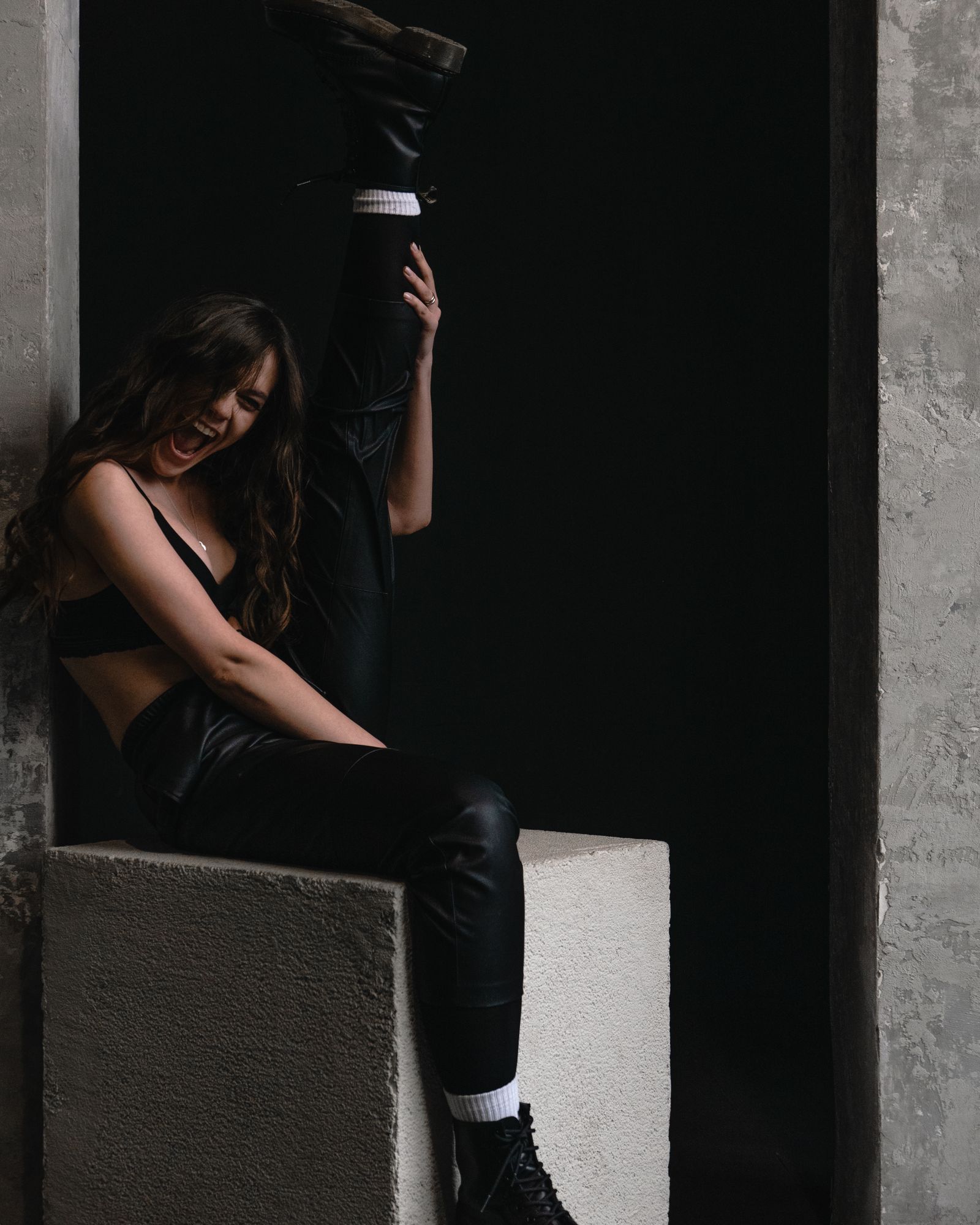
Il y a un moment chaque automne où vos leggings doux habituels semblent un peu trop décontractés, et où quelque chose avec plus de caractère commence à vous appeler. Ce quelque chose est presque toujours une paire de leggings en faux cuir grande taille — la pièce qui transforme un simple pull et des bottes en une tenue que les gens complimentent. Ils vous accompagnent de la course au café au dîner du samedi sans changement de tenue.
Mais le faux cuir est un animal différent du coton ou du poly brossé, et la plupart des conseils d'achat feignent de l'ignorer. Un tissu enduit ne s'étire pas comme un tricot uni. Il ne respire pas. Il se froisse, et ces plis se détendent pendant la nuit ou s'installent de manière permanente. Il ne peut pas aller au sèche-linge, et un fer chaud le fait fondre en quelques secondes. Ce n'est pas une raison de les ignorer, juste une raison d'acheter différemment.
Ce guide porte donc sur ce qui fait de ce tissu une catégorie à part : les quatre constructions, pourquoi la doublure est plus importante que le côté brillant, les détails de coupe qui décident du confort, les tests qui prédisent le vieillissement d'une paire, la routine d'entretien et six formules de tenue.
Ce que signifie réellement le faux cuir : quatre constructions et deux finitions
« Faux cuir » est un terme marketing générique, pas une spécification. Deux paires peuvent porter des descriptions identiques et se comporter de manière totalement différente. Apprenez les quatre constructions courantes et vous pourrez prédire comment une paire s'ajustera, bougera et vieillira.
Tricot enduit de PU : le cheval de bataille de tous les jours
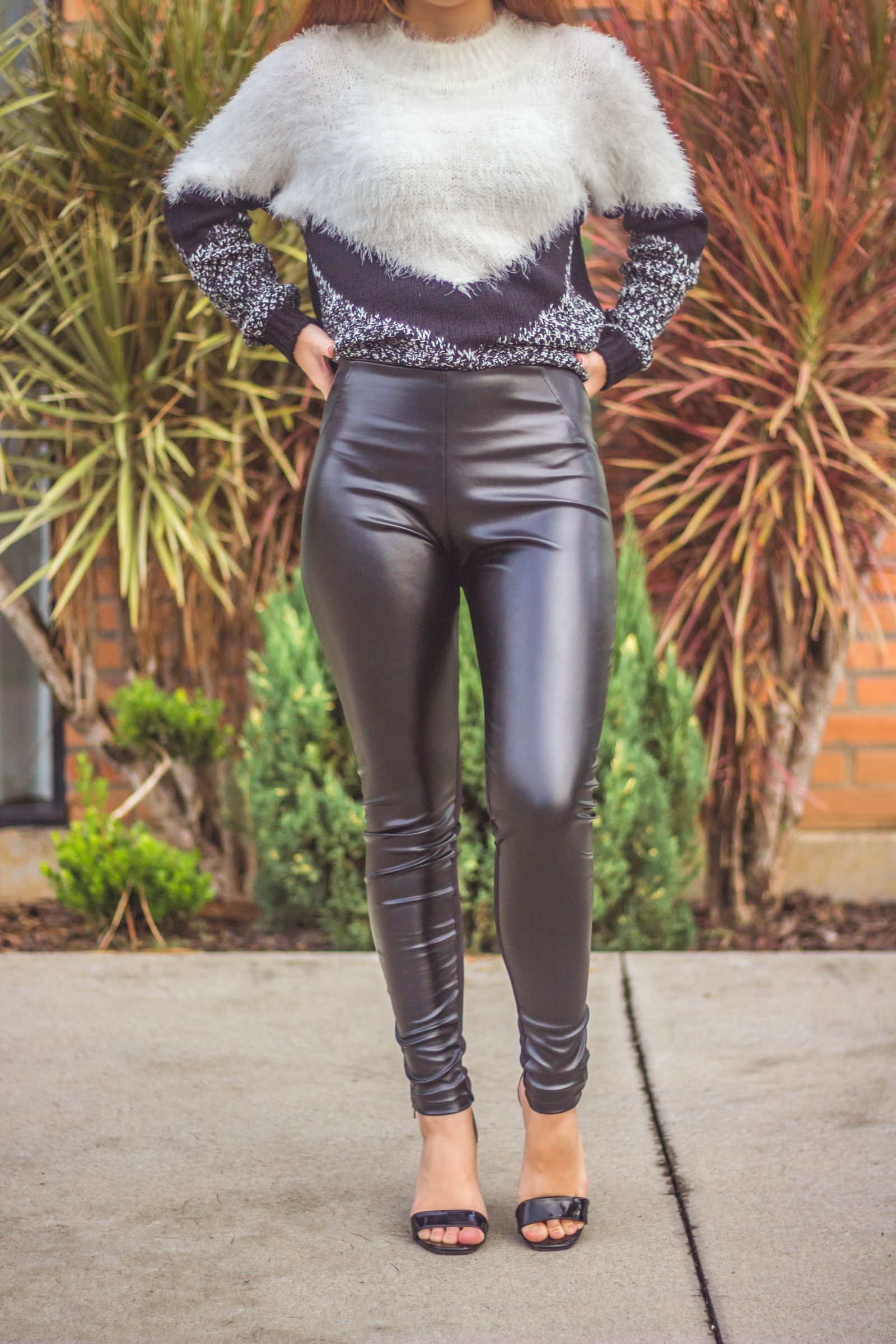
Le plus courant et, pour la plupart des gens, le plus portable. Une base extensible en polyester-élasthanne reçoit un mince revêtement en polyuréthane sur la face. Il ressemble à du cuir mais bouge presque comme un legging normal, car la base s'étire et le revêtement se plie avec elle. Ce sont les paires que vous pouvez porter pendant huit heures, et le point de départ le plus sûr.
Contrecollé ou laminé : structuré et sculpté
Un film de faux cuir distinct est collé à un tissu de support, créant une texture plus épaisse et plus dense. Les paires contrecollées conservent leur forme et ressemblent davantage à un pantalon. L'inconvénient : moins d'élasticité, plus de chaleur et un froissement permanent derrière le genou. Excellent pour les dîners, moins pour une voiture chaude.
Simili cuir intégral et panneaux non extensibles : vérifiez bien
Certains modèles utilisent un simili cuir véritablement non extensible sur le devant, parfois avec un empiècement en tricot à l'arrière. La tolérance de taille est extrêmement faible, et ce sont les paires les plus susceptibles de bailler à la taille ou de ne pas pouvoir être enfilées au-delà des hanches. Si une page produit ne mentionne jamais l'élasthanne, considérez cette catégorie et prenez une taille au-dessus.
Doublure en ponte : le confort avec de la tenue
Une face enduite sur une doublure en tricot double ponte de roma. C'est la meilleure construction si vous voulez l'apparence sans sacrifier le confort. Le ponte garde sa forme, résiste beaucoup mieux au dégonflement au niveau des genoux qu'un jersey fin, et a suffisamment de poids pour glisser plutôt que de coller. Il tient plus chaud, mais il dure.
Mat, satiné et effet mouillé
La finition est une variable distincte, et elle modifie la perception d'une même paire dans une pièce. Le mat absorbe la lumière, ressemble le plus au vrai cuir, cache les petites éraflures et convient le jour et au bureau. Le satiné se situe entre les deux. Le brillant intense ou "effet mouillé" reflète la lumière vive et donne une allure distinctement soirée – amusant, mais il montre chaque pli. Si vous voulez une paire qui fait tout, achetez mat.
Élasticité, Récupération, et Pourquoi le Tissu de Doublure Décide de Tout
Avec les leggings en coton, la composition est une question de confort. Avec les tissus enduits, c'est une question d'ajustement, une question de durabilité, et une question de savoir s'ils auront toujours bonne allure en mars.
Extensible dans les quatre sens versus deux sens
L'extensibilité bidirectionnelle se fait dans une seule direction, généralement autour du corps. L'extensibilité quadridirectionnelle se fait à la fois autour et le long de la longueur. Sur une silhouette courbée, ce n'est pas anodin : votre cuisse a besoin d'une élasticité horizontale lorsque vous vous asseyez et d'une élasticité verticale lorsque vous montez les escaliers. Un tissu enduit bidirectionnel est agréable à l'arrêt, mais il serre fortement la cuisse lorsque vous pliez le genou. Recherchez explicitement la mention "stretch quatre sens".
La récupération est le chiffre que personne n'imprime sur l'étiquette
L'élasticité, c'est la distance que parcourt un tissu. La récupération, c'est s'il revient en place. C'est la plus grande différence de qualité dans le faux cuir, et la raison pour laquelle certaines paires développent des bulles au genou après trois utilisations, tandis que d'autres restent impeccables deux saisons plus tard. Les doublures fines avec peu d'élasthanne s'étirent sous un genou plié et ne reviennent jamais en place, car un revêtement ne peut pas se redresser comme le peuvent les fibres nues.
Règle pratique : recherchez au moins huit à dix pour cent de spandex ou d'élasthanne, et préférez une doublure dense à une doublure fine et papier. Tirez le tissu au niveau du genou entre vos deux mains et relâchez. Il doit revenir à plat et rapidement. S'il hésite, ou laisse une légère trace étirée, cette paire se déformera.
Lire rapidement une étiquette de composition
- Polyester ou nylon plus 8 à 20 % d'élasthanne, extensible dans les quatre sens : un véritable legging qui ressemble au cuir. Le plus indulgent.
- PU listé séparément du tissu de base : contrecollé ou laminé. Structuré, plus chaud, moins d'élasticité.
- 100 % PU sans mention d'élasthanne : il s'agit en fait d'un pantalon effet cuir, et il doit être coupé généreusement pour fonctionner.
- Ponte, scuba ou double-tricot mentionné comme doublure : l'équilibre parfait entre confort et structure.
Les détails de coupe grande taille qui font ou défont une paire
Le tissu enduit est impitoyable quant à la circonférence d'une manière que les tricots doux ne sont pas. Rien de tout cela ne vise à rendre un corps plus petit ou à cacher quoi que ce soit – il s'agit de la mécanique d'un tissu à élasticité limitée rencontrant un corps réel.
Circonférence de la cuisse par rapport à la limite du revêtement
La plupart des tableaux de tailles sont construits autour de la taille et des hanches, ce qui n'est pas suffisant pour les tissus enduits. La cuisse est l'endroit où ces leggings échouent le plus souvent, car le revêtement a une limite stricte avant de se tendre et de blanchir. Mesurez la partie la plus large de votre cuisse et comparez-la aux spécifications de la marque pour la cuisse. Si seules la taille et les hanches sont indiquées et que vous avez une forme plus généreuse au niveau des cuisses, prenez une taille au-dessus – une ceinture lâche est plus facile à ajuster qu'une cuisse tendue.
La ceinture et la question du ventre
Le roulement de la ceinture est un problème de géométrie, pas un problème de corps. Une bande élastique étroite à la partie la plus souple du ventre n'a rien à quoi s'accrocher, elle se replie donc sur elle-même lorsque vous bougez. La solution est une bande large, de trois pouces ou plus, en tricot doux plutôt qu'en tissu enduit, car les bandes enduites glissent contre une couche de base et roulent plus vite. Notre collection de leggings grande taille est un endroit utile pour comparer les largeurs de ceinture.
La hauteur de la taille est plus importante ici
Avec un legging souple, une taille basse est un inconvénient mineur. Avec le faux cuir, c'est un vrai problème, car le tissu garde sa propre forme au lieu de s'adapter, de sorte que l'écart à l'arrière de la taille reste visiblement ouvert. Une taille vraiment haute maintient le panneau enduit à plat sur toute l'amplitude du mouvement. Penchez-vous en avant et passez une main le long de la bande arrière; un écart frais signifie que le style ne convient pas.
Coutures intérieures des cuisses et frottement
Le tissu enduit a un profil de friction différent de celui du coton, et cela compte si vos cuisses intérieures se touchent, ce qui est le cas pour la plupart des corps. Une couture intérieure de cuisse volumineuse sous un revêtement non respirant rend l'après-midi inconfortable. Recherchez des coutures plates ou collées plutôt que des crêtes surjetées épaisses, et privilégiez un gousset, qui éloigne l'intersection des coutures du point de friction le plus élevé. Si une paire frotte, des shorts sans couture fins résolvent le problème.
Largeur du mollet, ouvertures de cheville et fermetures éclair
La largeur du mollet est chroniquement sous-conçue sur les styles enduits, car la jambe est graduée moins généreusement que la hanche. Avec un mollet plus fort, évitez les chevilles étroites et effilées et recherchez une jambe droite. Les fermetures éclair aux chevilles aident la jambe à glisser sur une botte, mais une fermeture éclair est rigide dans un tissu à élasticité limitée. Vérifiez que la bande ne serre pas fort votre cheville lorsque vous êtes assis.
Les tests d'essayage : squat, assis, transpiration, et comment se comportent les plis
Se tenir devant un miroir ne vous dit presque rien sur le comportement d'un legging enduit dans la vie réelle. Cinq minutes de test vous disent presque tout.
Le test du squat
Accroupissez-vous comme pour ramasser quelque chose par terre, et maintenez la position. Est-ce que l'arrière de la taille baille ? Est-ce que le tissu sur la cuisse ou le siège présente des lignes de tension blanchies ? Une surface enduite qui blanchit sous la tension est étirée au-delà de sa capacité de récupération. Levez-vous et regardez les genoux : une bonne paire reprend sa forme, une mauvaise garde une bulle.
Le test des dix minutes assis
Asseyez-vous sur une chaise normale pendant dix bonnes minutes. Puis levez-vous et vérifiez les plis au niveau des hanches et derrière les genoux, et notez la vitesse à laquelle ils se détendent. Un bon faux cuir présente des plis doux qui disparaissent en quelques minutes et s'évanouissent pendant la nuit sur un cintre. Un faux cuir de mauvaise qualité présente des lignes nettes et pâles qui persistent.
Respirabilité et quoi porter en dessous
Soyons honnêtes : le tissu enduit ne respire pas. L'air ne passe pas à travers le polyuréthane et l'humidité ne s'y évapore pas. Cela détermine la saison plutôt que de disqualifier le vêtement : le faux cuir est un tissu pour temps frais, excellent de septembre à mars et inconfortable par temps humide.
Une fine couche de base change tout. Les shorts sans couture en microfibre ou en modal évacuent l'humidité du revêtement, éliminent la sensation moite, stoppent les frottements à l'intérieur des cuisses et rendent les leggings beaucoup plus faciles à enfiler. Ils protègent également l'intérieur des huiles corporelles et des lotions, qui dégradent un revêtement de l'intérieur. Pour les jours froids, des collants fins doublés de polaire ajoutent de la chaleur sans volume.
Comment le froissement se comporte avec le temps
Tout faux cuir se froisse. La seule question est de savoir si les plis sont doux et temporaires ou nets et permanents. Le PU fin sur un tricot extensible se froisse doucement et se récupère bien ; le film épais contrecollé se froisse de manière décisive derrière le genou. Si une paire détend ses plis sous vos yeux, gardez celle-là.
Comment entretenir les leggings en faux cuir pour qu'ils durent des années
C'est là que le faux cuir diverge le plus fortement de tout le reste dans votre tiroir, et c'est la différence entre une paire qui dure une saison et une qui dure cinq. La routine est simple.
Ne jamais les mettre au sèche-linge
C'est la seule règle sans exception. La chaleur du sèche-linge ramollit puis fait cloquer un revêtement en polyuréthane, et une fois que la surface a boursouflé ou est devenue collante, il n'y a plus de réparation possible. Suspendez-les pour les faire sécher, loin des radiateurs et à l'abri de la lumière directe du soleil.
Essuyez d'abord, lavez rarement
Étant donné que la face enduite est une surface scellée, elle n'absorbe pas les odeurs ou la saleté comme le fait le tissu. La plupart du temps, un chiffon humide suffit pour tout : essuyez avec de l'eau froide, ajoutez une goutte de savon doux pour une tache tenace, essuyez à nouveau et laissez sécher à l'air libre. Faites cela après chaque utilisation et vous pourrez passer des mois sans les laver.
Quand ils ont besoin d'un vrai nettoyage — généralement à cause de l'intérieur, pas de l'extérieur — retournez-les et lavez-les à la main à l'eau froide avec un détergent doux. Ne tordez pas ; pressez l'eau entre des serviettes. Si vous devez utiliser une machine, utilisez un sac en filet et le cycle le plus froid et le plus délicat. Évitez l'assouplissant, qui ternit la finition, et évitez le nettoyage à sec, car les solvants peuvent décaper le revêtement.
Ne jamais repasser le côté enduit
Un fer chaud fait fondre le polyuréthane sur la plaque presque instantanément. Pour faire disparaître les plis, suspendez-les dans la salle de bain pendant une douche chaude, ou tenez un steamer à vingt ou vingt-cinq centimètres et maintenez-le en mouvement. Si vous devez repasser, retournez-les, utilisez le réglage synthétique le plus bas avec un tissu de repassage, et testez d'abord à l'intérieur de la ceinture.
Rangez-les suspendus, pas pliés
Le pliage est ce qui crée des lignes de pli permanentes et blanches, car le revêtement est comprimé le long d'un bord tranchant et y reste. Suspendez-les sur toute leur longueur par la ceinture à l'aide de cintres à pinces, ou drapez-les sur une barre rembourrée recouverte d'un tissu doux. Pour voyager, roulez-les, ne les pliez jamais.
Plis blancs, éraflures et perte de brillance
Les fines lignes de tension sont le signe que le revêtement s'amincit là où il a été plié à plusieurs reprises. Vous ne pouvez pas les inverser complètement, mais une petite quantité de conditionneur sans danger pour le cuir ou de lotion non parfumée, appliquée avec un chiffon doux et essuyée, fonce souvent la zone et la fond. Testez d'abord dans un endroit caché. Si la finition est devenue terne, un chiffon microfibre à peine humide suivi d'un chiffon sec restaure l'éclat. Évitez les produits de nettoyage ménagers et tout ce qui est abrasif.
Six formules de tenue qui fonctionnent à merveille sur les silhouettes rondes
La meilleure chose avec ce tissu, c'est le peu d'effort que demande le stylisme. Les leggings apportent la texture, donc tout le reste peut être simple. Il ne s'agit pas de camoufler quoi que ce soit – il s'agit de proportion, de contraste et de laisser un excellent tissu faire son œuvre.
1. Tricot oversize et bottes hautes
Un pull épais de taille généreuse, des leggings en faux cuir mat et des bottes hautes. Le volume du pull contraste avec l'élégance du revêtement, c'est tout l'intérêt. Laissez le pull tomber entre la taille haute et la mi-cuisse, et remontez les manches.
2. Blazer et body
Un body ajusté rentré dans un pantalon taille haute, avec un blazer structuré par-dessus. Cela donne une allure de vraie tenue plutôt que de tenue décontractée et convient pour les dîners, les présentations et les bureaux décontractés. Le body élimine les plis à la taille et allonge la silhouette. Des chaussures plates pointues ou un petit talon carré complètent la tenue.
3. Pull tunique et bottines
Une tunique longue ou une robe pull arrivant à mi-cuisse, portée sur des leggings en faux cuir, avec des bottines d'une couleur proche des leggings. Assortir la botte au legging allonge la jambe, ce qui équilibre un haut plus long.
4. Cardigan long et t-shirt simple
Un cardigan gilet ouvert sur un simple t-shirt, légèrement rentré à l'avant, laissant apparaître la jambe enduite en dessous. Les deux panneaux verticaux du cardigan encadrent la tenue. Un look parfait pour les voyages et les courses.
5. T-shirt de groupe et baskets blanches
Un t-shirt graphique ou de groupe légèrement oversize, rentré à l'avant, avec des baskets blanches propres et une veste en jean ou un bomber. C'est la formule qui prouve que le faux cuir n'est pas seulement pour les soirées. Le haut décontracté le ramène au niveau de la rue. Le mat fonctionne mieux ici.
6. La formule soirée
Legging brillant, débardeur en soie ou haut en maille ajusté, bottines à talons, et un accessoire fort – une boucle d'oreille audacieuse ou un sac structuré. Gardez la palette sobre, idéalement tout dans un ton foncé, et laissez la finition apporter le drame.
Remarques sur les chaussures et les proportions
- Le tour de la botte est plus important que la hauteur du talon. Une botte large pour mollets qui convient réellement fait plus pour une tenue que n'importe quelle hauteur de talon.
- Gardez la cheville dégagée. Des chaussures dans une tonalité similaire aux leggings créent une ligne continue de la hanche au sol.
- Rentre-rentre presque tout. Une demi-rentre définit la taille sans engagement total et fonctionne avec presque tous les hauts que vous possédez.
- Jouez avec les textures, pas seulement les couleurs. Les tricots côtelés, le bouclé, la flanelle et le shearling paraissent tous plus riches à côté d'une surface lisse et enduite.
Si vous créez une garde-robe capsule saisonnière, il est utile d'acheter des silhouettes de jambes ensemble — parcourir nos bas grande taille en même temps que votre paire de faux cuir vous permettra de mieux voir quels hauts et bottes feront double emploi.
Questions fréquentes
Dois-je prendre une taille au-dessus pour les leggings en faux cuir grande taille ?
Généralement oui, d'une taille, si vous êtes entre deux tailles ou si la mesure de la cuisse est proche de la vôtre. Le tissu enduit a moins d'élasticité utilisable qu'un tricot simple, et il est plus confortable légèrement ample que légèrement serré, car le revêtement tendu blanchit et finit par se craqueler. L'exception est un véritable tricot PU extensible dans les quatre sens avec dix pour cent ou plus d'élasthanne, qui taille normalement.
Sont-ils assez chauds pour l'hiver ?
Ils sont résistants au vent, donc ils semblent plus chauds que leur épaisseur ne le suggère, mais ils n'ont presque aucune valeur isolante seuls. Le revêtement bloque l'air en mouvement, ils sont donc plus performants que les leggings en coton fin par temps venteux. Pour le grand froid, portez des collants fins doublés de polaire en dessous – chauds, presque sans volume, et plus confortables qu'un tissu épais.
Puis-je porter des leggings en faux cuir grande taille au travail ?
Dans la plupart des environnements décontractés-professionnels, oui, à deux conditions : choisissez le mat plutôt que le brillant, et associez-les à un haut structuré, un blazer ou une tunique qui les fasse ressembler à des pantalons plutôt qu'à des tenues de sport. Le noir mat avec un blazer et un petit talon carré est élégant. Gardez le look "wet" pour après les heures de travail.
Combien de temps une bonne paire doit-elle durer ?
Avec un rangement suspendu, sans sèche-linge, sans repassage direct et un nettoyage à l'éponge entre les utilisations, une paire bien faite devrait durer de trois à cinq saisons d'usage régulier. Ce qui met fin à leur vie est presque toujours un dommage dû à la chaleur ou un froissement dû au fait d'être plié dans un tiroir, et non l'usure normale.
Portez-les parce que vous le voulez
Il n'y a pas de taille à laquelle le faux cuir cesse d'être approprié, et il n'y en a jamais eu. Ce n'est pas une récompense pour avoir atteint une étape. Si cela vous donne l'impression d'être élégante et un peu puissante en entrant dans une pièce, c'est la seule justification dont vous avez besoin.
Ce qui détermine si vous aimez votre paire est plus pratique. Choisissez la bonne construction, vérifiez la récupération avant de vous engager, mesurez votre cuisse plutôt que de vous fier au tableau des hanches, ne les mettez pas au sèche-linge et suspendez-les le soir. Faites ces cinq choses et une bonne paire de leggings en faux cuir grande taille sera aussi belle à sa troisième saison qu'au premier jour.
Commencez par une paire noire mate, portée avec le pull que vous possédez déjà et les bottes déjà dans votre placard. Une fois que vous verrez tout le travail qu'une seule paire accomplit au cours d'une saison, le reste se mettra en place.