Plus Size Stirrup Leggings & Tights: The Complete Fit and Styling Guide for Fall 2026
Sep 01, 2026

There is one small strip of fabric that quietly solves the most annoying thing about cold-weather legwear: the hem that creeps up your calf every single time you walk. That strip is the stirrup, and plus size stirrup leggings are engineered entirely around it. The strap loops under the arch of your foot, anchors the leg from below, and leaves your heel and toes completely exposed — so the long line from waistband to ankle stays exactly where you put it through boots, ballet flats, a full commute and a nine-hour day.
If you have ever tucked leggings into tall boots and found them bunched north of your knee by lunchtime, you already understand why this construction is having a moment. What follows covers how the stirrup works, how it differs from footless and full-foot styles, how to fit the strap on wider feet, how to read inseam and rise on a curvy body, and six outfit formulas for autumn.
What Plus Size Stirrup Leggings Actually Are — and Why That Strap Changes Everything
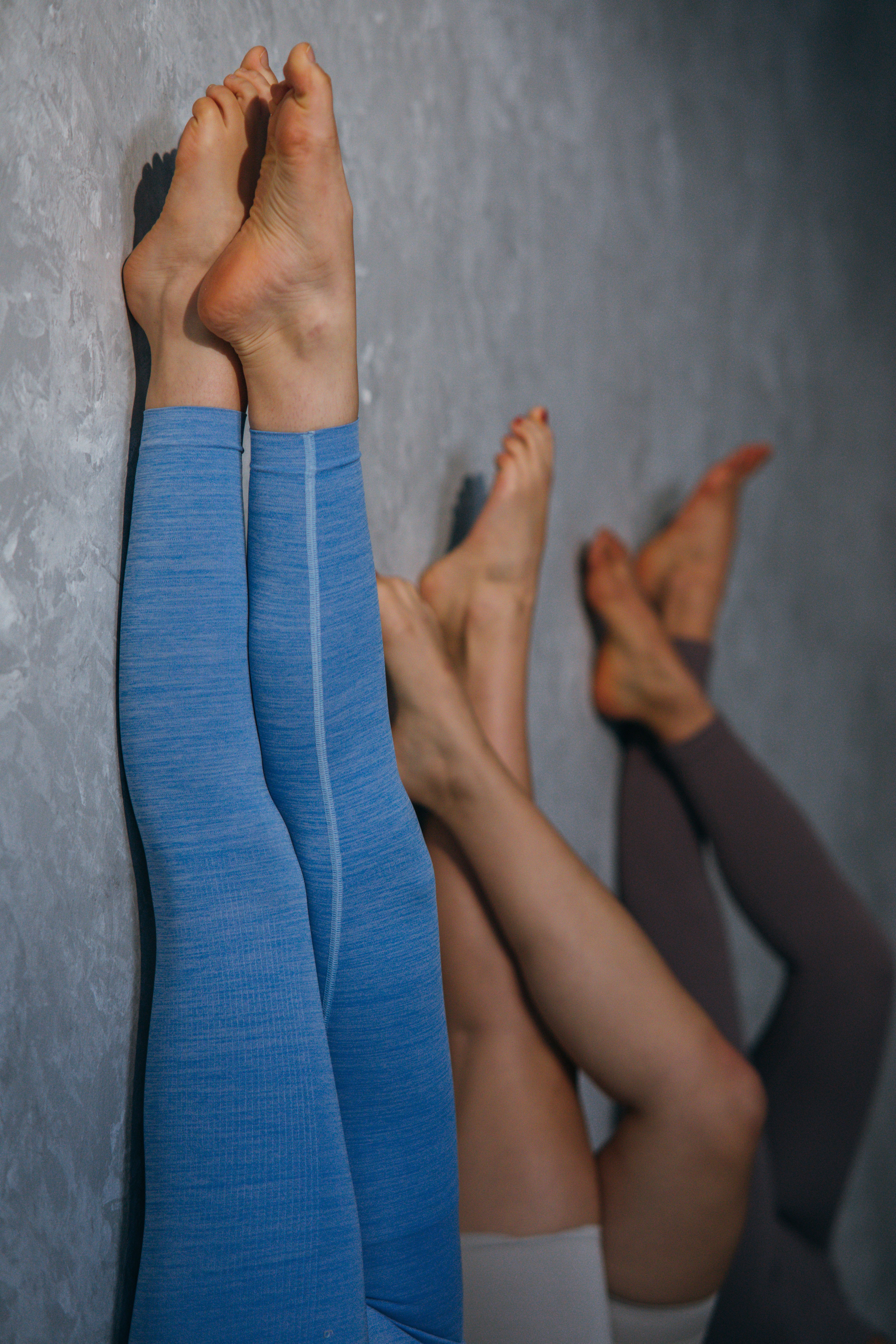
A stirrup legging is a full-length legging or tight whose hem does not stop at the ankle. Instead the fabric narrows into a band roughly one to two inches wide that passes beneath the arch of the foot and rejoins the leg on the other side, forming a closed loop. Your heel sits behind the strap, uncovered. Your toes sit in front of it, uncovered.
The mechanical point is tension management. A conventional legging is held only from the top, by the waistband and by whatever grip the fabric has against skin. Every stride creates a small upward drag at the ankle, and over hours those micro-movements accumulate into visible bunching at the calf and a shortened, uneven hem, and a boot shaft that grips the fabric accelerates it. A stirrup replaces that one-way tension with a two-point system: the waistband pulls up, the strap pulls down, and the leg panel sits in gentle, continuous vertical tension between them.
Why the payoff is bigger at extended sizes
This matters more, not less, as sizes go up. Longer leg panels mean more fabric surface area and a longer distance over which stretch can distort. Curvier hips and fuller thighs also mean the fabric is stretching horizontally through the upper leg, which borrows length from the vertical direction — the reason a legging that fits your hip perfectly can suddenly read cropped at the ankle. Plus size stirrup leggings counteract exactly that, holding the recovered length down where you want it and keeping the rise at your true waist instead of sliding southward all afternoon.
The secondary benefit is visual, and it has nothing to do with appearing smaller. An unbroken column of colour from waist to ankle simply reads as intentional and calm. The exposed heel and toe add a deliberate, almost dancerly punctuation at the bottom. It is a proportion tool, not a disguise.
Stirrup vs. Footless vs. Full-Foot: A Real Construction Comparison
These three styles get shelved together and treated as interchangeable. Each solves a different problem, and choosing wrongly causes most of the disappointment.
Footless tights and leggings
Footless styles simply stop at the ankle bone with a hemmed or raw edge. Nothing passes under the foot at all. They are the most versatile with sandals and the coolest option for transitional weather. The trade-off is precisely what the stirrup was invented to fix: with no downward anchor, the hem travels. Under boots or anything with friction, footless hems ride up. Right for barefoot lounging and open footwear; wrong under a knee-high boot.
Full-foot tights
Full-foot tights enclose the entire foot like a sock. They are the warmest, they layer invisibly inside closed shoes, and they never ride up. The costs are real: a toe seam that can rub inside a narrow shoe, sizing that must accommodate your shoe size as well as your leg length, a tendency for the foot section to slip and pool at the heel by evening, and near-unwearability with any open-heel or open-toe shoe.
Stirrups: the middle path
Stirrups take the anchoring of a full foot and discard the enclosure. You get hold-down security with no toe seam to irritate, no heel pooling, no shoe-size dependency, and full compatibility with mules, slingbacks, ballet flats and open-heel loafers. You also get airflow, which makes a heavier fabric wearable indoors without overheating. What you give up is warmth across the foot itself — on a genuinely cold day you will want a sock or a lined boot — and you accept a pressure point under the arch that has to be fitted properly.
Fabric, Denier and Opacity: How to Read a Spec Sheet Before You Buy
Opacity is the most common source of returns, and it is predictable once you know what to look for. Denier measures the linear density of the yarn: higher denier means thicker yarn and less light transmission.
Below about 30 denier you are in sheer territory — pretty, delicate, not remotely warm. Between 40 and 60 denier you get semi-opaque coverage that still shows some skin tone under bright light. From 70 to 120 denier you reach true opacity, the range most people mean when they say they want tights that stay solid. Above 150 denier the fabric behaves less like a tight and more like a knit legging, with visible surface texture and real thermal value.
The extended-size opacity trap
Here is the detail brands rarely print: denier is measured on the yarn, not on the stretched garment. Any tight becomes more transparent as it stretches, so the same 60-denier fabric that reads solid on a narrow calf can read patchy across a fuller thigh. If you want dependable opacity through the hip, choose a higher denier rather than hoping the fabric will cope — 80 to 100 is a far safer starting point than 40.
Blends and what each fibre contributes
A dependable everyday blend sits around 80–92% nylon or polyamide with 8–20% elastane. Nylon supplies smoothness, durability and colour depth. Elastane supplies stretch and, critically, recovery — the ability to snap back rather than sag. Under about 8% elastane a stirrup style will stretch out and stay stretched, defeating the purpose of the strap. Cotton-rich blends feel soft and breathable but bag at the knee fastest; modal and viscose drape beautifully but pill sooner. Mentions of double-knit, interlock or four-way stretch signal genuine recovery rather than one-directional give. You can compare weights and opacities across this curated collection of plus size tights before committing.
Strap Width, Arch Pressure and Fitting Wider Feet
The strap is the whole point of the garment and simultaneously the most common reason people abandon it. Almost every complaint traces back to one of three variables: strap width, strap length, and how the strap is joined to the leg.
Width is a comfort setting, not a style detail
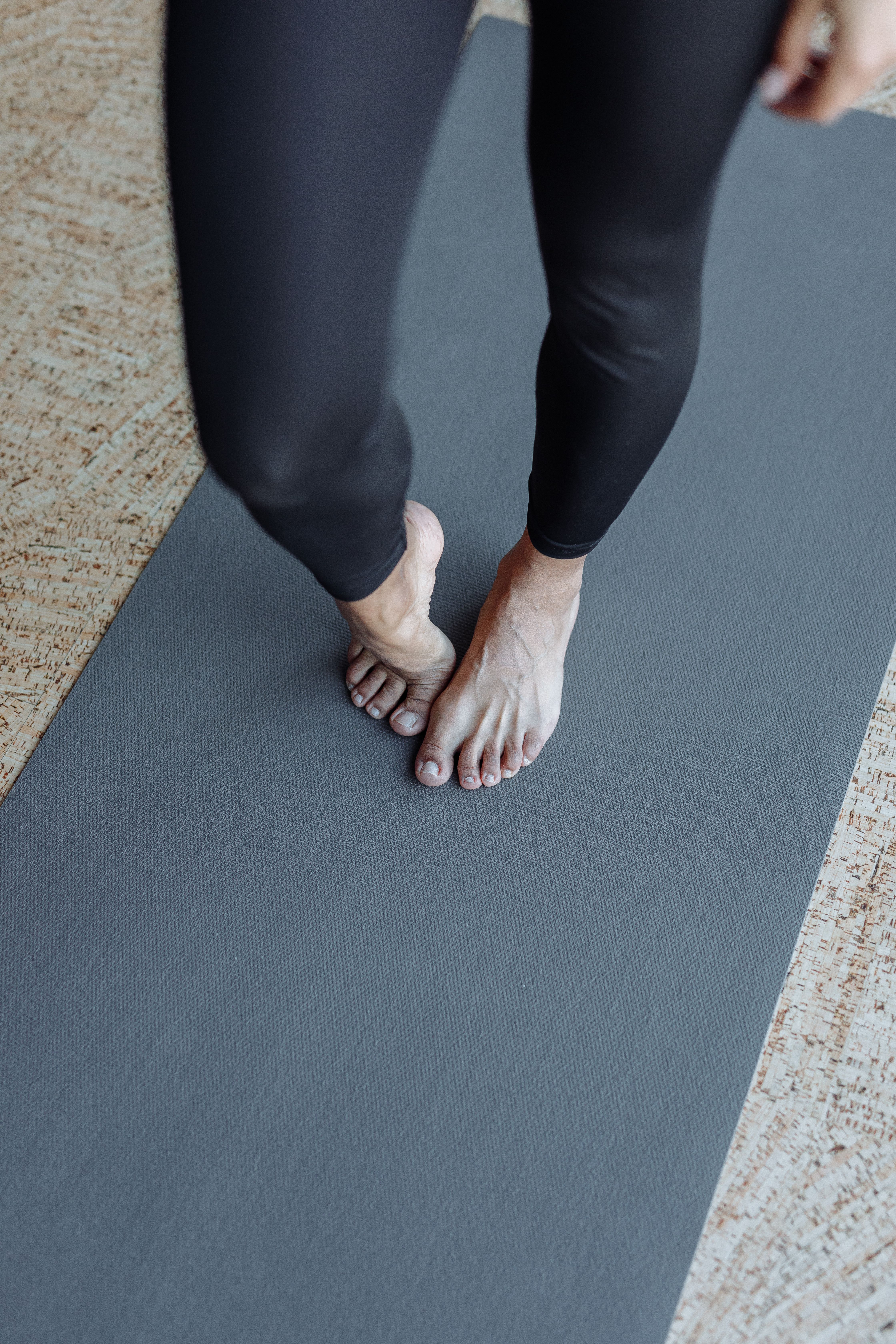
A narrow strap under about three quarters of an inch concentrates all the downward tension into a thin band, which under an insole becomes a distinct pressure line across the arch after a couple of hours. A wider strap of one and a half to two inches spreads the same force across more surface area, which is dramatically more comfortable for all-day wear. If you are choosing between two pairs of plus size stirrup leggings and one has a visibly wider underfoot band, choose that one.
Wide feet and high arches need extra strap length
Strap length is graded to the leg, not to the foot, so a grading that assumes an average foot width can pull uncomfortably tight if your foot is wide or your instep is high. The result is a strap that tugs the leg panel downward too hard, creating a dragging sensation at the ankle and sometimes pulling the waistband down. Two fixes: choose a style with a flat, seamless join where the strap meets the leg rather than a bulky overlock seam, and if you are between sizes with a wide foot, size up and rely on a supportive waistband to manage the extra room. A slightly loose leg with a comfortable strap beats a perfect leg with a strap that bites.
The five-minute walk test
Before committing to a long day, put them on with the actual shoes you plan to wear, stand, and walk for five full minutes. A strap that will bother you almost always announces itself in that window. Position it at the narrowest part of your arch rather than riding forward toward the ball of the foot, where it will be felt with every step. Inside boots, a thin trouser sock worn over the strap smooths the pressure point and stops the band shifting. If you have a bunion or a prominent instep bone, wear the sock rather than fighting the fabric.
Inseam, Rise, Hip Sizing and Gusset Construction
Vertical fit is where extended sizing succeeds or fails, and a stirrup style is unusually honest about it, because the strap will not let you cheat length.
Measure the hip, then check the inseam separately
Charts are usually built on hip circumference and height. Measure your hip at the fullest point with the tape parallel to the floor and no tension, then find your height band; the intersection is your starting size. The number that decides comfort is the inseam — crotch seam to the top of the strap. If a listed inseam is more than about an inch shorter than yours, the strap will pull hard under the arch and drag the rise down. Significantly longer, and you get slack fabric pooling above the ankle. For plus size stirrup leggings, inseam matters more than for any other style, so ask if it is not published.
Rise types and what each one does
A high rise sitting at or just above the natural waist gives the most stable, secure feel and pairs naturally with cropped knits and tucked tops. A mid rise a couple of inches below the waist suits shorter torsos and anyone who finds a high band restrictive when seated. Low rise is a Y2K styling choice that, paired with the downward pull of a stirrup, needs frequent adjusting. Beyond height, check the band itself: a wide flat-knit band of three to five inches that lies smooth, rather than a thin encased elastic that folds and rolls when you sit. A bonded inner grip or a drawcord is genuinely useful on a longer leg panel.
Why the gusset is not a minor detail
A gusset is the small diamond or triangular panel set into the crotch seam. Without one, four seams meet at a single point, creating a stress-concentrated junction that is the most common place for a seam to split and for fabric to thin and go sheer. A gusset spreads that intersection across a shaped panel, adding room front to back, reducing friction between the thighs and improving range of motion on stairs. On a stirrup style it does extra work, because the strap transmits downward tension straight through the crotch seam with every step. A mentioned gusset is a real quality marker; a flatlock or coverstitch finish is a second one.
Balletcore, Y2K and Six Outfit Formulas for Fall 2026
The revival comes from two directions at once. Balletcore borrowed the visual language of the rehearsal studio — wrap cardigans, soft knits, satin, and the stirrup pant dancers have worn for warm-ups for decades. Simultaneously the Y2K nostalgia cycle reached the early 2000s, when stirrups appeared under bootcut denim and pointed boots. The result is a style with two very different personalities, both genuinely wearable rather than costume.
Six formulas to build from
- The boot column. Opaque stirrups in charcoal or black, a knee-high boot, and an oversized cable knit landing mid-hip. The strap guarantees the hem stays put inside the shaft.
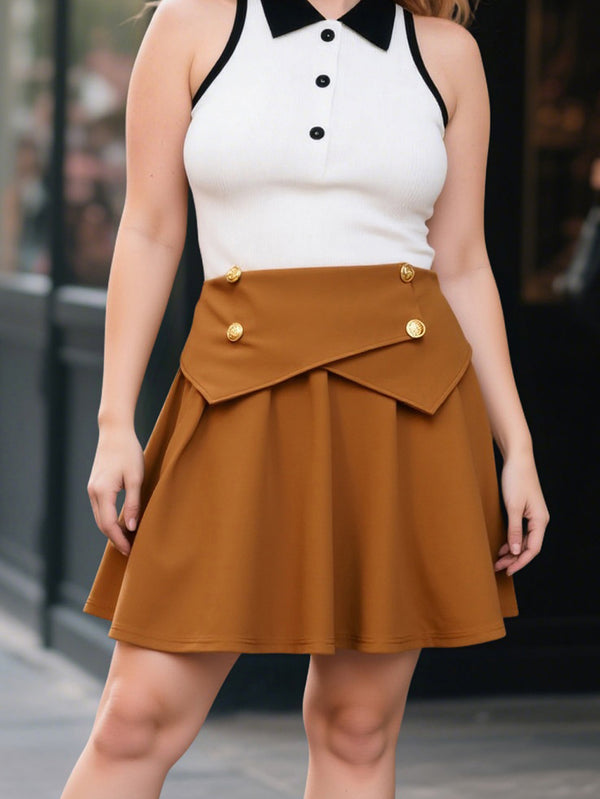
- Balletcore, everyday version. Black stirrups, ballet flats or Mary Janes, a soft wrap cardigan over a fitted tank, and a short pleated skirt over the top. The exposed heel and flat shoe do all the referencing.
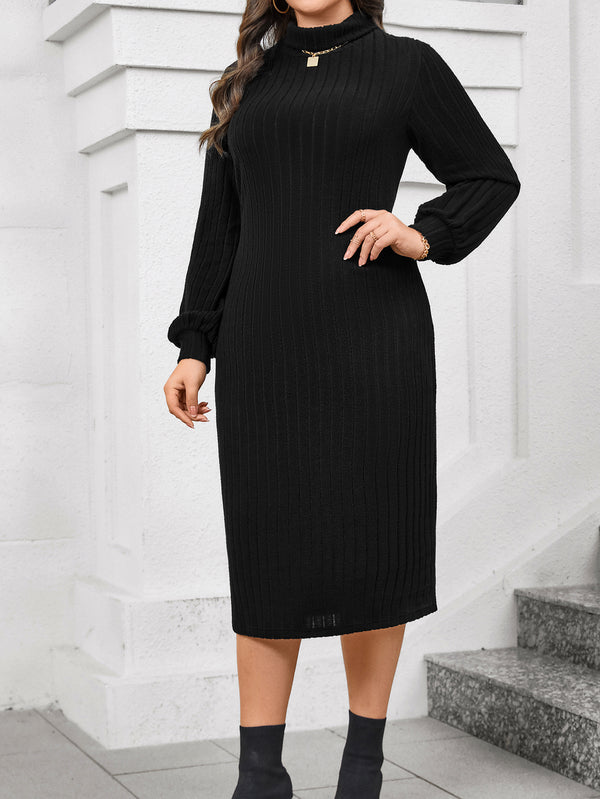
- Long knit and loafers. A tunic sweater or sweater dress at mid-thigh, stirrups beneath, chunky loafers or a lug-sole flat. The vertical line stays clean because the strap holds the hem.
- Layered over the top. Stirrups under a midi shirt dress or denim skirt with a heeled ankle boot. The visible slice of leg between hem and boot reads as styled rather than accidental.
- Warm-up off duty. Stirrups, a cropped zip-through, thick slouch socks pulled over the strap, and sneakers. The socks solve the cold-foot problem completely and add texture at the ankle.
- Evening, minimal effort. High-denier stirrups, a slingback or mule so the bare heel shows deliberately, and a satin slip or wrap top.
Layering notes for cold months
Because the foot is open, stirrups layer far more easily than full-foot tights. Wear a thermal or wool sock over the strap inside a boot with no seam bulk anywhere. Stack a sheer stirrup over an opaque one for depth of colour. In genuinely cold conditions, wear plus size stirrup leggings underneath a wide-leg trouser as a base layer: the strap stops them riding up inside the trouser leg, which is exactly the failure mode that makes footless base layers so irritating. To compare waistband heights and stretch levels across full-length options, the broader plus size leggings range shows how the same size grading behaves in different fabrics.
Troubleshooting Common Fit Complaints — and Making Them Last
Most disappointments have a specific, fixable cause.
Five complaints and their fixes
The strap digs into my arch. It is too narrow or too short for your foot. Move to a wider underfoot band, size up, wear a thin sock over the strap, or reposition it into the narrowest part of the arch. The waistband slides down. The inseam is short for your leg, so the strap is pulling the rise downward — size up or find a longer inseam, and choose a wide flat band with inner grip. The fabric goes sheer over the seat. Denier is too low for the stretch being asked of it; move into the 80–100 range. Bagging at the knee by afternoon. Elastane content is too low or recovery has been damaged by heat; look for at least 10% elastane and stop machine drying. The strap twists sideways. Usually a bulky seam at the strap junction, or the leg was put on twisted — smooth the panel from ankle upward as you dress.
Care that actually preserves the strap
Elastane is destroyed by heat, chlorine and abrasion, in that order. Wash cool at 30 °C or below, turn the garment inside out, and use a mesh laundry bag so the strap cannot snag on zips or hooks. Skip fabric softener entirely — it coats elastic fibres and reduces their ability to recover. Never tumble dry: reshape the leg gently and dry flat away from radiators and direct sun. Fold rather than hang, because hanging a heavy leg panel from the waistband stretches it over time. Inspect the strap seam every few washes; securing a loosening stitch by hand costs two minutes and buys another season. Rotating two or three pairs gives the elastane time to relax back to shape.
Frequently Asked Questions About Plus Size Stirrup Leggings
Can I wear stirrup leggings with sneakers and regular socks?
Absolutely, and it is one of the most comfortable ways to wear them. Pull the strap into position under your arch first, then put a sock on over the top so the band is sandwiched between your foot and the sock. This smooths out any pressure point completely and stops the strap shifting during the day. Slouch socks or ribbed crew socks look intentional pushed down over the ankle.
How are plus size stirrup leggings different from footless tights?
The difference is a single strip of fabric with a large practical consequence. Footless tights end at the ankle with nothing under the foot, so the hem is free to travel upward as you walk and will bunch at the calf inside boots or under trousers. A stirrup runs a band beneath your arch that anchors the leg from below, holding the hem in place all day. Footless styles win with sandals and for barefoot lounging; stirrups win any time the leg is enclosed, layered, or expected to stay put through a long day.
What size should I buy if I am between sizes or have wide feet?
Size up. On a stirrup style the underfoot strap is graded to the leg length, so the smaller of two sizes shortens the effective inseam and pulls the strap tight across your arch, which drags the waistband down and creates discomfort within hours. A slightly roomier leg is easy to manage with a wide, supportive high-rise waistband or a drawcord, whereas a strap that is too short cannot be fixed at all. Check the listed inseam alongside the hip measurement, and prioritise strap width if your instep is high.
Will they lose their shape or roll down at the waist?
Not if the fabric and the band are right and you wash them kindly. Look for at least 8 to 10 percent elastane for genuine recovery, a wide flat-knit waistband of three to five inches rather than a thin encased elastic, and a gusseted crotch that spreads the tension the strap transmits with every step. Then protect the elastic: cool wash, no fabric softener, no tumble dryer, dry flat, and fold rather than hang. Rotating between a few pairs lets the fibres recover fully and keeps every pair holding its shape far longer.