Plus size blouses are the quiet powerhouse of a curvy wardrobe: the piece you reach for when a t-shirt feels too casual, a sweater feels too heavy, and you want to look put together without spending twenty minutes deciding. A blouse is soft but structured, polished but breathable, and it moves between a Monday meeting, a Thursday lunch, and a Saturday dinner with almost no effort from you.
At Moon Wood, our customers tell us the same thing again and again: they want tops that feel elevated without feeling stiff, and comfortable without looking like loungewear. The blouse sits right in that sweet spot. This guide covers what actually defines a blouse, which fabrics behave the way you want them to, how necklines and sleeves change the whole feeling of an outfit, the fit details that matter most on a fuller bust, and how to tuck, pair, and care for these pieces so they last for years.
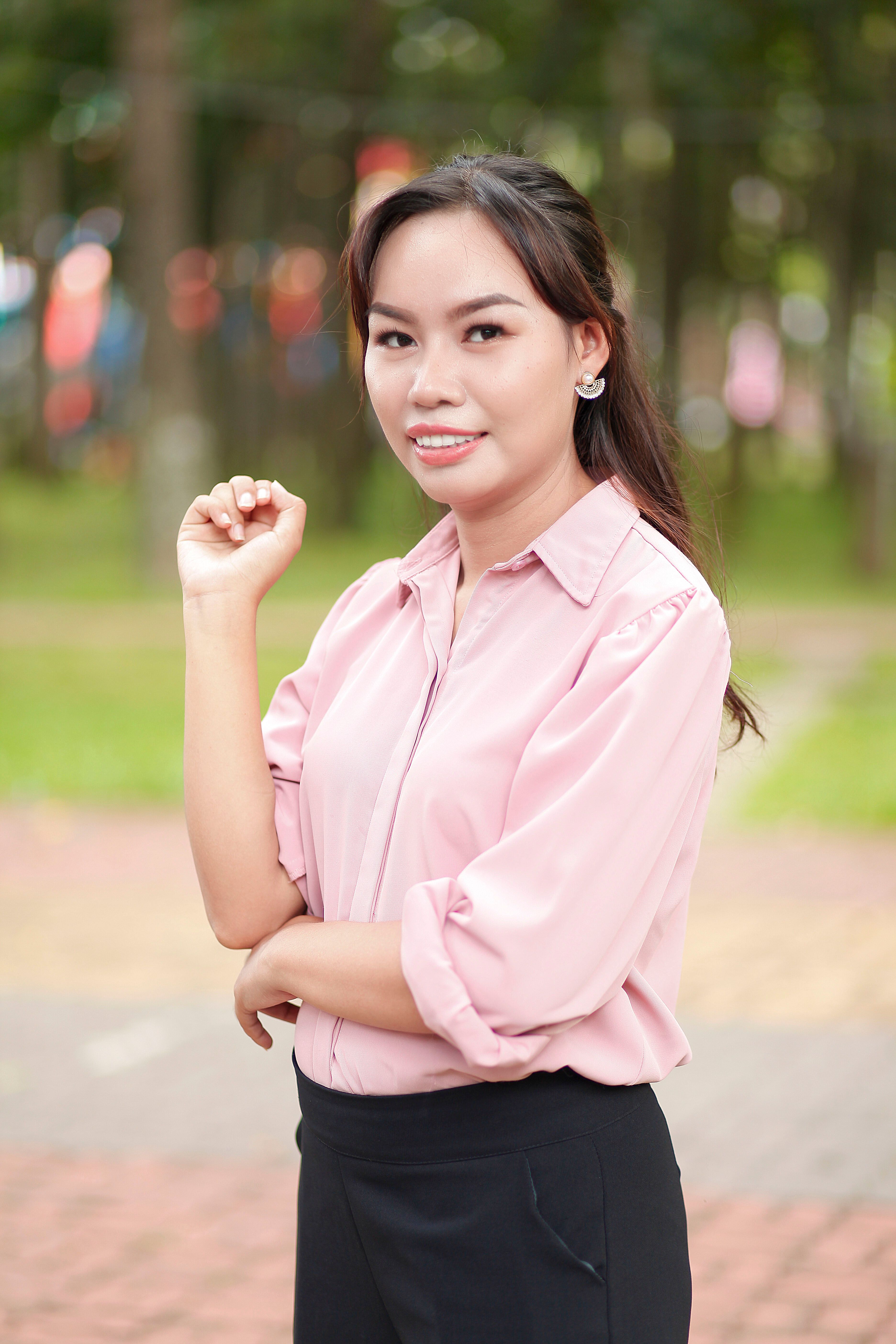
Why a Blouse Earns Its Hanger Space
Most of us have a closet full of knits. Knits are easy: they stretch, they forgive, they pull on in three seconds. But a jersey top will always read as casual, no matter how nice the color is, because the fabric has no built-in shape of its own.
Structure without stiffness
A woven blouse behaves differently. Because the fabric holds a little structure on its own, it creates clean lines through the shoulders and a smooth column down the front. It looks intentional under a blazer or on its own with jeans, and it does that while still being a single light layer, which matters in an office where the thermostat has its own opinions.
One piece, many contexts
The real argument here is range. One blouse in a neutral color can go to a client presentation, a birthday dinner, and a wedding rehearsal, changing character based on what you put with it. Trousers and loafers read professional; jeans and sandals read weekend; a satin skirt reads evening.
Comfort has genuinely caught up
The old objection to blouses was comfort, because older woven shirts had almost no give. That has changed. Stretch wovens, gusseted underarms, better shoulder engineering, and smarter button placement mean a modern blouse can move with you. If the last one you tried felt restrictive, the category deserves a second look.
What Actually Makes a Blouse a Blouse
The word gets used loosely. A blouse is a top made from woven fabric rather than knit, usually with some kind of front opening, cut with softer structure than a menswear-style shirt. Here is how that plays out against the other tops in your closet.
Woven versus knit
Knit fabric is made from loops of yarn, which is why a t-shirt stretches in every direction. Woven fabric is threads crossing at right angles, which gives it stability. It does not cling the way jersey does, it holds a crease, and it drapes away from the body in soft folds. That is the single biggest reason a blouse feels dressier than a tee in the same color.
Blouse versus t-shirt or tank
Tees and tanks are pull-on knits with no closures. They are wonderful basics, but their whole visual language is casual. A blouse adds a front placket, buttons or a keyhole, often a collar or a tie detail, and more shape through the body. Where a tee is a background piece, a blouse is usually the focal point.
Blouse versus button-down shirt
A classic button-down is crisper: stiff collar, structured cuffs, boxier body. A blouse borrows the buttons and softens everything else, with fluid fabric, a flat collar or none at all, and sleeves that gather rather than stand at attention.
Blouse versus cardigan
A cardigan is a knit layering piece designed to open over something else. A blouse is a complete top on its own. Wear both together and the blouse still does the work of the outfit while the cardigan adds warmth and a second color.
The Fabric Guide: What Each One Actually Feels Like
Fabric determines almost everything: how warm a blouse is, how it drapes, how much care it needs, and whether it reads luxurious or crisp. Here is what to expect from the fabrics you will see most often in plus size blouses.
Chiffon
Sheer, lightweight, and airy, with a slightly grainy texture and beautiful floating drape. Chiffon is the fabric behind most romantic, floaty styles. Because it is semi-transparent it is usually lined or worn with a smooth camisole underneath. Excellent in heat and packs small for travel, but it snags on rings, so treat it gently.
Silk and silk blends
Real silk has a soft luster and a cool hand that warms to your skin within minutes. It breathes remarkably well and regulates temperature in both directions. The trade-off is care: silk prefers hand washing, dislikes direct heat, and can show water spots. A washable silk or silk blend gives you most of the feel with far less fuss.
Cotton poplin
A plain-weave cotton with a smooth, matte, slightly crisp finish. Poplin is the workhorse: it holds a clean line, takes color beautifully, launders easily, and reads tailored. Look for a small percentage of elastane if you want structure that still moves. Pure poplin wrinkles, so keep a steamer nearby if you like sharp lines.
Crepe
Crepe has a subtly pebbled surface made by twisted yarns, and it is arguably the most practical fabric here. It drapes fluidly, resists wrinkling far better than cotton, and has a matte sophistication that photographs well. If you travel for work, crepe can live in a suitcase and come out looking fine. It is our first recommendation for a workwear rotation.
Satin and satin blends
Satin is a weave rather than a fiber, which is why you see silk satin, polyester satin, and blends. What defines it is the glossy face and matte back. Satin brings instant evening energy and slides smoothly over other layers. Modern blends breathe much better than they used to, though the reflective surface shows every wrinkle, so hang it properly.
Necklines and Sleeves: The Two Choices That Change Everything
Two blouses in identical fabric and size can feel completely different depending on neckline and sleeve. These are the details worth being picky about, because they decide where the eye travels and how freely you can move.
The V-neck
The most-requested neckline for good reason: it creates vertical space at the chest, keeps the throat open and cool, and works with every necklace length. Depth matters more than shape, with a shallow V reading office-safe and a deeper V feeling evening-ready. If a V gapes when you move, that is a construction issue, and a small snap solves it permanently.
The bow-tie or tie-neck
A soft bow at the throat is the fastest way to make a plain blouse feel considered. Tie it into a full bow for something sweeter, knot it loosely like a scarf for something modern, or let the ties hang straight for a long vertical line. These look especially good under blazers, where the tie fills the neckline without jewelry.
Peter Pan and flat collars
Small, rounded, and lying flat against the chest, the Peter Pan collar is sweet, a little retro, and reads friendly. It works beautifully with a fuller bust when the collar is scaled up slightly rather than left tiny, so it stays proportional to the frame. A contrast white collar on a colored body is a lovely detail.
Surplice and wrap
The surplice, where one side crosses over the other, is one of the best necklines for a fuller bust because the crossover is designed to accommodate curve rather than fight it. Wrap styles that tie at the side add adjustability, letting you set the waist exactly where you want it. Look for a secure inner tie or a modesty snap.
Square necklines
Square necks have quietly become a favorite. The horizontal line across the collarbone frames the neck cleanly and highlights beautiful shoulders, and the geometry feels fresh next to years of V-necks. Pair them with a delicate short chain, or nothing at all, and let the line speak.
Cap and short sleeves
Cap sleeves just cover the shoulder cap; short sleeves end partway down the upper arm. Both are summer heroes, and the detail to check is circumference, since a generous, softly gathered sleeve is far more comfortable than a tight one. A flutter or petal shape adds movement and air.
Three-quarter sleeves
Ending between elbow and wrist, this may be the most useful sleeve length in existence. It keeps your arms covered, stays out of the way while you type or cook, sits under a blazer without bunching, and shows a bracelet nicely. If you can own only one sleeve length for work, choose this.
Long sleeves with cuffs
A real buttoned cuff is what makes a blouse feel finished. Cuffs give the wrist a clean edge and let you push sleeves up neatly. Check for two button positions so you can adjust the fit, and a proper placket opening rather than a stitched-shut slit. Blouson sleeves that gather into the cuff are especially comfortable, since the volume sits away from the arm.
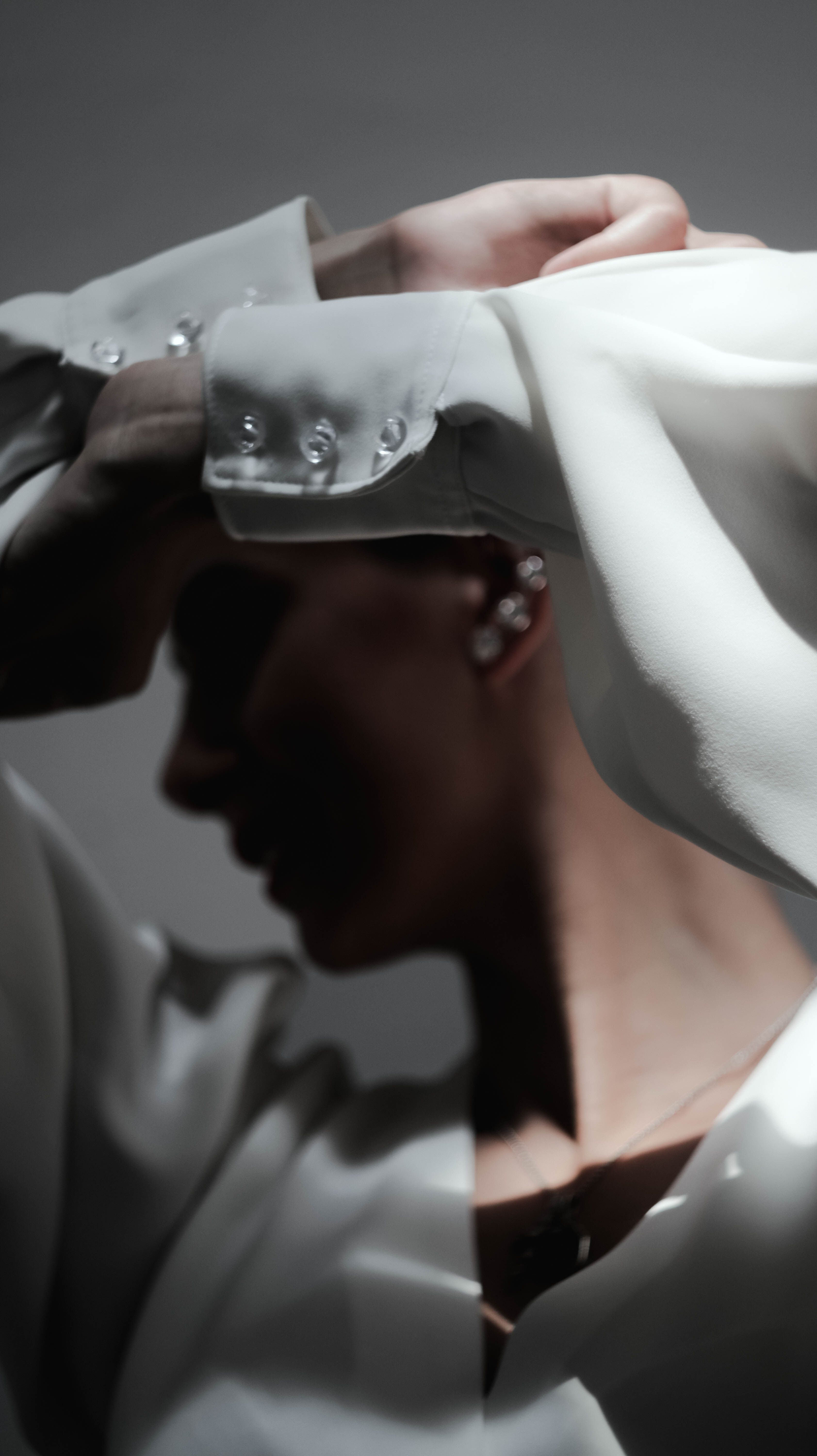
Curvy Fit Details That Make or Break a Blouse
This is where good design earns its keep. The difference between a blouse you wear constantly and one that stays on the hanger is almost always a handful of construction details.
Real bust accommodation
Many blouses are simply scaled up from a smaller pattern, adding width everywhere equally, which produces a top that is roomy at the waist and still strained at the bust. Well-drafted plus size blouses add room specifically where it is needed through a full bust adjustment, bust darts, or extra front length so the hem does not ride up in front.
Princess seams and darts
Princess seams are curved vertical seams running from the shoulder or armhole to the hem. They shape a garment in three dimensions rather than two, giving gentle contouring through bust and waist without adding bulk. Darts do similar work on a smaller scale. Both signal that someone thought carefully about the pattern.
Stretch wovens
Look for a few percent elastane in the fabric content. Two to four percent is enough to transform how a woven top feels across the back and upper arms without changing how it drapes. It is one of the most meaningful upgrades in modern blouse construction.
Armholes and shoulder seams
Armhole depth decides whether you can raise your arms comfortably: cut too high and narrow it binds, cut too low and wide it pulls the whole blouse sideways when you reach. Shoulder seams should sit at the outer edge of your shoulder, not halfway down your arm, since a dropped seam on a fitted sleeve limits your range of motion. Underarm gussets are a mark of thoughtful construction.
Button placement and plackets
The most common blouse complaint is gapping at the bust, and it comes down to spacing. Closely spaced buttons, or a button positioned right at the fullest point of the bust, prevent the pull. Hidden plackets, where buttons sit behind a fabric flap, give a smooth uninterrupted front, and some designs skip the issue entirely with a partial placket over a fully covered front.
Styling: Tucking, the French Tuck, and Pairing With Bottoms
How you finish a blouse changes the entire outfit. There is no correct answer here, only options, and all of them are valid.
Fully tucked
A full tuck is the most polished choice and the right one for high-waisted trousers, pencil skirts, and anything with a defined waistband. Two tricks help: choose a blouse with enough front length to stay put, and tuck the front and sides while keeping the back smooth rather than stuffing fabric in evenly. A thin belt confirms the waistline.
Fully untucked
Untucked is relaxed, cool in summer, and endlessly wearable. It works best when the blouse has some shape, whether from princess seams, a soft tie, or a gentle A-line sweep, so it reads intentional rather than boxy. Untucked over wide-leg trousers with a low sandal is one of the easiest warm-weather outfits going.
The French tuck
The French tuck, or half tuck, means tucking only the center front and leaving the sides and back loose. You get the waist definition of a tuck with the ease of an untucked hem, and it rescues blouses that are slightly too short to tuck fully. Tuck a small amount, pull down gently for a soft blouson, and leave it a little imperfect.
Office and professional pairings
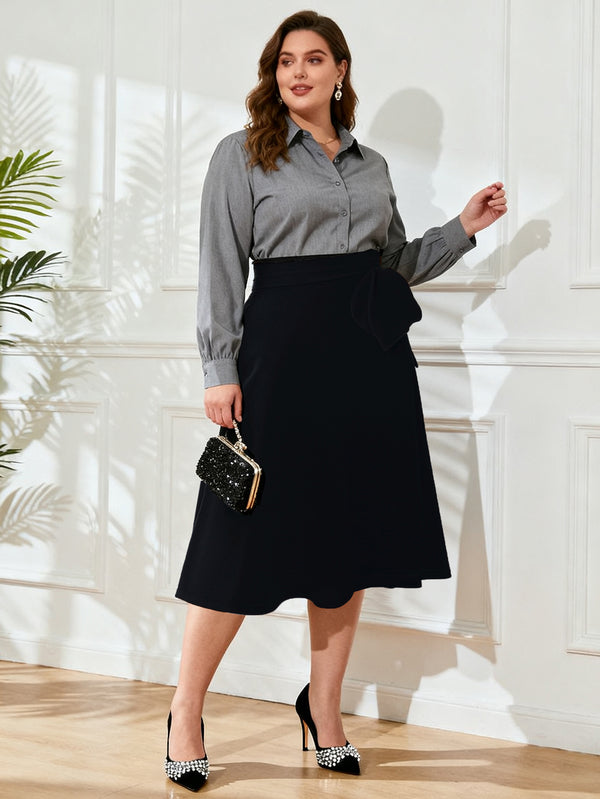
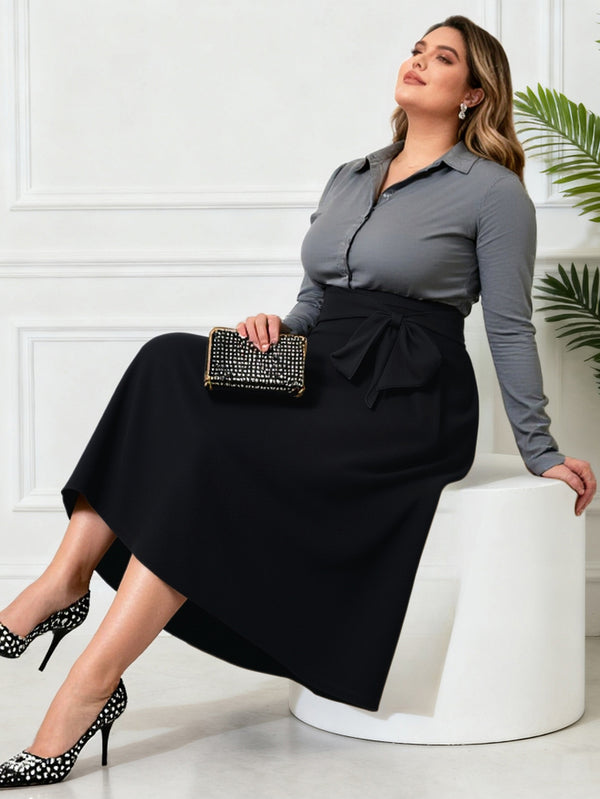
Wide-leg or straight trousers in a neutral tone are the most reliable base. Crepe or poplin tucked into tailored trousers with a pointed flat needs nothing else, though a blazer adds authority. A pencil or A-line midi skirt with a tucked blouse is equally strong, and for a relaxed office, dark straight-leg denim with a satin-blend blouse and loafers threads the needle. Browse our plus size bottoms for trousers and skirts cut with the same attention to proportion as our tops.
Smart casual, weekend, and evening
Swap trousers for your favorite jeans: a chiffon or crepe blouse with straight denim, sleeves pushed to the elbow, is effortlessly put together. Leggings work with a longer or high-low blouse and ankle boots. For evening, satin does the heavy lifting, whether with a long slip skirt or black wide-leg trousers and a statement earring.
Building a small, hardworking collection
Starting from scratch, three pieces cover almost everything: one crisp white or cream poplin, one fluid crepe in navy or black, and one print or jewel tone you genuinely love. Add satin when you need evening options. You can see the full range of shapes, fabrics, and sleeve lengths in our plus size tops collection.
Care: Keeping Your Blouses Looking New
Woven fabrics reward a little attention, and the payoff is plus size blouses that still look crisp after two years instead of two months.
Washing
Cool water and a gentle cycle handle most modern blouses. Button the front first so the placket keeps its shape, and turn satin and printed pieces inside out. A mesh laundry bag stops chiffon from twisting around other garments. Skip fabric softener on silk and satin, which dulls the finish, and never use chlorine bleach on silk.
Drying and storage
Air drying on a hanger is the best habit you can build, because most wrinkles set in the dryer and hanging a blouse damp lets gravity do your ironing. Use a padded hanger for silk and satin, since thin wire leaves shoulder dents. Store with space between garments, and use breathable cotton garment bags rather than plastic.
Ironing versus steaming
Steaming is gentler and faster for chiffon, silk, satin, and crepe: hang the blouse, hold the steamer a few centimeters away, and work top to bottom. Cotton poplin is the exception and genuinely benefits from a warm iron. Always press on the reverse side, use a pressing cloth on delicates, and do collars and cuffs from the inside first to avoid shine marks.
Preventing static and clinging
Static is a dry-air problem, most common with synthetics in winter. Dryer sheets help, but so do simpler fixes: mist the inside of the blouse lightly with water, run a metal hanger between the fabric and your body to discharge the buildup, or apply unscented lotion before dressing so there is less friction.
Frequently Asked Questions
How do I stop a button-front blouse from gapping at the bust?
First, look for designs built to prevent it: closely spaced buttons, a hidden placket, or a partial placket with a covered front. If you already own a blouse you love that pulls slightly, the easiest permanent fix is a small snap or a single hidden stitch between the two buttons at the fullest point. Fashion tape works for one occasion, and sizing up then having the waist taken in is a perfectly legitimate approach.
Which fabric should I choose if I want low-maintenance blouses?
Crepe is the clear winner. It resists wrinkling, drapes well, machine washes cool, and looks polished straight off the hanger. Rayon and viscose blends come next, especially for warm weather. Cotton poplin is durable and washes beautifully but needs pressing. Save pure silk and heavy satin for pieces you wear occasionally and are happy to steam or hand wash.
Can I wear a blouse untucked and still look professional?
Absolutely. The key is shape and length rather than the tuck itself. An untucked blouse with princess seams, a soft tie, or a gentle A-line sweep, ending around hip level, reads as deliberate. Add a blazer or a structured cardigan and the look tightens up instantly. Most workplaces now read a well-cut untucked blouse over tailored trousers as entirely appropriate, and the French tuck gives you a middle option whenever you want a defined waist.
What size should I order in plus size blouses if I am between sizes?
For woven styles, size to your fullest measurement, usually the bust, and adjust elsewhere if needed. Wovens have far less give than knits, so the bust and upper arm are where a too-small size shows first. If the fabric contains two percent or more elastane you have a little more flexibility. Always check the specific garment measurements in the size chart rather than relying on the letter size, and read the sleeve and armhole notes, since those vary most between brands.
Blouses are worth the small learning curve. Once you know which fabric suits your life, which neckline you reach for, and which sleeve length keeps you comfortable, shopping gets dramatically easier. Start with one blouse that fits well and feels good on, wear it three different ways, and build from there.