Plus Size Pencil Skirts for Fall 2026: The Complete Fit, Comfort & Workwear Styling Guide
Sep 01, 2026

A well-made plus size pencil skirt is one of the rare pieces that can carry you from a Monday morning budget review to a Friday evening dinner without a single change of clothes. It is the straight, narrow, knee-length silhouette that follows the natural line of your hip and thigh instead of flaring away from it — and that single structural difference is exactly why it feels so different to wear than every other skirt in your closet. Fall 2026 is a genuinely good season for it: tights are back on rotation, offices are busier than they have been in years, and fabric technology has finally caught up with curvy bodies. This guide covers fit mechanics, fabric science, tailoring, care and six outfit formulas you can copy directly.
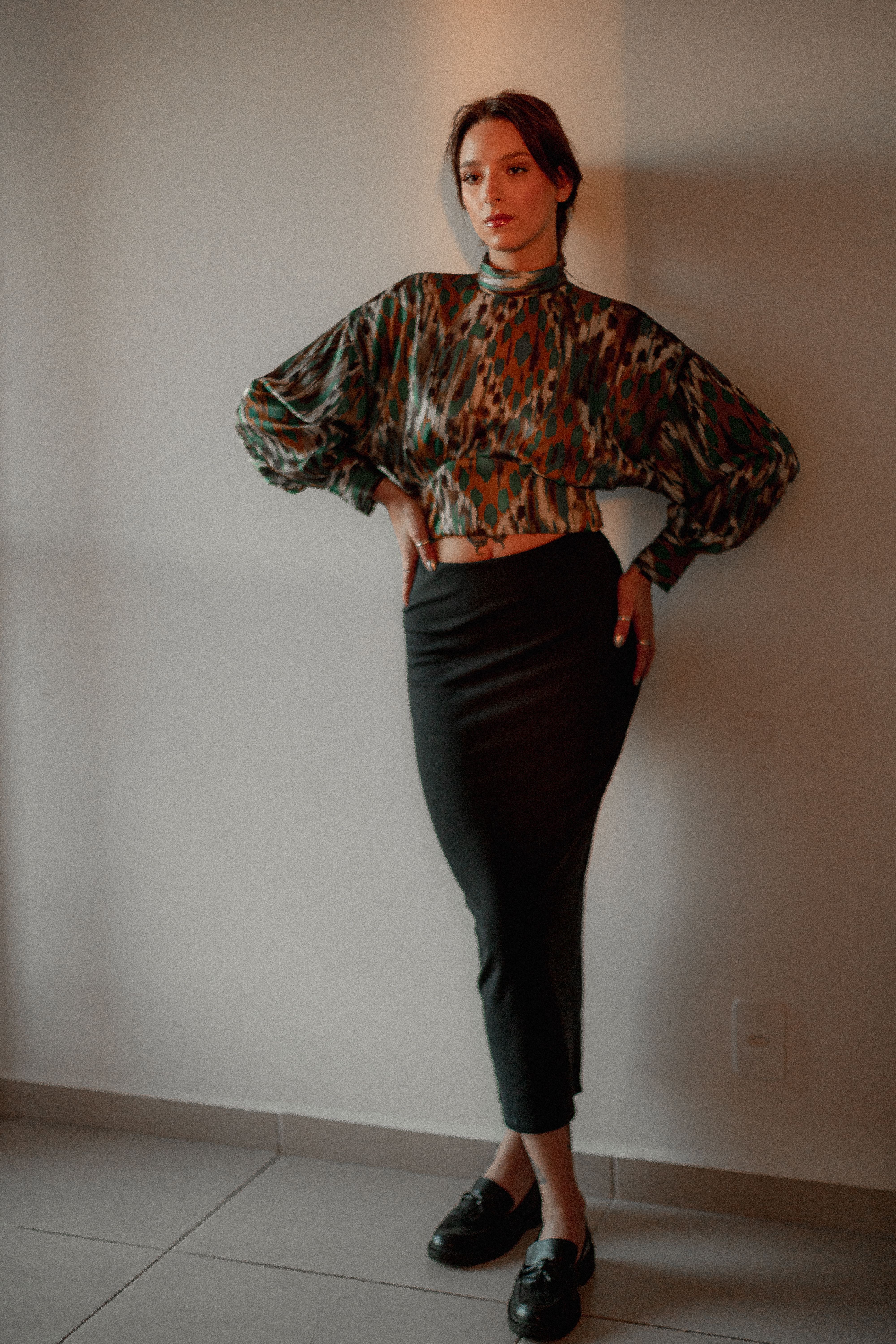
What Makes the Pencil Silhouette Different From Every Other Skirt
The pencil cut is defined by three things: a straight side seam from the fullest part of the hip down to the hem, a hem that lands at or just below the knee, and little to no added fabric for flare. Some versions taper slightly toward the hem, usually no more than half an inch per side, which gives the shape its clean vertical line. Compare that to an A-line, which adds width as it drops, or a pleated skirt, which builds movement into the fabric itself. The pencil has none of that built-in ease, so every inch of comfort comes from the fabric, the waistband and the vent.
That constraint is the whole reason a plus size pencil skirt either becomes your most-worn piece or the one that stays on the hanger. When the stretch content, the rise and the stride room are right, it is one of the easiest things to get dressed in: one piece, one decision, done. When any of those three are wrong, you spend the day tugging.
Why It Reads as Professional
Pencil skirts carry a specific visual grammar in workplaces. The uninterrupted vertical line and the tailored waist read as deliberate in a way a casual knit skirt does not, which is why it remains the default recommendation for interviews, client meetings and any environment with a business dress code. This is our first office-dressing guide on the blog, and the pencil is the right place to start.
Where It Fits Alongside Your Other Skirts
Think of it as the structured end of your rotation. If you already own softer, fuller shapes from your plus size skirt collection, a pencil adds the one thing they cannot: a sharp, tailored line that anchors a blazer. Two — one black or charcoal, one in a color or subtle pattern — cover an entire season of work outfits.
Fabric First: Ponte, Crepe, Twill and Stretch Suiting Decoded
Fabric matters more in a plus size pencil skirt than in any other skirt shape, because the fabric does the work that flare would otherwise do. Here is what each of the four main options delivers.
Ponte de Roma
Ponte is a stable double-knit and the most comfortable choice for long days. A good ponte runs roughly 65–70% rayon or viscose, 25–30% nylon or polyester, and 4–6% spandex, at a weight of about 280–340 gsm. That weight is the number to care about: below roughly 260 gsm the fabric goes soft and clingy, and above 360 gsm it feels heavy and warm. Ponte stretches in all four directions, springs back reliably, resists wrinkles almost completely, and forgives a lunch. Its weakness is pilling at the seat after heavy wear.
Crepe
Crepe is a woven with a fine pebbled surface, usually polyester or a triacetate blend with 2–4% elastane. It drapes beautifully, does not cling, resists creasing, and travels well. Because the stretch percentage is lower, crepe needs a functional vent and a size chosen off your hip measurement. It is the most polished of the four and the best pick for interviews.
Cotton Twill and Stretch Suiting
Twill is a sturdy diagonal weave, typically 96–98% cotton with 2–4% elastane. It holds a crisp shape and wears like iron, but it has the least give of the group, creases at the lap when you sit, and needs a generous vent. Stretch suiting — often around 62% polyester, 34% viscose and 4% elastane, or a tropical-weight wool blend — is the middle path: it looks like real tailoring, breathes better than pure polyester, and holds a pressed line through a full day.
The Stretch and Recovery Rule
Stretch and recovery are two separate properties and only one of them is printed on the label. Stretch is how far the fabric travels; recovery is whether it returns. As a working minimum, look for 3% elastane in a woven and 4–6% in a knit, and treat 5–8% spandex in a knit as the comfort sweet spot. Test recovery by pulling the fabric across the widest part of the skirt and releasing it — if a faint stretched shadow lingers, the skirt will bag at the seat by mid-afternoon. Skip scuba and neoprene knits for workdays; they stretch generously but trap heat.
Waistband and Rise: Where the Skirt Should Actually Sit
Rise determines both comfort and how the whole outfit proportions itself, and it is the specification most often ignored on product pages.
Natural Waist vs. High Rise
A natural-waist skirt sits at the narrowest point of your torso, usually about an inch above your navel. It gives the cleanest tucked line with a blouse and keeps the waistband away from your ribs when you sit. A high-rise version sits an inch or two higher, closer to the bottom of the ribcage; it lengthens the visual line of the leg and stays put more reliably under a fitted top, but on shorter torsos it can press upward when seated. If your torso is short, measure from your underarm to your waist — under about 15 inches, stay with the natural waist. Mid-rise plus size pencil skirts sit below the waist on the upper hip and are the least stable choice, because there is no narrow point to hold them.
Contoured Bands Solve the Gap
A straight-cut waistband is a flat rectangle, which means it fits a cylinder. Bodies are not cylinders, so on a curvy figure a straight band tends to stand away at the back while gripping at the front. A contoured waistband is cut on a slight arc to follow the difference between waist and upper hip, and it is the most useful construction detail to look for. Widths of 2 to 3 inches distribute pressure better than a narrow 1-inch band and are less likely to dig or roll.
Closures Worth Choosing
An invisible back zip with a hook-and-bar gives the most tailored result. A side zip keeps the back seam unbroken and sits more comfortably against a chair. A wide knit pull-on band in ponte is the most forgiving for all-day wear and for bodies whose waist measurement shifts through the month. A partial back-elastic insert hidden under the band is a good compromise: structure at the front, give at the back.
Vents, Slits and Stride Room: The Movement Math
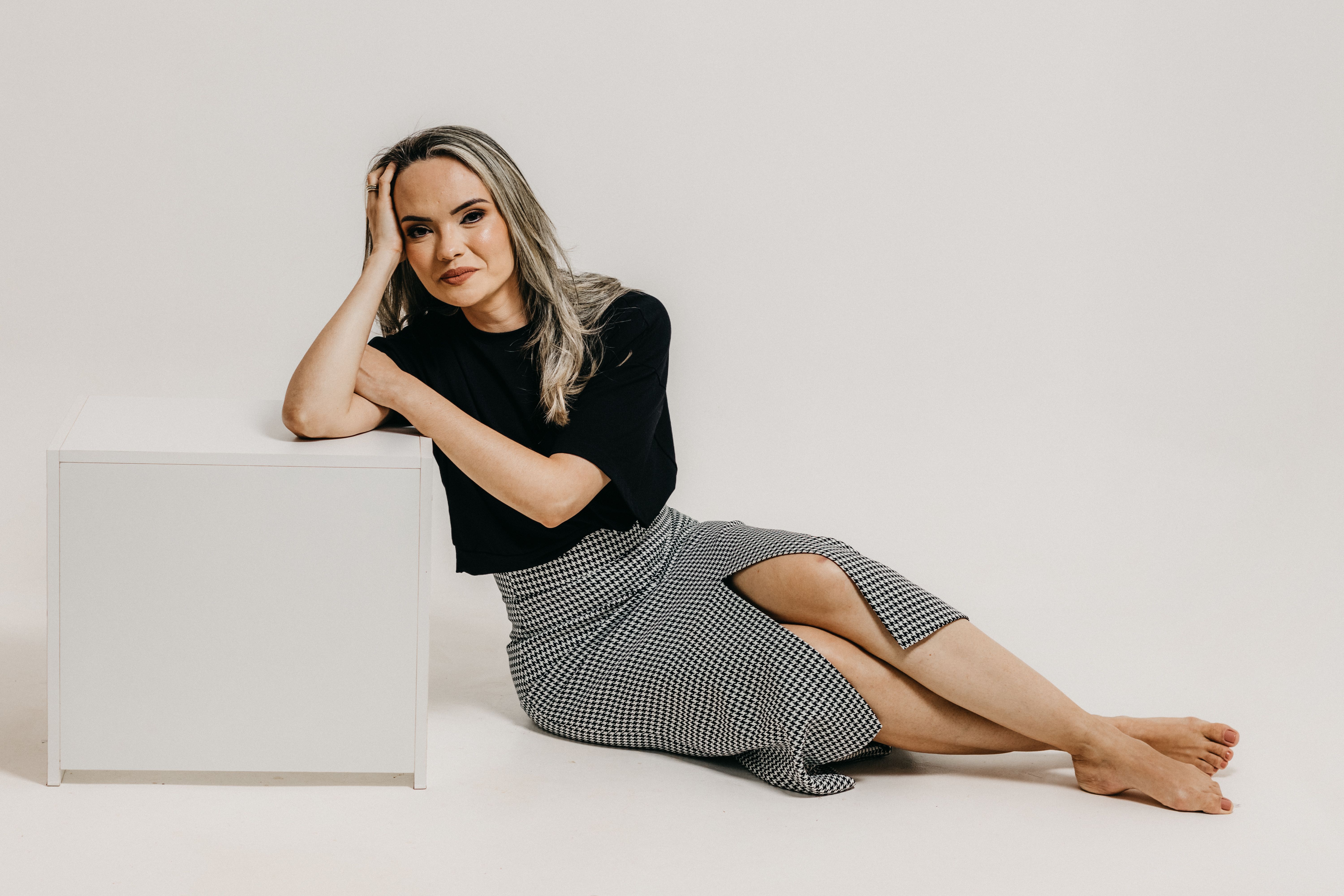
This is the specification that decides whether you can take stairs two at a time or shuffle. A plus size pencil skirt restricts your stride by design, and the opening at the hem is what buys it back.
Back Vent, Kick Pleat or Side Slit
A back vent is a simple overlapped opening at the center back seam, typically 4 to 6 inches long. It is the most professional-looking option and the standard on tailored skirts. A kick pleat is a vent with an extra fabric panel folded behind it, so it releases stride room without ever showing a gap — the best choice if you walk a lot. A side slit shifts the opening to one seam and reads slightly more evening than office; keep it at 5 inches or under for professional settings. A skirt with no vent at all is only workable in a genuinely stretchy knit.
How to Test Stride Room Before You Buy
Do three things in the fitting room. First, take a full normal walking step and see whether the hem restricts you or the vent opens past comfortable. Second, sit down completely and cross your legs; check where the hem lands and whether the waistband presses. Third, climb a few stairs. If the vent splits open more than about two inches wide while you walk, the skirt is too narrow through the thigh for your stride, and sizing up then taking in the waist beats living with it.
Remove the Basting Stitch
New tailored skirts almost always ship with the vent held closed by a loose X-shaped basting stitch. That thread is for shipping only. Snip it carefully from the inside with a seam ripper before the first wear — leaving it in is the most common reason a brand-new skirt feels impossibly tight.
Hem Length, Lining and All-Day Sitting Comfort
Small details decide whether you forget you are wearing the skirt or think about it every hour.
Getting the Hem Right
The most versatile hem lands 1 to 2 inches below the kneecap. At that length the skirt works with both flats and heels, stays appropriate in conservative offices, and pairs cleanly with tights or bare legs. A hem exactly at the top of the knee is more casual and shows more leg when seated. Drop below mid-calf and you have changed the silhouette entirely. Always check the seated length: a plus size pencil skirt rides up 2 to 3 inches when you sit, so a hem that grazes the knee standing will sit above it in a chair.
Lining, Slip and Static
A full lining does four jobs: it stops the outer fabric clinging, it lets the skirt glide over tights instead of grabbing them, it keeps thinner fabrics opaque, and it protects seams from stress. Bemberg cupro and tricot linings breathe far better than cheap polyester taffeta. If your skirt is unlined, a smooth half-slip does the same job for a few dollars. For fall static, the practical fixes are a lining, a light anti-static spray inside the skirt, running slightly damp hands over the fabric before you leave, and using a wool dryer ball rather than a dryer sheet.
Wrinkles and Care
Ponte and crepe can be machine washed cold on a gentle cycle in a mesh bag and hung damp to dry; they need little or no pressing. Twill and wool-blend suiting do better with dry cleaning or a cold hand wash, then pressing on the reverse with a pressing cloth so the fabric does not glaze. Never press a vent flat with a hot iron and no cloth — you will set a shine line down the center back. Hang skirts from clip hangers by the waistband rather than folding them over a bar.
Sizing by Hip, Not Waist — and the Tailoring Fix for Waist Gap
The single most useful sizing rule for a plus size pencil skirt is this: buy for your hip, then fix the waist. The hip is the hardest measurement to alter and the one that causes real discomfort when it is too small, while the waist is genuinely easy to take in.
Take Three Measurements, Not One
Measure your natural waist at its narrowest point, your full hip at its widest point (usually 8 to 9 inches below the waist), and your high hip about 4 inches below the waist. That third number catches people out, because a skirt can fit your full hip perfectly and still bind at the high hip. Compare all three against the garment's flat measurements, not just the size label, and allow 1 to 2 inches of ease in a woven and zero to 1 inch in a stretchy knit.
The Waist Gap and What It Costs to Fix
If the difference between your waist and hip is 12 inches or more, a skirt sized to your hip will very often leave 1 to 3 inches of extra room at the waist. That is a normal, well-documented consequence of standard grading, not something wrong with your body. A tailor fixes it by taking in the center back seam, deepening two back darts, or reshaping the waistband to a curve. It is a routine, inexpensive alteration — typically fifteen to thirty-five dollars — and it turns an off-the-rack skirt into something that looks made for you.
Alterations Ranked by Difficulty
Easiest: taking in the waist, and shortening a hem on a skirt with a side slit. Moderate: shortening a hem on a back-vented skirt, since the vent must be rebuilt. Harder: letting out the hip, only possible when seam allowances are generous. Not worth it: reshaping a skirt that is genuinely too narrow through the thigh. If two sizes fit differently in different places, choose the one that fits the hip and thigh.
Six Outfit Formulas for Fall 2026
These are complete, copy-them-directly combinations, arranged from most formal to most relaxed.
1. The Interview Outfit
Charcoal or navy crepe plus size pencil skirt hemmed 1 inch below the knee, a crisp white or pale blue button-front shirt tucked in, a matching single-button blazer, opaque 40–60 denier tights in charcoal or black, and a closed-toe pointed pump with a 2-inch block heel. Add small stud earrings and a structured tote. Nothing competes for attention, which is the point.
2. Everyday Office, Cold Building
Black ponte plus size pencil skirt, a fine-gauge merino crewneck in camel or burgundy tucked in, a thin leather belt if the waistband has loops, and ankle boots. Layer a longline cardigan over the top for warmth without bulk at the waist. Ponte's recovery means this survives a nine-hour day and a commute.
3. Business Casual Friday
Patterned or tweed pencil skirt, a soft cotton or silk-blend blouse worn half-tucked, and loafers or low block-heel boots. Swap the blazer for an unstructured knit jacket. This is the version that also works for a coffee meeting straight after work.
4. The Commute Layer
Twill or wool-blend pencil skirt, a turtleneck tucked in, fleece-lined or 80–100 denier hosiery from our plus size tights range, knee-high boots, and a longline wool coat that ends below the skirt hem so the proportions stay clean. Carry your indoor shoes.
5. Evening and Dinner
Deep green or burgundy pencil skirt with a subtle sheen, a fitted long-sleeve top or a draped satin camisole, sheer 15–20 denier tights, a heeled sandal or pointed flat, and a statement earring. A skirt with a modest side slit is the one to reach for here.
6. Elevated Weekend
Ponte pencil skirt with white leather sneakers, an oversized sweatshirt or chunky sweater tucked loosely at the front only, and a denim or shearling jacket. The contrast between the tailored skirt and casual knit is what makes it look intentional rather than mismatched.
Proportion Notes That Always Work
Keep one half of the outfit fitted and let the other half be relaxed — two loose pieces lose the shape, two tight pieces feel restrictive. Match the depth of your tights to your shoes for an unbroken vertical line. If you are shorter, a higher rise with a hem just below the knee gives the longest line; if you are taller, a longer hem and lower rise both work.
Frequently Asked Questions About Plus Size Pencil Skirts
Are pencil skirts a good choice if I carry weight around my middle or hips?
Yes, and the specifications matter far more than your shape. If you carry more through the middle, choose a contoured waistband 2 to 3 inches wide plus a knit with real recovery, so nothing presses or rolls when you sit. If your hip-to-waist difference is large, size to the hip and have the waist taken in. A plus size pencil skirt is a garment with adjustable variables, not a test your body has to pass, and every body type can wear one comfortably once the fabric and rise suit you.
How much stretch should a plus size pencil skirt have?
For a woven fabric such as crepe, twill or suiting, look for at least 3% elastane, with 4% being noticeably more comfortable across a full workday. For a knit such as ponte, 5 to 8% spandex is the sweet spot. Just as important is recovery: stretch the fabric firmly across its widest point and let go. It should snap back with no lingering stretched shadow. Fabric that stays distorted will bag at the seat within a few hours of sitting.
What hem length works best, and how does it change with height?
One to two inches below the kneecap is the most versatile length for almost everyone, because it stays appropriate in conservative offices and works with both flats and heels. Remember the skirt will rise 2 to 3 inches when you sit, so check the seated length before deciding. If you are under about 5 feet 4 inches, stay at the shorter end of that range so the proportion does not get heavy. If you are 5 feet 9 or taller, you can comfortably go 3 inches below the knee.
How do I stop my skirt riding up or twisting as I walk?
Riding up usually means the skirt is gripping your tights instead of gliding over them, so a full lining or a smooth half-slip solves most cases immediately. Twisting almost always means the fit is too loose at the waist relative to the hip, which lets the whole skirt rotate; taking in the waist fixes it permanently. A silicone-gripped waistband on your hosiery helps too. If the hem restricts your stride, the thigh is too narrow and a longer vent or the next size up is the answer.