If you have been searching for plus size grip socks, you already understand the small daily frustration they solve: a smooth sock sliding on a wood floor, a studio mat that refuses to hold your stance, or cold feet padding across tile when you would rather be cozy. Plus size grip socks are the quiet upgrade that changes how your whole movement practice feels, whether you are flowing through a yoga sequence, holding a pilates reformer, balancing at a barre class, moving through a home workout, recovering in a hospital bed, or simply lounging on the sofa. They give you a confident, non-slip sole, a gentle band that respects a wide calf, and a soft hug for a wide foot, all without the bulk of a slipper or the chill of bare flooring. The best part is that they ask nothing of your body and give plenty back, so you can move, rest, and recover on your own terms. This guide walks through how the grip works, how the fit is built for fuller legs and feet, and how to wear and care for them through every season of your routine.
Why Plus Size Grip Socks Belong in Every Closet
Most of us keep a drawer of ordinary socks that were never designed with a fuller figure in mind. They ride down, they pinch, and on slick surfaces they do nothing to keep you steady. Plus size grip socks flip that experience. They are built around the shape of real legs and real feet, then finished with a silicone grip pattern on the sole that turns any floor into a place you can trust. Once you wear a pair through a single class or a single lazy Sunday, the ordinary kind starts to feel like a compromise you no longer have to accept. They are the rare purchase that quietly improves several parts of your week at once, from movement to rest to the simple act of crossing a room.
A studio and slipper alternative in one
Think of them as the best of two worlds. You get the grounded contact of a bare foot for yoga and pilates, plus the security of a slipper for everywhere else. You can roll from a morning stretch straight into making coffee without changing footwear, and you never have to choose between warmth and traction. Where a slipper feels heavy and a bare foot feels risky, a grip sock lands in the comfortable middle that actually fits a real life.
Comfort that meets you where you are
Body positivity is not a slogan here; it is the design brief. A wider cuff, a deeper heel, and a roomier toe box mean the sock follows your body instead of fighting it. The result is a piece you actually reach for, day after day, because it feels like it was made with you in mind. When clothing fits the body in front of it rather than the other way around, getting dressed stops being a small negotiation and becomes something easy and kind. That ease is worth protecting, because the days you feel good in what you are wearing are the days you move more, rest better, and show up for yourself.
The Science of the Non-Slip Sole
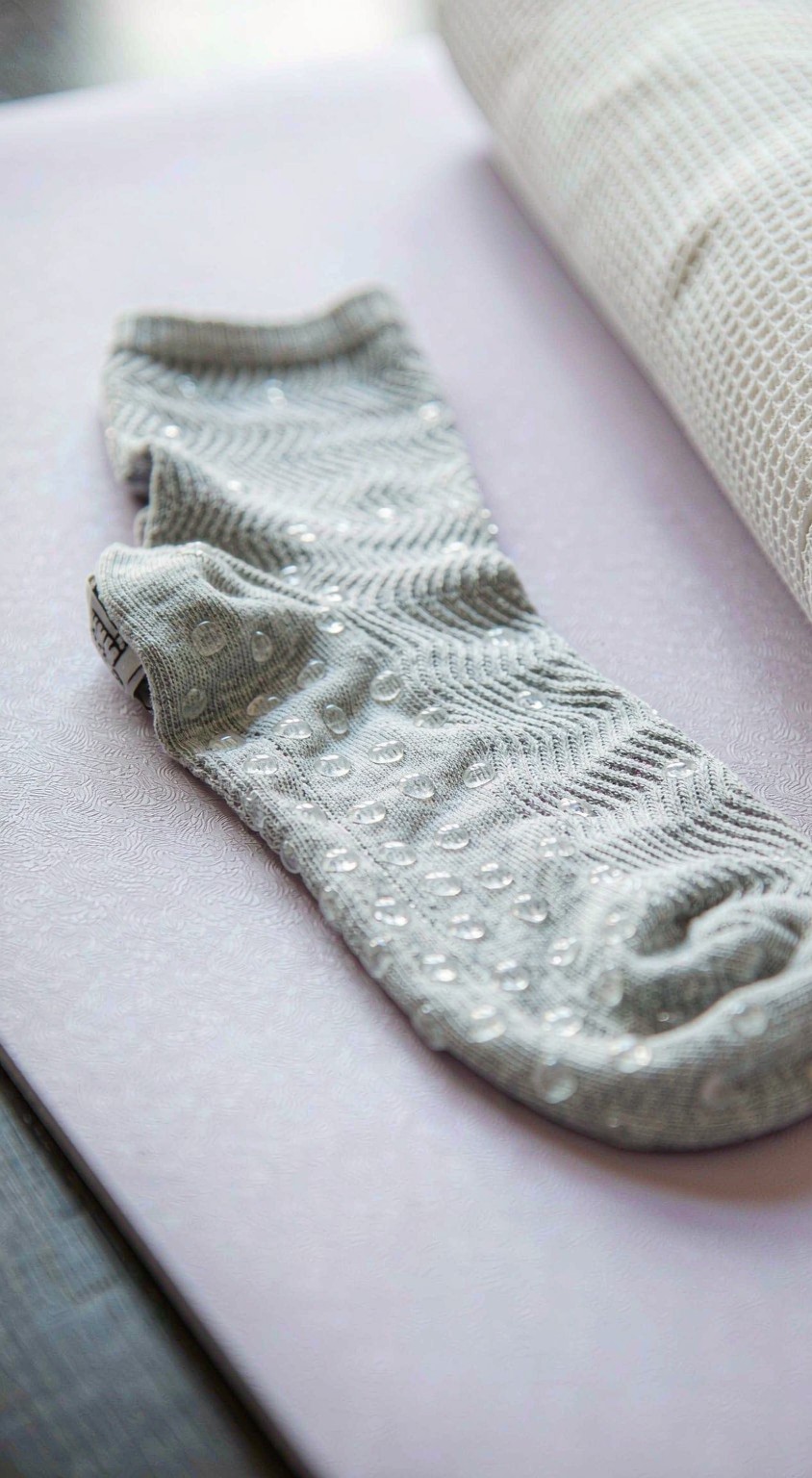
The magic of a grip sock lives on the bottom. Tiny silicone dots or shapes are applied in a pattern that increases friction exactly where your foot meets the ground, so you stay planted through every transition. Understanding why the sole works helps you pick a pair that matches the way you actually move, instead of one that simply looks grippy in a photo.
How silicone dots create friction
Silicone is naturally tacky against smooth surfaces like studio floors, hardwood, and polished tile. When you press your foot down, the dots flatten slightly and grip, giving you a stable base. Lift and step, and they release cleanly without sticking or leaving residue. This micro-grip is what lets you hold a warrior pose or a pilates bridge without creeping an inch forward. It is a quiet kind of confidence: you stop bracing for the slide and start trusting the floor.
Grip patterns that matter
Not all grip is created equal. A scattered dot field works for gentle lounging, while a denser arch-and-heel layout supports balance work and barre. Some designs add a dotted stripe across the ball of the foot for pivots. The pattern is not decoration; it is engineered contact, and the right one depends on how you move. If your practice is calm and restorative, light coverage is plenty; if it is dynamic, look for grip that spans the whole sole.
When grip earns its keep
You notice the sole most in the moments that matter: a sweaty yoga flow, a tilted hospital floor, a toddler-wrangling dash across the kitchen. Grip socks quietly remove the fear of slipping, which frees your attention for the activity itself rather than the surface beneath you. That shift, from watching your feet to enjoying your movement, is the whole point of the design.
Designed for Wide Calves and Wide Feet
Standard socks are graded for a narrow ideal, which is why so many plus size women describe them as tourniquets. Our approach starts from a different template, one that assumes your legs and feet deserve the same thoughtful engineering as anyone else's, and then delivers it in sizes that actually fit.
Why standard socks fall short
A tight cuff cuts circulation and leaves a red ring by midday. A narrow toe box cramps and blisters. A short leg rides down into your shoe. None of that is a you problem; it is a design problem, and grip socks built for plus sizes solve it by adding room where you need it and gentle compression where you do not. When the fit is right, the sock disappears into the background of your day instead of announcing itself with every step.
Stretch without squeeze
The cuff uses a wider, softer rib that stays up through a class yet never bites. The foot stretches with your stride instead of resisting it. You get a secure feel without the sensation of being squeezed, which is the difference between a sock you tolerate and one you love. Good stretch recovers between wears, so the pair that fits today still fits a month from now.
Sizing that respects your shape
Look for size ranges that extend well beyond the usual cap, with clear foot-length and calf guidance. A good plus size grip sock tells you the stretched circumference so you can choose with confidence rather than hoping for the best. Take a minute with a tape measure once; it pays you back in pairs that actually stay up and feel good from the first wear to the last. If you sit between sizes, lean toward the larger one for lounging and the snugger one for high-movement classes, then keep both in the rotation.
The Barefoot-Shoe Feel
One of the joys of grip socks is how close they come to going barefoot while still protecting you. This is the barefoot-shoe feel: connection, freedom, and feedback. You keep the sensory link to the ground that bare feet love, with just enough between you and the floor to stay clean, warm, and steady.
Grounding through your practice
In yoga and pilates, teachers talk about rooting through the four corners of the foot. Grip socks keep you from sliding while still letting you feel the floor, so your balance work actually trains your stabilizers instead of fighting a slippery sock. That feedback is what teaches your ankles and hips to do their quiet, constant job of keeping you upright. Over weeks of practice, the small steadiness adds up to real confidence on the mat and off it.
Toe freedom and alignment
A roomy toe box lets your toes spread naturally, which supports better alignment and a more stable base. Cramped toes roll inward and weaken your stance; free toes do the opposite. The barefoot-shoe philosophy is built into the shape, not bolted on. Give your toes room and you often feel the difference all the way up through your knees and hips.
Transitioning from barefoot training
If you are building foot strength or rehabbing, grip socks are a gentle bridge between fully bare and fully shod. They protect shared studio floors and hospital corridors while preserving the sensory input your brain uses to balance. Wear them as a stepping stone, and your feet get the practice they need without the exposure they do not.
Materials That Breathe and Move
What a sock is made of decides whether it feels like a treat or a chore. Grip socks live close to the skin, so fiber choice matters more than the label on the front implies. The right blend keeps you dry when you are active and cozy when you are not.
Cotton blends for everyday softness
A cotton-rich blend is soft, familiar, and forgiving against sensitive skin. It breathes during a slow flow and comforts during a lazy afternoon. For lounging and recovery, cotton leads the list because it feels like the socks you have always trusted, only shaped to fit you properly this time. It is the easy, dependable default for most days.
Bamboo and moisture control
Bamboo viscose is silky, naturally breathable, and friendlier to warm, active feet because it moves moisture away from the skin. If your practice runs hot or you wear grip socks for long hospital stays, bamboo keeps things fresher. It also tends to feel cooler against the sole, which many people prefer during summer or in heated studios.
Stretch fibers that hold shape
A measured dose of spandex or elastane is what lets the sock recover after each wear instead of bagging out. The right blend returns to form wash after wash, so the grip stays where it belongs and the cuff keeps its gentle hold. Too little stretch and the sock fights you; too much and it loses its shape. The balance is the quiet craft behind a good pair.
From Studio to Sofa: How to Style Them
Grip socks are wonderfully versatile, and a few simple pairings make them feel intentional rather than improvised. They move between roles all day, so dressing around them is less about rules and more about what you are up to.
At the studio
Pair grip socks with plus size leggings and a relaxed tee for a look that moves with you from warm-up to savasana. Neutral tones keep things calm; a pop of color signals play. Either way, you are dressed for the practice and ready for the lobby. Add a layer you can shed, and the whole outfit works from the car to the cool-down.
Around the house
At home, grip socks replace slippers on slick floors and look cute with joggers or shorts. Keep a basket by the door so guests and family can grab a pair too. Pair them with plus size socks in other weights to cover every season without clutter. A small rotation by the entry means no one is ever padding around barefoot on a cold morning.
Recovery and hospital days
For post-surgery or hospital time, grip socks are often the recommended choice because they reduce fall risk on polished floors. Pack a few in a calm color, and pair them with loose, easy clothing so dressing never becomes a struggle. Comfort in those moments is practical care, not a luxury, and a steady pair of socks is a small way to feel more at home in an unfamiliar place.
Caring for Your Grip Socks
A little care keeps the grip doing its job and the fibers feeling new. These socks are low maintenance, but a few habits extend their life. Treat them well and a single pair will carry you through many practices and many quiet evenings.
Washing without wrecking the grip
Turn them inside out and wash on a gentle, cold cycle with mild detergent. Skip fabric softener, which can coat the silicone and dull the traction. A mesh bag keeps the dots from snagging on zippers or hooks in the load. A quick sort before the wash is all it takes to keep the soles crisp and ready. If a pair picks up gym odor, a short soak in cool water with a splash of white vinegar refreshes the fibers and keeps them fresh without harming the grip.
Drying and storage
Air dry flat or tumble on low; high heat can curl the silicone and shrink the cuff. Store them folded in a drawer rather than balled, so the grip pattern stays even and the elastic is not stressed in one spot. A tidy sock drawer is its own small comfort, and it makes the next pair easy to find.
Knowing when to retire a pair
When the dots go smooth, the cuff loosens past comfort, or thin spots appear at the heel, it is time to rotate in a fresh pair. A worn grip sock loses the very thing that makes it special, so treat replacement as self-care, not waste. Letting go of a loved-but-worn pair makes room for one that performs the way you deserve.
Frequently Asked Questions About Plus Size Grip Socks
Are plus size grip socks only for yoga and pilates?
Not at all. While they shine in yoga, pilates, and barre, they are just as useful for home workouts, hospital and recovery stays, travel through slick hotel rooms, and everyday lounging. Anywhere a smooth sock would slide, a grip sole earns its place. Think of them as everyday footwear for indoor life, not a single-activity accessory.
Will the grips hurt my floors or leave marks?
No. Silicone dots are soft and non-marking on hardwood, tile, and laminate. They grip your foot to the floor rather than scratching it, and they leave no residue when you lift away. You can wear them confidently across rental floors and brand-new finishes alike, with nothing to wipe up afterward.
How do I pick the right size for a wide calf and wide foot?
Check the brand's stretched circumference and foot-length guidance rather than guessing from a single number. Choose the size that covers your measurements with room to spare; a slightly generous fit feels secure without squeezing, which is exactly what plus size grip socks are designed to deliver. When in doubt between two sizes, the roomier one usually wins for all-day comfort.
Can I wear them without shoes?
Yes. Grip socks are made to be worn solo as a slipper alternative on indoor floors. They protect your feet, warm them a little, and keep you steady, all while letting you skip the bulk of shoes around the house or studio. They are the easy answer to the question of what to wear on feet that need both freedom and a sure footing.