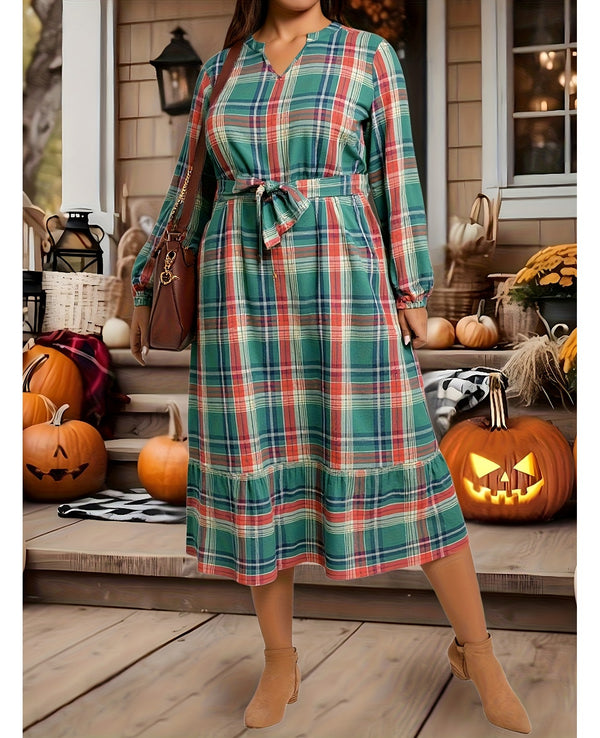
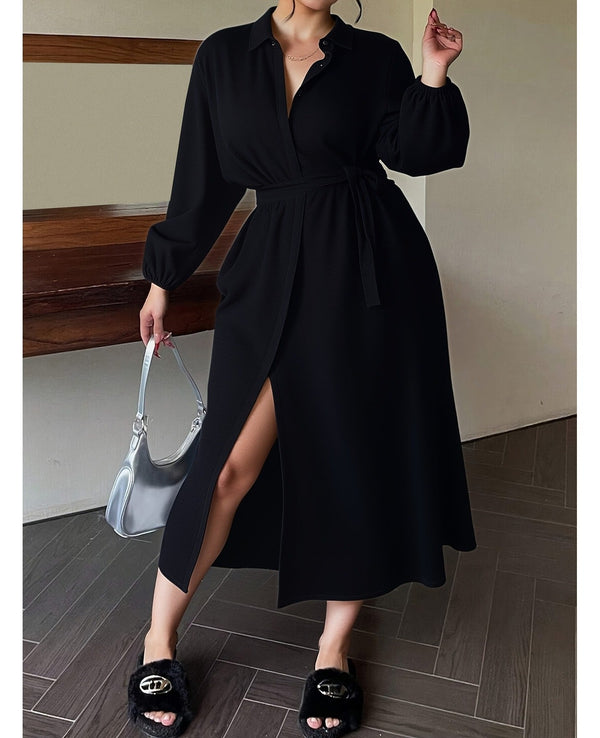
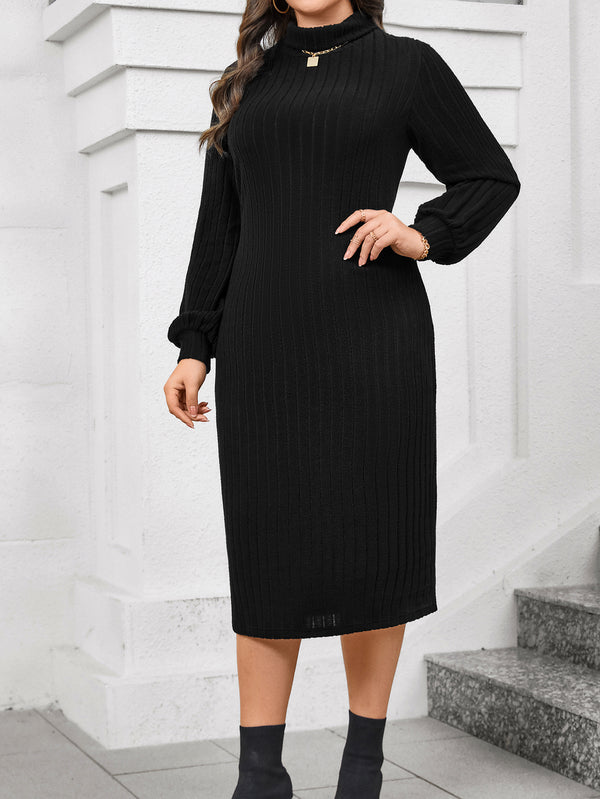
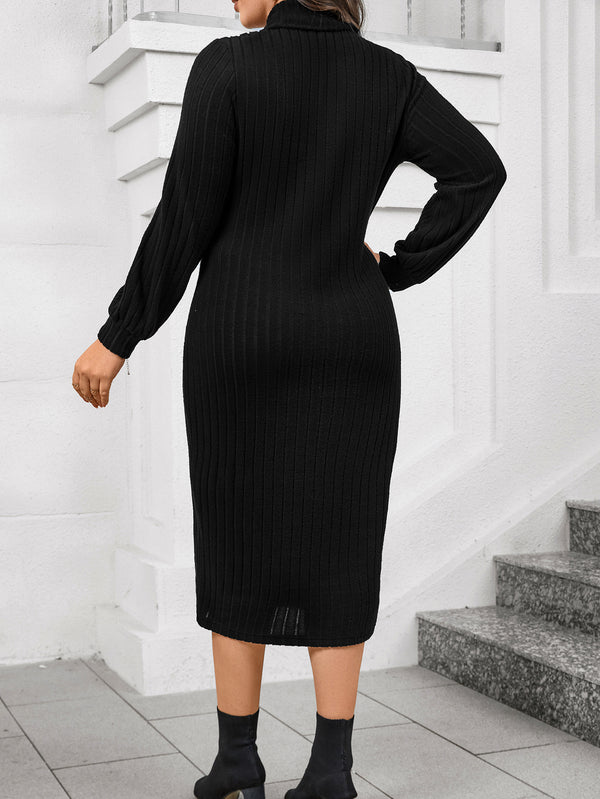
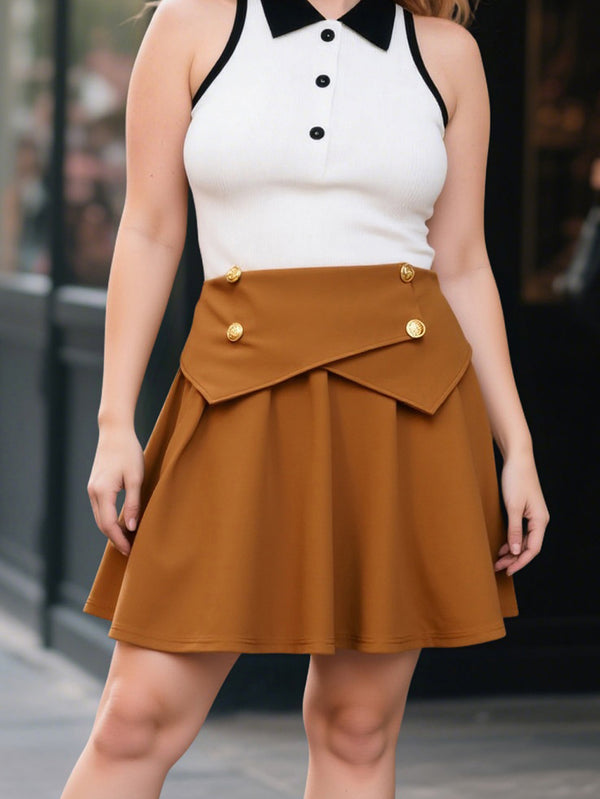
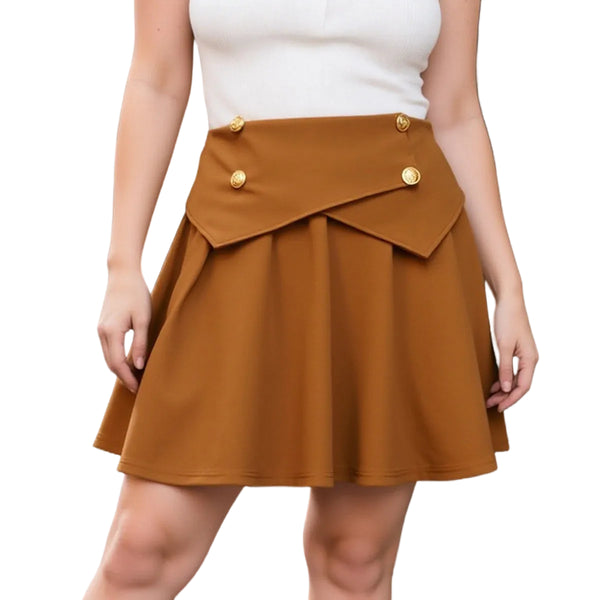
Plus size skirt suit outfits bring tailoring, movement, and personal style into one fall-ready combination. A matching jacket and skirt can look authoritative without feeling severe, and the pieces can work separately on less formal days. The key is not to use tailoring to correct or conceal your body. It is to find a jacket and skirt that respect how you move, then style them for the work, weather, and social setting in front of you. This guide explains fit, fabric, layers, shoes, color, and repeatable formulas for making a skirt suit feel modern, comfortable, and distinctly yours.
Choose the suit silhouette before chasing a trend
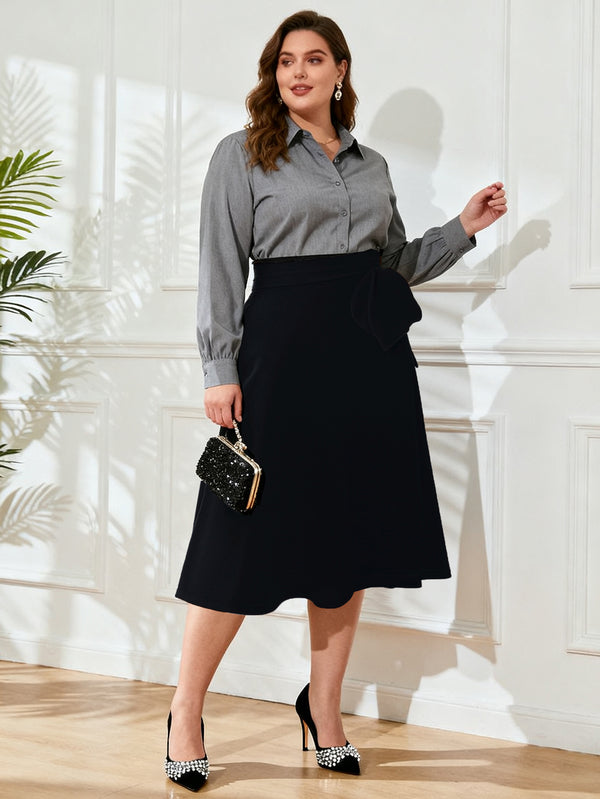
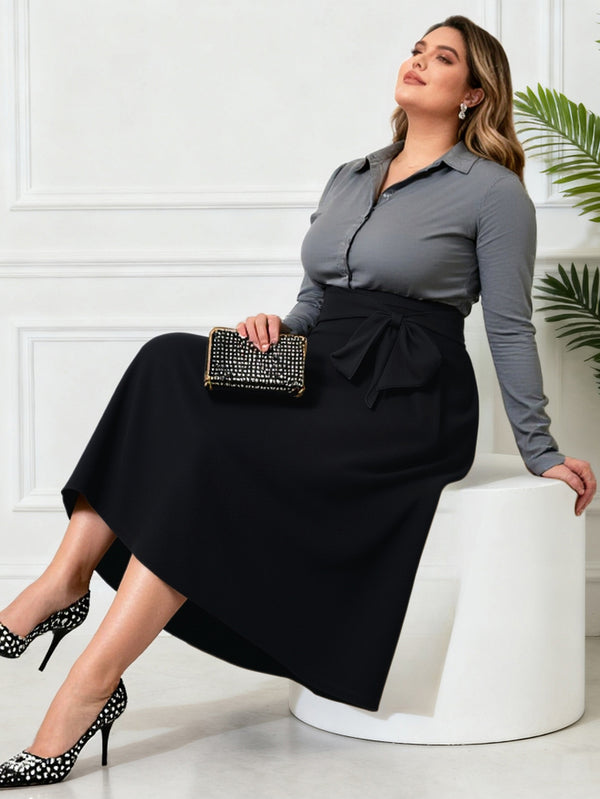
Begin with the outline you want to wear. A softly shaped blazer with an A-line midi skirt creates movement and offers room through the hip and thigh. A straight blazer with a pencil skirt gives a cleaner column. A boxy cropped jacket with a fuller skirt feels more playful. None of these shapes belongs to only one body type. Try the complete suit and notice whether its lines match your taste, rather than asking whether your body has earned the right to wear them.
Jacket fit starts at the shoulders and upper back. The seam should sit near your natural shoulder unless the design is intentionally dropped. Reach forward as if typing or driving; the back should not feel trapped. Button the jacket and take a normal breath. A little ease at the bust and stomach keeps the front from pulling. If you prefer to wear it open, the lapels should still fall cleanly instead of swinging far apart because the jacket is too small.
For the skirt, test standing, sitting, stairs, and a full stride. A pencil skirt needs a walking vent or enough stretch. An A-line skirt should hang smoothly without the waistband tipping. A wrap shape needs secure overlap when you sit. Waist placement is personal: high rise can feel supported, while a mid rise may be better for a shorter torso or anyone who dislikes pressure near the ribs. Comfort is information, not a flaw to push through.
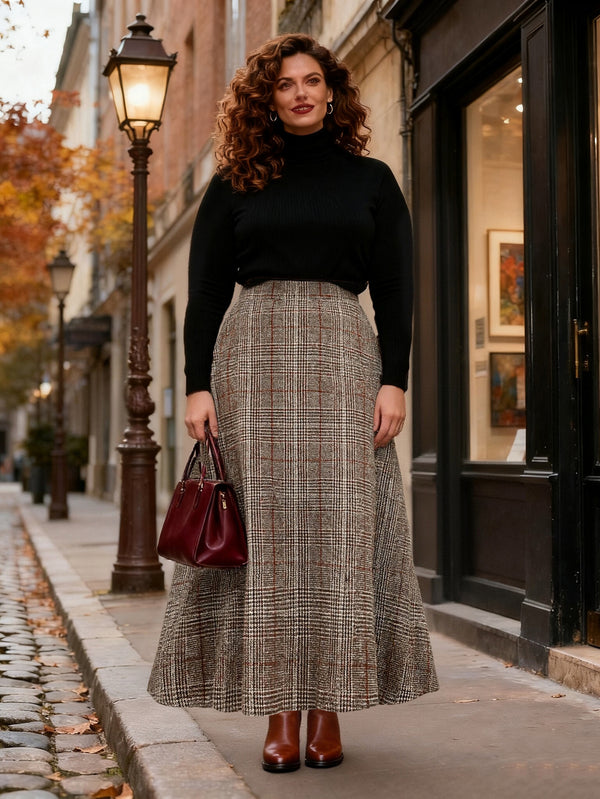
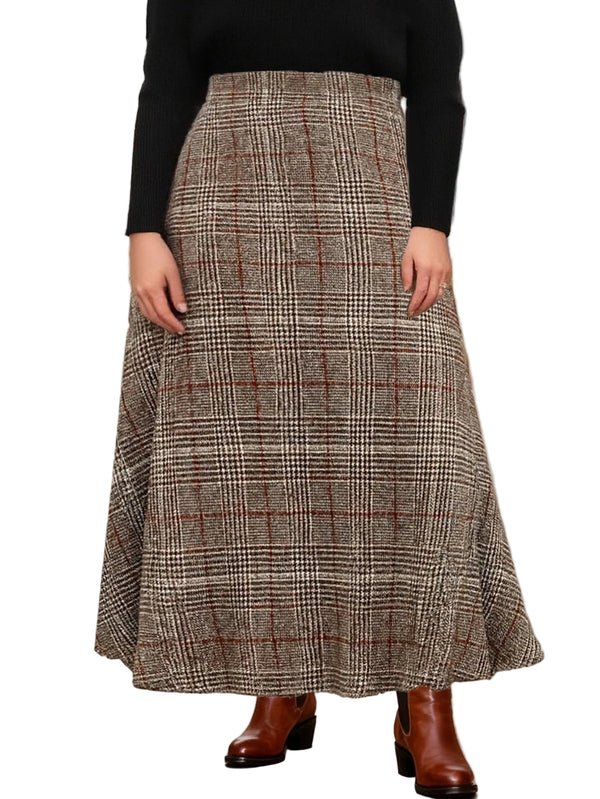
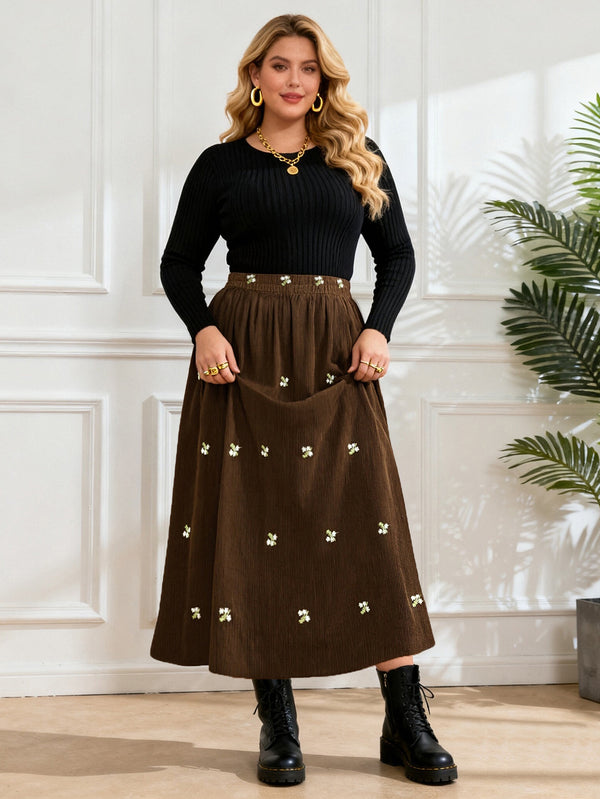
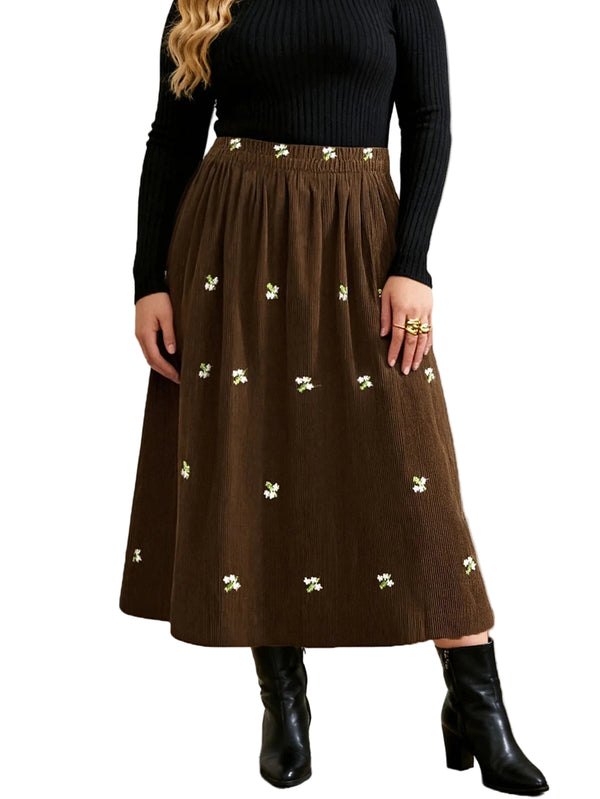
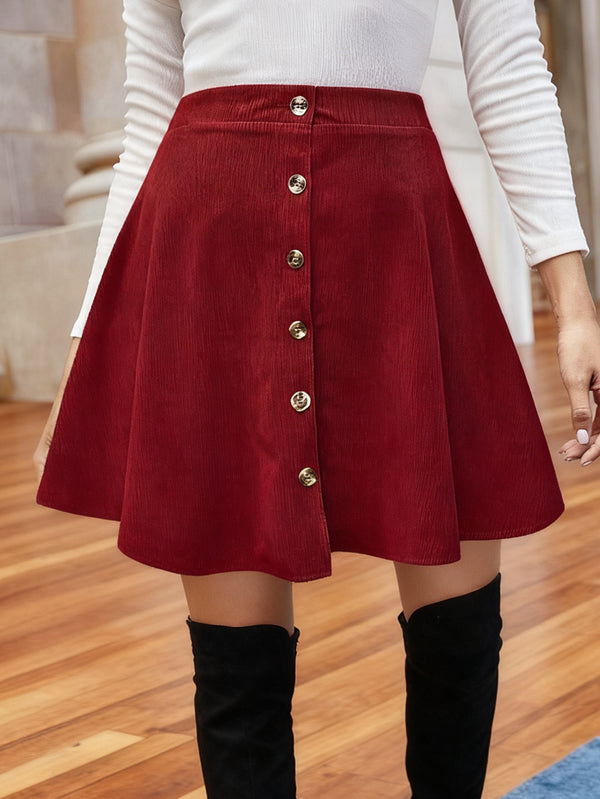
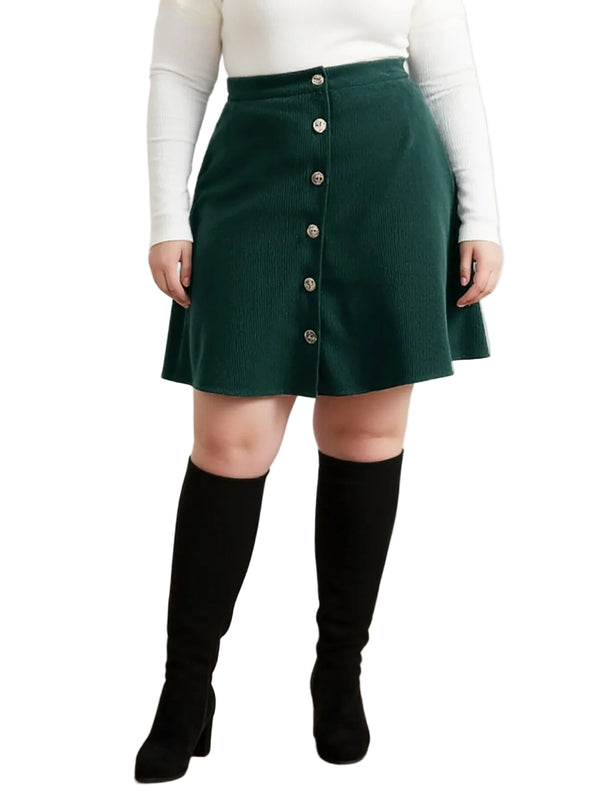
Explore the plus size skirt collection by thinking about length, fabric, and movement first. A matching suit can come from two coordinated pieces, but a near-match in texture and color can also create a convincing set. The goal is a relationship between the pieces, not factory-perfect sameness.
Prioritize fabric, lining, and alterations that improve movement
Fall suiting fabrics range from fluid ponte to crisp twill, brushed wool blends, corduroy, and soft plaid. Ponte has stretch and recovers well, making it useful for travel and long seated days. Twill looks polished and can hold a crease, though it needs enough ease at stress points. Wool blends add warmth and texture. If wool feels itchy, look for a full lining or plan a soft base layer between the fabric and your skin.
Lining affects both comfort and drape. A lined skirt is less likely to cling to tights, and lined sleeves slide more easily over a blouse or knit. However, a tight non-stretch lining can make a flexible outer fabric feel restrictive. Check the lining while seated and when raising your arms. If it catches, puckers, or limits your stride, the garment is not truly fitting just because the outer layer looks smooth in a mirror.
Small alterations can transform a suit. Sleeve length, skirt hem, waistband shaping, and button placement are common adjustments. Buy for the area that is hardest to alter—often shoulders or hips—then tailor the easier areas if your budget allows. Ask the tailor to preserve movement and to pin changes while you sit as well as stand. A suit that looks beautiful only in a still pose is not ready for a real workday.
Static and friction also matter. Tights can cause an unlined skirt to cling, while some linings twist as you walk. An anti-static spray, slip, or smoother tight can help. Before an important event, wear the complete outfit at home for an hour. That trial catches rolling waistbands, scratchy labels, noisy fabrics, and shoes that change the way the hem hangs.
Care requirements belong in the buying decision too. A suit that needs frequent dry cleaning may not suit a busy weekly rotation, while a washable ponte set can be easier to maintain. Read both care labels because the jacket and skirt may have different construction. After wearing, air the pieces together, brush away surface lint, and store the jacket on a supportive hanger. Rotate the skirt rather than wearing it several days in a row, especially when the fabric creases at the hip. Consistent care keeps the color and texture of the two pieces aging at a similar pace.
Layer tops that support the neckline and temperature
A skirt suit does not require a traditional button-down shirt. A fine-gauge crew neck looks modern and minimizes bulk beneath the blazer. A mock neck adds a strong vertical neckline and warmth. A fluid blouse brings softness, while a clean tee makes the suit feel relaxed. Choose a top based on the jacket opening: a deep V lapel frames a higher neckline beautifully, and a shorter lapel can leave room for a collar or necklace.
Color near the face changes the entire suit. Berry, teal, cobalt, and warm red bring energy to charcoal or brown tailoring. Ivory softens pinstripes. Black makes camel plaid feel graphic. If your workplace leans conservative, saturated solid colors offer expression without adding a complex print. If you love print, try a small stripe, abstract dot, or scarf pattern and let the suit remain the visual anchor.

Keep the layer smooth where it meets the waistband. A bodysuit can stay tucked, but only if the torso length and closure feel comfortable. A regular top can be fully tucked, half tucked, or left out beneath an open blazer. There is no moral value in showing a waist. Choose the method that lets you sit, reach, and use the restroom easily. A thin belt can add a finishing line, but it is optional.
Plan for indoor and outdoor temperatures. A heavy knit under lined wool may be too warm inside, even when the commute is cold. Use a breathable base and add a scarf or coat outdoors. If the blazer must come off, make sure you like the top and skirt together. That simple check prevents the jacket from becoming something you endure all day just to keep the outfit complete.
Make hosiery a deliberate part of the outfit
Tights connect the skirt and shoe while adding warmth. Opaque black is dependable, but charcoal, chocolate, navy, and burgundy can make a suit feel more nuanced. A tonal combination—brown suit, chocolate tights, burgundy shoes—creates depth without sharp contrast. Sheer black or espresso tights lighten the look for presentations, dinners, and mild days. Patterned hosiery works best when you can see enough of the motif to appreciate it.
Choose tights for fit before finish. The waistband should stay in place without cutting in, and the gusset should reach comfortably. Look at height and hip guidance, then consider how much stretch the fabric offers. If you spend hours seated, test the waist in that position. A pair that feels fine while standing may roll or compress at a desk. Sizing up is a practical option when the chart and fabric allow it.
Moon Wood's plus size tights collection can help you build a base for skirts through cooler months. For a classic office outfit, match dark tights to loafers or boots. For a creative workplace, try burgundy tights with a charcoal suit or patterned tights beneath a solid brown set. Keep a spare pair at work if you rely on sheer styles, and choose reinforced toes when closed shoes cause friction.
Bare legs, tall socks, or leggings can also work depending on the dress code and weather. A midi skirt with knee-high boots may need less hosiery coverage. Soft leggings under a long skirt provide warmth for a casual office, though they should not bunch around the ankle. Your comfort needs belong in the outfit decision from the beginning.
Use shoes to move the suit between formal and relaxed settings
Pumps are one option, not the definition of professional style. A stable block heel can feel polished, but pointed or almond-toe flats create a similar line without height. Loafers add substance and work well with both pencil and A-line skirts. Choose a sole with grip for wet sidewalks and enough toe room for swelling later in the day. If a shoe changes your posture because it hurts, it is not improving the suit.
Ankle boots make a skirt suit feel distinctly autumnal. A close shaft works neatly beneath a midi hem, while a chunkier boot gives a mini or knee-length skirt more visual weight. Knee-high boots reduce the exposed gap and can provide warmth. Check calf and shaft measurements, then sit and bend your knees. The top edge should not dig in behind the knee or fight the skirt hem.
Clean sneakers are useful when the setting allows them. They relax a plaid, corduroy, or softly tailored suit and make commuting easier. Keep the shape streamlined if you want a polished effect, or choose a substantial retro runner for deliberate contrast. White is not the only option; cream, burgundy, navy, or chocolate may connect more naturally with a fall palette.
If your day includes different levels of formality, carry a shoe change. Commute in supportive sneakers or boots, then switch to loafers or pumps for a presentation. Make sure the hem works with both heel heights. A skirt is forgiving here, which is one reason a skirt suit can be more adaptable than it first appears.
Create fall color and pattern combinations that feel current
Chocolate brown is a strong foundation for fall because it pairs with ivory, berry, teal, rust, and pale blue. Charcoal pinstripes feel sharp with wine or cobalt. Camel plaid becomes modern with black, cream, or tomato red. Navy works with forest green and warm tan. You do not need to limit a work wardrobe to neutral-on-neutral combinations; one saturated layer can make familiar tailoring feel refreshed.
When mixing patterns, compare scale. A fine pinstripe can sit beside a medium floral blouse because the shapes are clearly different. A large plaid often looks best with a solid top or a very small print. If pattern mixing feels busy, repeat one color from the suit in the second pattern. That creates a visible connection without requiring an exact match.
Texture can replace pattern. A brushed brown suit with a satin shell balances matte and shine. Corduroy with a smooth turtleneck feels rich but relaxed. Ponte with a ribbed knit adds quiet dimension. Use accessories to continue the story: a structured leather bag sharpens a soft suit, while a suede bag makes crisp tailoring feel warmer.
Jewelry should work with the neckline and your movement. A short chain or studs stay clear of lapels. A brooch can personalize a blazer, and a bold earring remains visible even when the jacket is closed. Choose pieces that do not catch on knitwear or compete with an ID lanyard. Practicality does not diminish creativity; it helps the outfit function in your actual environment.
Outerwear can either blend with the suit or frame it. A long camel coat over charcoal tailoring feels classic, while a burgundy coat over brown creates a richer tonal story. Make sure the coat has enough room at the shoulders and sleeves so the blazer does not crumple beneath it. For rain, a clean trench protects the skirt without hiding the entire look. When you remove the coat, give the blazer a quick smoothing at the lapels and hem rather than worrying about perfect, motionless tailoring.
Build three skirt suit formulas you can repeat
For a presentation, wear a chocolate A-line skirt suit with an ivory shell, burgundy pumps or flats, and a structured bag. The warm palette looks intentional without being loud. Keep the jacket buttoned while presenting if that feels secure, then open it afterward. A thin camisole under the shell can add coverage without changing the visible outfit.
For a regular office day, pair a charcoal pinstripe blazer and midi skirt with a berry knit and loafers. Add charcoal tights when it is cool. The knit softens the tailoring, and the loafers support walking between meetings. If the office warms up, the berry top and skirt still look complete after the blazer comes off.
For a creative or casual setting, style a camel plaid skirt suit with a black turtleneck and cream sneakers. Push or roll the sleeves only if the lining allows it to sit neatly. Add a crossbody bag and simple hoops. The sneakers make the suit approachable, while the matching pieces keep it purposeful.

Repeat formulas by changing one element at a time. Swap the berry knit for teal, the loafers for boots, or the solid tights for a subtle pattern. This method gives you variety without requiring a new suit for every outfit. It also helps you learn which combinations feel most like you.
FAQ
Does a plus size skirt suit need to be dark to look professional?
No. Professionalism comes from fit, condition, context, and how comfortably you carry the outfit—not from a mandatory dark color. Brown, camel, olive, burgundy, and even brighter shades can work. If your workplace is conservative, introduce color through the top or accessories while keeping the suit itself quieter.
Can I buy the blazer and skirt in different sizes?
Yes, and separates often provide a better fit because shoulders, bust, waist, and hips do not follow one fixed ratio. Match fabric dye lots when possible, or choose pieces that look intentionally coordinated rather than almost identical. Fit each item independently, then assess the complete outfit.
What skirt length is easiest for sitting and commuting?
A knee or midi length is versatile, but construction matters as much as length. Look for stretch, a vent, enough hip ease, and a waistband that stays comfortable while seated. Test stairs, car entry, and a full stride. The easiest skirt is the one that supports your normal movements without repeated adjustment.
How can I make a skirt suit feel less formal?
Wear a knit or tee instead of a blouse, leave the blazer open, and add loafers or clean sneakers. Softer fabrics, relaxed sleeves, and a crossbody bag also reduce formality. You can wear the blazer with jeans or the skirt with a cardigan on separate days, extending the suit beyond office events.